The average person checks their phone 96 times per day, and a significant chunk of that time goes to gaming. But here's the problem: most mobile games feel like shallow time-wasters designed to extract money rather than deliver genuine entertainment. Finding titles that respect your time while actually being enjoyable requires knowing what separates memorable experiences from forgettable cash grabs.
What Makes a Mobile Game Actually Fun
Non boring mobile games share specific design elements that keep players engaged without feeling manipulative. The core gameplay loop—the cycle of actions you repeat throughout the game—needs to feel satisfying within the first 30 seconds. If tapping, swiping, or solving puzzles doesn't click immediately, retention drops dramatically.
Progression systems matter more on mobile than any other platform. Console games can rely on story or graphics, but mobile titles need tangible advancement every session. The best entertaining mobile games provide meaningful progress whether you play for three minutes or three hours. This might mean completing a puzzle, unlocking a character skin, or advancing one level in a campaign.
Accessibility separates great mobile games from good ones. Touch controls must feel responsive without requiring precision that's impossible on a small screen. Games that demand console-level dexterity frustrate players quickly. The interface should accommodate one-handed play when possible—most people game while commuting, waiting in line, or lying in bed.
Replay value extends beyond simple content volume. A game with 500 levels becomes boring if they all feel identical. Variety in mechanics, randomized elements, or skill-based challenges keep experiences fresh. The difference between playing level 50 and level 150 should involve new strategies, not just harder versions of the same puzzle.
Monetization philosophy shapes the entire experience. Games built around selling solutions to problems they created feel exploitative. The best titles either charge upfront or offer optional purchases that enhance rather than enable progress.
Author: Tyler Vance;
Source: canelomobile.com
Best Casual Mobile Games for Quick Sessions
Casual mobile games worth playing fit into the gaps of your day without demanding sustained attention. These titles pause instantly when you get interrupted and resume exactly where you left off without penalty.
Puzzle games dominate this category because they naturally segment into discrete challenges. A single Sudoku puzzle, word game round, or match-three level provides complete satisfaction in five minutes. The brain doesn't need to remember complex storylines or control schemes between sessions.
Arcade-style games work well for mobile games to pass time during commutes or waiting rooms. Endless runners, simple platformers, and reaction-based challenges deliver immediate gameplay without tutorials or setup. You tap to start and the game begins—no cutscenes, no loading screens, no friction.
Turn-based strategy games accommodate interruptions better than real-time titles. A chess match, card battle, or tactical combat scenario waits patiently while you handle a work email or order coffee. These games respect that mobile players rarely have uninterrupted focus.
The ideal casual game loads in under three seconds and presents the core gameplay within five seconds. Every additional second of loading or menu navigation reduces the likelihood players will open the app during short breaks. Quick sessions need quick access.
Author: Tyler Vance;
Source: canelomobile.com
Roguelite games have found surprising success on mobile by offering complete runs in 10-15 minutes. Each attempt feels different due to randomized elements, and permanent unlocks between runs provide long-term progression. Death doesn't feel punishing when you can complete another attempt during your lunch break.
Addictive Mobile Games That Keep You Coming Back
Addictive mobile games engineer retention through psychological hooks that range from benign to predatory. Understanding these mechanics helps you choose good mobile games that respect your time rather than exploit your attention.
Daily reward systems create appointment mechanics—reasons to open the app at specific times. Streak bonuses incentivize consecutive days of play, while time-limited events create urgency. The best implementations offer meaningful rewards without punishing players who miss a day. Aggressive versions lock essential progression behind daily logins, transforming entertainment into obligation.
Progression systems with visible advancement scratch the completion itch effectively. Experience bars, skill trees, and collection mechanics provide tangible goals that extend beyond individual play sessions. Seeing a progress bar at 87% creates psychological pressure to reach 100%, even when the reward is cosmetic.
Social competition amplifies engagement through leaderboards, guild systems, and friend challenges. Knowing real people see your achievements or compete against your scores adds stakes that single-player experiences lack. This works best when competition feels fair rather than pay-to-win.
Gacha mechanics and loot boxes represent the dark side of retention design. Random rewards trigger the same neural pathways as gambling, creating compulsion rather than genuine enjoyment. Games built entirely around these systems prioritize monetization over entertainment.
The difference between addictive and exploitative is whether the game would still be fun without the retention mechanics. Great mobile games use daily rewards and progression to enhance an already enjoyable core loop, while predatory titles use them to mask shallow gameplay
— Sarah Chen
Skill-based progression creates healthier addiction than time-based grinding. Games where you improve through practice and learning feel rewarding in ways that simple time investment cannot match. Mastering difficult challenges provides satisfaction that persists beyond the gaming session.
Mobile Games Perfect for Playing with Friends
Mobile games for groups have evolved beyond simple pass-and-play titles into sophisticated multiplayer experiences that rival console offerings. The best social games accommodate both synchronous and asynchronous play, letting friends engage together or at their own pace.
Real-time multiplayer games create immediate social experiences but require coordination. Party games with quick rounds work well because they don't demand hour-long commitments. Trivia competitions, drawing games, and cooperative puzzles let groups play together regardless of physical location.
Turn-based multiplayer removes scheduling pressure by letting players take their turns whenever convenient. Word games, board game adaptations, and strategy titles work asynchronously, maintaining social connection without requiring simultaneous availability. A chess match might span several days with each player moving during their free moments.
Cooperative games build teamwork rather than competition. Puzzle games requiring coordination, survival challenges demanding resource sharing, and story-driven adventures experienced together create shared memories. These titles work especially well for friends with different skill levels since cooperation accommodates varying abilities.
Competitive multiplayer ranges from casual to hardcore. Friendly competition in racing games or sports titles differs dramatically from ranked matches in MOBAs or shooters. Choose based on your group's tolerance for stress—some friend groups thrive on intense competition while others prefer low-stakes fun.
Cross-platform play expands potential player pools beyond mobile-only users. Games that work across phones, tablets, and computers let groups play together regardless of device preference. This flexibility matters more as friend groups span different ecosystems.
How to Find Mobile Games That Match Your Style
Good mobile games exist in every genre, but finding them requires filtering through thousands of options. Your preferences around time commitment, difficulty, and spending determine which titles deserve your attention.
Genre preferences narrow the field significantly. If you hate puzzle games, no amount of polish will make a match-three game enjoyable. Identify what you actually enjoy—action, strategy, story, competition—and filter accordingly. Many players waste time on popular titles in genres they fundamentally dislike.
Time commitment varies wildly between games. Some demand daily engagement to remain competitive, while others let you play casually without falling behind. Consider your actual schedule honestly. A game requiring 30 minutes daily becomes a chore when you realistically have 10-minute sessions available.
Difficulty preferences matter more on mobile than other platforms. Some players want relaxing experiences that don't demand intense focus, while others seek challenging gameplay that requires full attention. Frustrating difficulty spikes ruin games meant for stress relief, while excessive hand-holding bores players seeking mastery.
Visual style and audio design affect enjoyment more than many players realize. Games you'll play in public need mutable audio and non-embarrassing visuals. Anime aesthetics, cartoon graphics, or realistic art styles appeal to different audiences—choose what you'll actually want to look at for hours.
Community size impacts multiplayer games significantly. A small player base means long matchmaking times and limited competition. Check recent reviews to gauge whether games still maintain active populations, especially for titles more than a year old.
Free vs. Paid: Which Offers Better Value
Free games dominate mobile gaming, but paid titles often provide better experiences. The trade-offs involve upfront cost versus ongoing monetization pressure.
Premium games charging $3-10 upfront typically offer complete experiences without artificial limitations. You get all content immediately, without energy systems, ad interruptions, or pressure to purchase consumables. This model works best for players who know they'll invest significant time in a game.
Free-to-play games let you sample before committing money, but many employ manipulative monetization. The best free games offer optional cosmetic purchases or reasonable progression boosts. The worst create problems then sell solutions, making the free experience deliberately frustrating.
Subscription services like Apple Arcade or Google Play Pass provide middle ground—monthly fees unlock libraries of premium games without ads or in-app purchases. This works well for players who regularly try new games rather than focusing on single titles long-term.
Trial periods and refund policies reduce risk for paid games. Both app stores allow refunds within specific windows if games don't meet expectations. This safety net makes trying premium games less risky than it appears.
Author: Tyler Vance;
Source: canelomobile.com
Avoiding Pay-to-Win Traps
Pay-to-win mechanics let spending players gain insurmountable advantages over free players. Identifying these systems early saves time and frustration.
Competitive games selling power create unfair environments where skill matters less than wallet size. If top leaderboard positions correlate directly with spending, free players cannot compete meaningfully. This differs from games selling cosmetics or convenience without affecting competitive balance.
Energy systems limiting play sessions exist to encourage spending on refills. Games allowing 15 minutes of play every four hours prioritize monetization over entertainment. The most predatory versions require energy for everything, while better implementations let you make meaningful progress during limited sessions.
Loot boxes and gacha systems hide essential progression behind random chance. Games requiring specific characters or items to advance, then selling random chances to obtain them, create gambling mechanics without guarantees. Pity systems guaranteeing rewards after specific spending thresholds don't eliminate the fundamental problem.
Time-limited exclusive content pressures impulse purchases through artificial scarcity. Limited banners, seasonal characters, or event-only items create fear of missing out rather than genuine desire. Games constantly pushing exclusive content prioritize monetization over stable gameplay.
Common Mistakes When Choosing Mobile Games
Players waste significant time on disappointing games by making predictable selection errors. Avoiding these mistakes improves your hit rate considerably.
Downloading based solely on advertisements creates unrealistic expectations. Mobile game ads frequently show gameplay that doesn't exist in the actual product, featuring puzzle mechanics or scenarios completely absent from the real game. Always check actual gameplay footage or reviews before installing.
Ignoring user reviews means missing red flags about monetization, bugs, or false advertising. Sort reviews by recent and read both positive and negative feedback. Pay attention to complaints about updates that worsened the game or introduced aggressive monetization after launch.
Storage and battery concerns get overlooked until they become problems. Games requiring 5GB+ storage and draining battery in 90 minutes aren't practical for daily play. Check requirements before installing, especially on older devices with limited space.
Franchise recognition doesn't guarantee quality. Many beloved console or PC franchises have terrible mobile adaptations designed purely for monetization. Conversely, unknown studios often create excellent original mobile experiences.
Confusing player count with quality leads to downloading popular but mediocre games. High download numbers indicate marketing success, not necessarily gameplay quality. Niche games with smaller but passionate communities often provide better experiences than mainstream titles.
Starting too many games simultaneously prevents meaningful engagement with any single title. Mobile games reveal their depth over hours, not minutes. Committing to 2-3 games provides better experiences than installing dozens and playing each superficially.
Comparison of Mobile Game Types
Game Type
Time Per Session
Best For
Monetization Model
Group Play Available
Puzzle Games
5-15 minutes
Quick breaks, casual players
Free with ads or premium unlock
Limited (asynchronous)
Roguelites
10-20 minutes
Complete experiences in short time
Premium or cosmetic purchases
Rare
Strategy Games
15-45 minutes
Deep thinking, planning
Free-to-play with purchases
Yes (turn-based)
Party Games
5-10 minutes per round
Social play, groups
Free with cosmetics
Yes (real-time)
RPGs
20-60 minutes
Story, progression
Free-to-play with gacha
Sometimes (co-op raids)
Arcade/Endless
3-10 minutes
Passing time, high scores
Free with ads
Limited (leaderboards)
FAQ
What are the most fun mobile games that don't require internet?
Offline games eliminate connectivity requirements and data usage. Premium puzzle games like Monument Valley or The Room series work entirely offline. Roguelites such as Dead Cells and Slay the Spire offer complete experiences without internet. Many premium ports of console games function offline, including Stardew Valley and Terraria. Check game descriptions specifically for offline capability, as many free-to-play titles require constant connection for verification purposes.
How much storage do entertaining mobile games typically need?
Storage requirements vary dramatically by game type. Simple puzzle games might need 100-300MB, while high-end RPGs can demand 3-8GB. Games with extensive voice acting, 3D graphics, or large content libraries require more space. Many games also download additional data after installation, so the app store size listing doesn't reflect total storage needs. Plan for 1.5-2x the listed size to accommodate updates and cached data.
Are free mobile games as good as paid ones?
Quality exists in both categories, but premium games typically offer better experiences without monetization pressure. Free games can be excellent when they sell cosmetics or use ethical models, but many employ manipulative tactics that degrade enjoyment. Paid games provide complete experiences upfront without artificial limitations. The best free games match or exceed paid alternatives, but finding them requires careful filtering.
What mobile games are best for short breaks?
Puzzle games, arcade titles, and turn-based strategy games accommodate brief sessions effectively. Look for games that save progress automatically and resume instantly. Avoid story-driven RPGs or real-time competitive games that penalize interruptions. Games with discrete levels or rounds rather than continuous gameplay work better for unpredictable break lengths. Offline capability helps since short breaks might occur in areas with poor connectivity.
How do I find mobile games without annoying ads?
Premium games charging upfront rarely include ads. Subscription services like Apple Arcade guarantee ad-free experiences across their libraries. Some free games offer one-time purchases to remove ads permanently—usually $3-5. Check reviews specifically mentioning ad frequency and intrusiveness. Games with optional rewarded ads (watch for bonuses) feel less aggressive than forced interstitials. Avoid free games from publishers known for aggressive advertising.
Which mobile games work well for group play?
Party games like Spaceteam or Heads Up work well for in-person groups. Online multiplayer titles such as Among Us or Brawl Stars let friends play remotely. Trivia games and drawing games accommodate varying skill levels. Turn-based strategy games like Chess or Civilization allow asynchronous play across time zones. Cooperative puzzle games provide shared challenges without direct competition. Choose based on whether your group prefers synchronous real-time play or flexible asynchronous engagement.
Finding genuinely entertaining mobile games requires looking beyond download counts and flashy advertisements. Focus on core gameplay loops that feel satisfying immediately, progression systems that respect your time, and monetization models that don't manipulate or pressure. The best mobile games provide complete experiences whether you play for five minutes or five hours, accommodating the unpredictable nature of mobile gaming.
Start by identifying your actual preferences around genre, time commitment, and social features rather than downloading whatever's trending. Premium games often deliver better value than free alternatives despite upfront costs, while subscription services provide risk-free exploration of quality titles. Read recent reviews, watch actual gameplay footage, and avoid games whose monetization models conflict with your spending philosophy.
The mobile gaming landscape contains thousands of options ranging from exploitative cash grabs to legitimate masterpieces. Your time and attention are valuable—invest them in games designed for entertainment rather than extraction. Whether you want quick puzzle sessions during commutes, competitive multiplayer with friends, or deep strategic experiences, quality options exist once you know how to filter effectively.
Mobile gaming has evolved into a multi-billion dollar industry reaching billions of players globally. Understanding which titles dominate requires examining download counts, engagement patterns, revenue streams, and viral momentum across platforms and regions
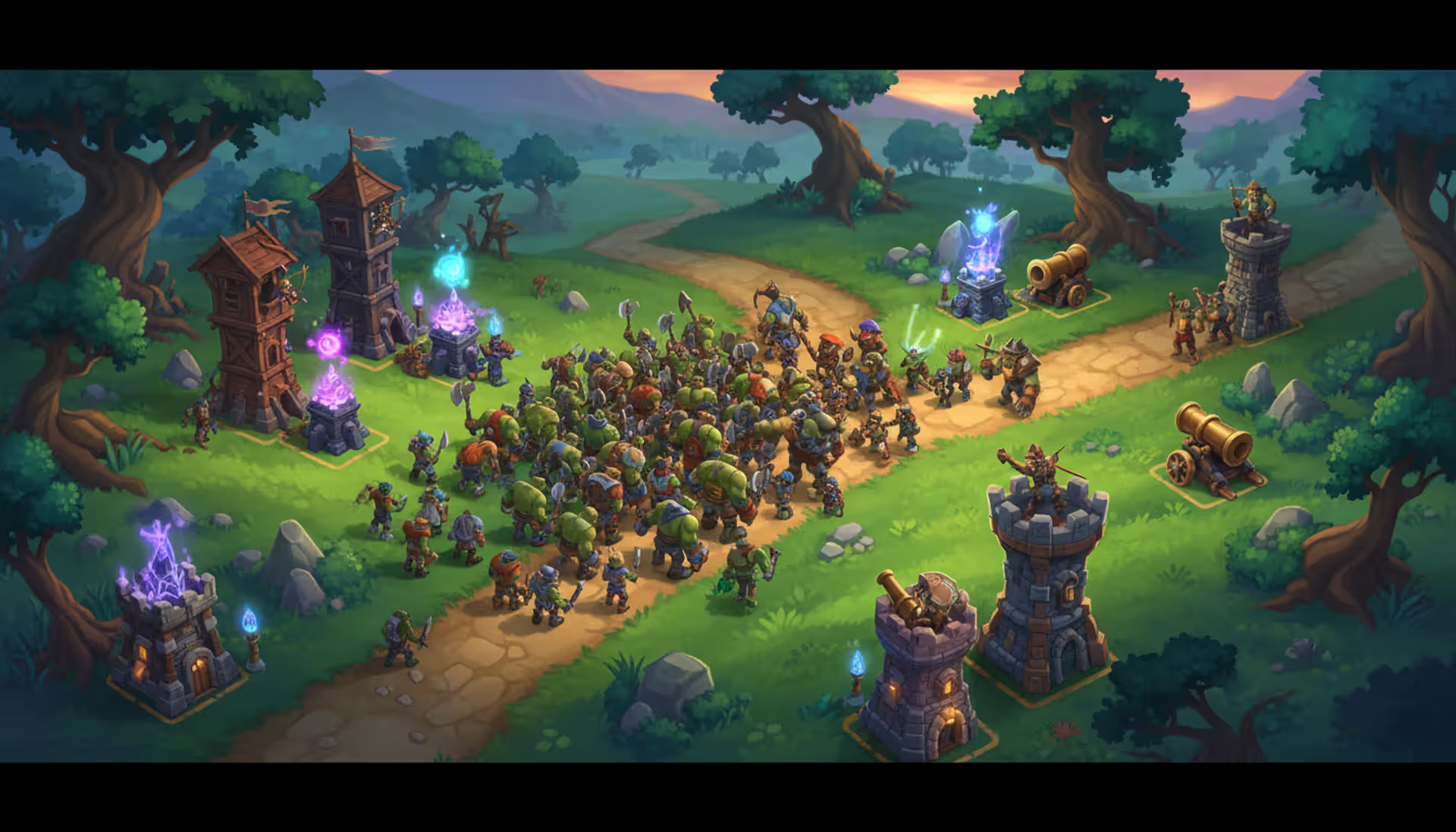
Tower defense games have carved out a permanent place in gaming culture. Whether defending against waves on your phone or settling in for PC marathons, the genre offers uniquely satisfying strategic depth. The best tower defense games balance accessible mechanics with rewarding complexity
Mobile gaming dominates with $120 billion in revenue and millions of daily players. This guide ranks the best mobile games across genres, evaluates monetization fairness, and reveals which titles respect your time and wallet in 2026
The iPhone transformed mobile gaming from simple time-killers into genuinely compelling experiences. This guide cuts through thousands of App Store options to identify games that respect your intelligence, wallet, and schedule—organized by how you actually shop for games
The content on this website is provided for general informational and educational purposes only. It is intended to explain concepts related to video games, gaming guides, builds, mobile gaming, multiplayer strategies, and gaming history.
All information on this website, including articles, guides, and examples, is presented for general educational and entertainment purposes. Gameplay outcomes, strategies, and performance may vary depending on player skill, game updates, and platform.
This website does not provide professional advice or guarantee game outcomes, and the information presented should not be used as a substitute for official game documentation or developer guidance.
The website and its authors are not responsible for any errors or omissions, or for any outcomes resulting from decisions made based on the information provided on this website.