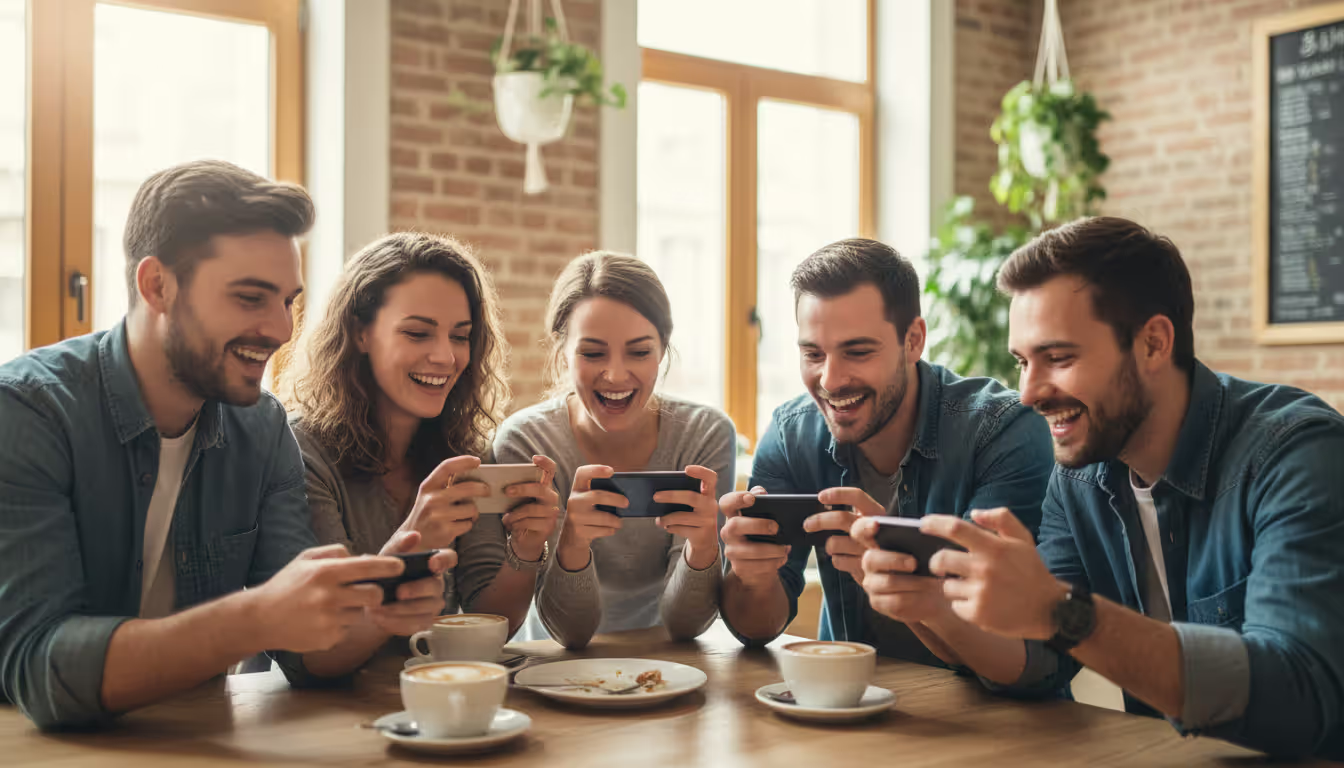
The mobile gaming world hit $98 billion in revenue last year, with over 2.8 billion people playing games on their phones at least once a week. But which games actually matter? The answer depends on whether you're measuring downloads, daily players, revenue, or cultural buzz—and these numbers rarely align.
How Mobile Game Popularity Is Measured
Game rankings shift constantly because different metrics paint wildly different pictures of success.
Install counts show immediate appeal. When you see a game hit #1 on Google Play or the App Store, that ranking typically reflects download speed over the past day or week, not total lifetime installs. A celebrity endorsement or viral TikTok can shoot an unknown title to the top overnight, though it might vanish just as quickly.
Here's the catch: downloads mean nothing if people quit after one session. That's where DAU and MAU come in—daily and monthly active users. Think of it this way: would you rather have 50 million people download your game then delete it, or 5 million who play every single day? The "stickiness" ratio (DAU divided by MAU) separates passing fads from genuine hits. Anything above 20% signals that players are hooked.
Revenue tells yet another story. Genshin Impact doesn't crack the top 10 download charts most weeks, yet it generates more money than almost every other mobile game combined. Why? Because free-to-play monetization means a small percentage of passionate players (often called "whales") can fund entire game studios. Companies like Sensor Tower estimate revenue since developers rarely share exact figures, and data.ai aggregates spending patterns across both major app stores.
Social media momentum now matters as much as traditional charts. A game spreading through YouTube Shorts or spawning endless TikTok memes might have 40 million players before app store algorithms notice. Tracking hashtag growth, creator partnerships, and streaming viewership often predicts tomorrow's chart-toppers better than today's rankings.
Author: Jordan Kessler;
Source: canelomobile.com
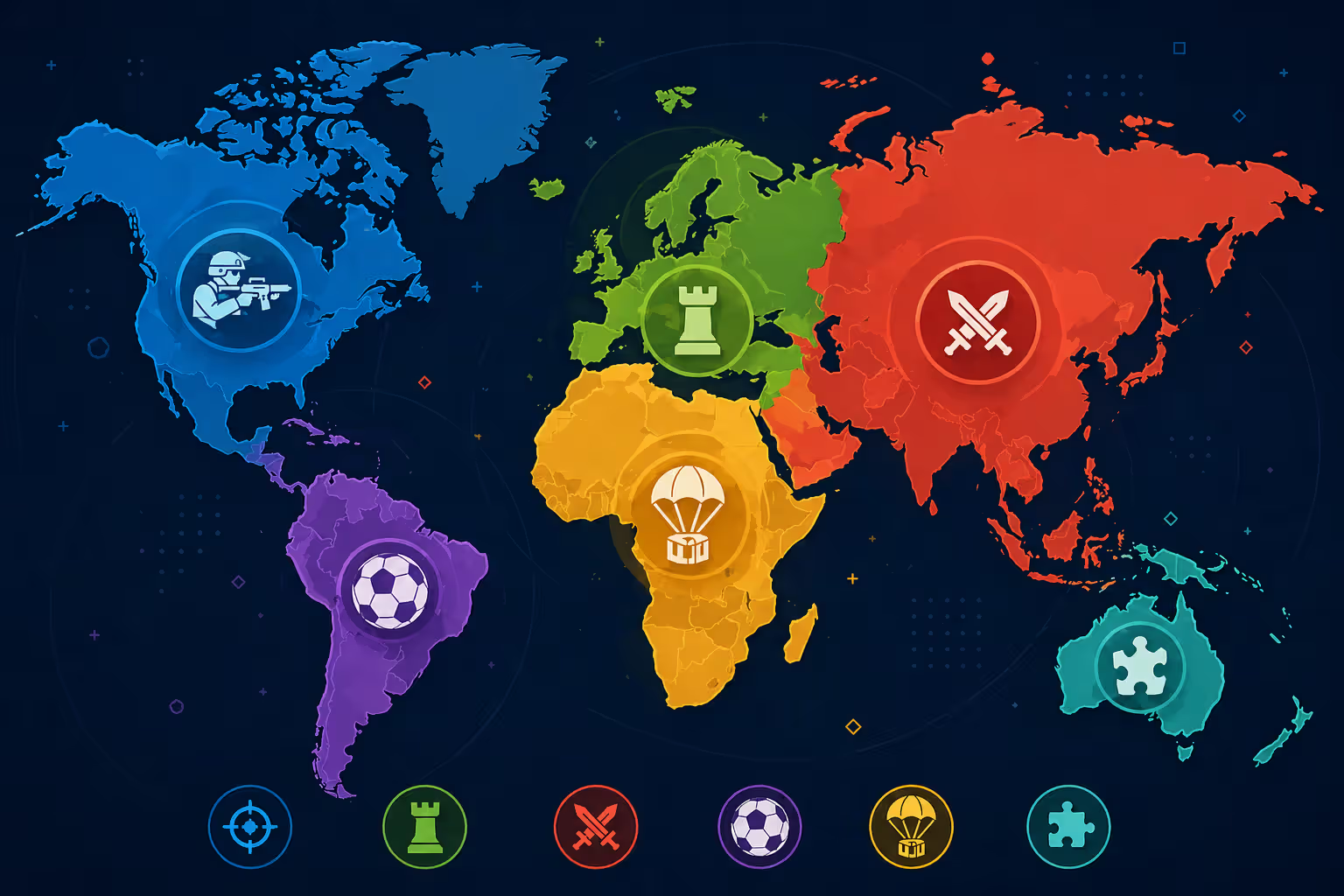
Don't forget regional differences. Honor of Kings prints money in China while barely existing elsewhere. Free Fire dominates Latin America and Southeast Asia but trails competitors in North America. Any "worldwide" ranking has to weight markets carefully—or acknowledge that no single game truly rules everywhere.
Top Downloaded Mobile Games Right Now
Right now, these games lead the pack when you count fresh installs across both iOS and Android:
Game Title
Genre
Platform
Est. Downloads (2025–2026)
Release Year
Monopoly GO!
Casual/Board
iOS, Android
180M+
2023
Royal Match
Puzzle
iOS, Android
165M+
2020
Roblox
Sandbox/Social
iOS, Android
150M+
2012
Subway Surfers
Endless Runner
iOS, Android
145M+
2012
Candy Crush Saga
Match-3 Puzzle
iOS, Android
140M+
2012
PUBG Mobile
Battle Royale
iOS, Android
135M+
2018
Free Fire MAX
Battle Royale
iOS, Android
130M+
2021
Stumble Guys
Party/Obstacle
iOS, Android
125M+
2021
Brawl Stars
MOBA
iOS, Android
120M+
2018
Genshin Impact
Action RPG
iOS, Android
115M+
2020
Monopoly GO! came out of nowhere in 2023, spending what analysts estimate at $500 million on Super Bowl ads, YouTube pre-rolls, and subway posters. Scopely bet big on nostalgia—everyone knows Monopoly—but simplified the game into a slot-machine-style loop where you roll dice, collect properties, and attack friends' boards. The strategy paid off spectacularly.
Royal Match proves that incremental improvements matter. It's fundamentally the same match-3 puzzle as a hundred other games, but the animations feel satisfying. When you clear a row, tiles explode with juice and polish that makes your brain happy. That 0.5-second dopamine hit keeps people playing for years.
iOS versus Android rankings diverge significantly. iPhone users spend roughly 2.5x more per person but represent a smaller total audience. Games targeting premium spenders often launch iOS-first. Meanwhile, titles optimized for budget Android phones—especially those under $150—access markets in India, Brazil, and Indonesia where billions of potential players live.
Expect seasonal swings too. Puzzle games surge during January (New Year's resolution energy) and September (back-to-school commutes). Multiplayer shooters peak during summer break. The week after Christmas sees massive download spikes from people unwrapping new devices, though these players quit at 3x the normal rate.
Most Played Mobile Games by Active Users
Download counts flatter games with good marketing. Active users reveal which titles become genuine habits.
Roblox hosts roughly 70 million people daily who aren't just playing games—they're creating them, hanging out in virtual spaces, and treating the platform like a social network. The secret? Network effects. Once your friend group migrates to Roblox, leaving means social isolation. New experiences launch hourly, so the platform never goes stale.
PUBG Mobile and Free Fire collectively attract over 100 million daily players hunting for battle royale victories. These games conquered markets where high-end gaming PCs are rare by running smoothly on phones costing $100. Match length matters here: both games typically wrap up in 10-12 minutes, perfect for a lunch break or commute. Compare that to console shooters demanding hour-long sessions.
Candy Crush Saga still commands around 45 million daily players thirteen years after launch. How? By perfecting one thing: making failure feel like bad luck rather than lack of skill. You almost beat that level—just buy five more moves and you'll definitely win this time. That psychological trick has generated over $20 billion.
Genshin Impact asks players to download 20+ gigabytes and tolerate serious battery drain, yet 25 million people play daily. HoYoverse updates the game every six weeks with new storylines, characters, and regions that feel like expansion packs. The anime art style and gacha mechanics create a blend of RPG depth and collection addiction that hooks people for years.
Author: Jordan Kessler;
Source: canelomobile.com
Notice the gap between installs and retention. Hypercasual games—simple one-button time-wasters—might hit 80 million downloads in a month but keep only 2% of players past week one. Strategy and RPG titles attract fewer initial downloads but convert 15-20% into long-term players worth 10x more in lifetime revenue.
Trending Mobile Games Gaining Momentum
Several games are climbing charts fast through smart timing, viral mechanics, or simply outspending competitors:
Whiteout Survival came from relative obscurity to challenge top strategy games by blending city-building with frozen apocalypse survival. Developers Century Games spent aggressively on Facebook and Google ads targeting players who aged out of similar games, then retained them with generous early progression that makes you feel powerful before difficulty ramps up.
Honkai: Star Rail launched with 30 million pre-registrations—people signed up months before release. HoYoverse applied every lesson from Genshin Impact's success, creating a turn-based RPG with production values rivaling PlayStation games. The "gacha" system keeps players chasing new characters through randomized pulls, generating both revenue and endless social media chatter when someone gets lucky.
Party Animals spread through pure virality. The physics-based party game features adorable animals with floppy ragdoll bodies competing in chaotic mini-games. Every match produces hilarious failures perfect for TikTok clips—accidental self-destructs, physics glitches, last-second victories snatched from certain defeat. Players became unpaid marketers by sharing these moments.
Author: Jordan Kessler;
Source: canelomobile.com
Monopoly GO! deserves another mention for its unprecedented growth curve. Most mobile games build audiences over months or years. Monopoly GO! rocketed to #1 grossing within weeks through an advertising blitz that reportedly cost more than many games' entire development budgets. Scopely essentially bought the top spot, then relied on solid retention mechanics to justify the investment.
Games go viral when they lower every barrier to fun. Complex tutorials kill momentum—every extra screen before gameplay costs you 20% of installers. Viral hits let you start playing within 15 seconds. They create "shareable moments" that look interesting in a six-second clip. And they respect players' time with three-minute sessions rather than demanding hour-long commitments.
Biggest Mobile Games Ever Released
A few titles transcended gaming to reshape culture and prove mobile platforms could compete with consoles:
Pokémon GO generated over $7 billion while getting millions of people to walk around parks hunting virtual creatures with their phone cameras. The 2016 launch created spontaneous gatherings of thousands in public spaces—something no other mobile game has replicated. Niantic proved that location-based gaming could work at massive scale, though dozens of imitators have since failed trying to copy the formula.
Candy Crush Saga has pulled in north of $20 billion since 2012. King didn't invent match-3 puzzles—Bejeweled did that years earlier. But King perfected the monetization psychology: unlimited free attempts, but you can buy boosters and extra moves when you're stuck one move away from victory. That "almost won" feeling opens wallets more effectively than any hard paywall.
Honor of Kings generates roughly $10 million daily from Chinese players alone, making it arguably the world's most financially successful game most Western players have never heard of. Tencent adapted the MOBA (multiplayer online battle arena) genre for touchscreens by simplifying controls and shortening matches. The game has achieved cultural status in China comparable to the NFL in America.
PUBG Mobile brought console-quality battle royale to devices costing $150, accumulating over 1 billion downloads and establishing mobile esports as legitimate competition with multi-million dollar prize pools. Before PUBG Mobile, most people assumed complex shooters required keyboards and mice. Tencent's developers proved otherwise through smart control schemes and aggressive optimization.
Clash of Clans wrote the playbook for mobile strategy games, generating over $10 billion while maintaining millions of daily players more than a decade post-launch. Supercell pioneered asynchronous multiplayer—you attack other players' bases while they're offline, eliminating the need for everyone to be online simultaneously. Clan features transformed random strangers into coordinated teams that felt like social obligation, making quitting feel like abandoning friends.
Author: Jordan Kessler;
Source: canelomobile.com
These games share unexpected longevity. Mobile gaming supposedly favors disposable entertainment, yet these titles have lasted longer than most console franchises. The secret lies in live service models: constant updates, seasonal events creating urgency, and social features that make games feel like communities rather than software.
What Makes Mobile Games Go Viral
Viral success combines design choices, marketing savvy, and luck—though you can improve your odds:
Simplicity wins every time. Can your mom figure out the controls in 10 seconds? Games requiring tutorials lose 40% of installers before gameplay begins. Viral hits use one-finger controls or simple swipes that toddlers and grandparents grasp instantly. Complexity adds friction, and friction kills virality.
Social features amplify organic growth. Stumble Guys lets you challenge friends with two taps. That ease created a sharing loop where every player recruited their social circle. Similarly, Wordle's colored square results (though web-based) showed how shareability drives exponential growth. The easier you make sharing, the faster your game spreads.
The most successful mobile games in recent years have all mastered the art of creating 'watercooler moments'—experiences players naturally want to discuss with friends.Whether it's a lucky gacha pull, a clutch victory, or a hilarious physics glitch, these shareable moments generate organic marketing worth millions in ad spend
— Sarah Chen
Influencer partnerships provide rocket fuel. One video from a creator with 5 million subscribers can drive 200,000+ installs in 48 hours. Smart developers budget 20-30% of marketing spend for influencer campaigns during launch windows, offering early access, exclusive content, or direct sponsorships that seed YouTube, Twitch, and TikTok simultaneously.
Cultural timing matters more than we admit. Among Us languished for two years before exploding during pandemic lockdowns when isolated people craved social interaction. Wordle launched when people wanted daily ritual games requiring five minutes. No amount of advertising can manufacture these cultural moments—you have to recognize and exploit them.
Invisible monetization preserves recommendations. Hit players with aggressive paywalls early and they'll warn friends away. Viral games delay purchase pressure, letting people enjoy 10-20 hours before encountering real obstacles. This "try before nudging you to buy" approach converts installers into advocates rather than critics.
Technical optimization expands your addressable market exponentially. A game demanding flagship phones excludes 80% of global Android users. Meanwhile, titles running smoothly on three-year-old budget devices access billions of potential players in emerging markets. Sometimes restraint—prioritizing compatibility over cutting-edge graphics—unlocks more success than technical showboating.
Frequently Asked Questions
Which mobile game has been installed more times than any other?
Subway Surfers crossed 3 billion lifetime installs across both major platforms—the endless runner's colorful graphics and swipe-to-dodge mechanics have attracted players since 2012. That said, total install counts include people who downloaded, deleted, then reinstalled months later, plus multiple installs across different devices. Historical download numbers don't necessarily indicate current popularity or engagement.
How do app stores decide which games top their charts?
Both Google Play and Apple's App Store use proprietary formulas that heavily weight recent download velocity—essentially how fast people are installing right now compared to competitors. Charts refresh roughly every 24 hours, measuring fresh installs and sometimes factoring engagement signals and ratings. Third-party analysts like Sensor Tower and data.ai build global rankings by aggregating regional data and estimating revenue, since developers rarely disclose exact financial figures publicly.
What games are people downloading and talking about right now?
Early 2026 sees Monopoly GO! still dominating casual categories despite launching in 2023, while Whiteout Survival climbs strategy rankings through aggressive user acquisition. Honkai: Star Rail maintains strong RPG engagement through regular content updates, and Party Animals gains steam via TikTok virality. Keep in mind trending status shifts weekly as marketing campaigns launch and seasonal events temporarily spike specific titles.
Which game commands the largest daily player base currently?
Roblox leads with approximately 70 million people logging in daily, though calling it a single game oversimplifies—it's really a platform hosting thousands of user-created experiences. Among traditional standalone games, PUBG Mobile and Free Fire together exceed 100 million daily players across their combined audience, while Candy Crush Saga still attracts roughly 45 million daily puzzle-solvers despite launching over a decade ago.
Do mobile game rankings change frequently or remain stable?
Download charts can flip dramatically within 24 hours following major ad campaigns, viral moments, or influencer coverage. That said, the top 10 positions usually feature the same recurring titles trading spots rather than complete newcomers crashing the party. Revenue rankings show more stability—established moneymakers maintain their positions for months since monetization depends on long-term player relationships rather than momentary hype.
What ingredients typically create viral mobile game success?
Viral hits usually combine ultra-accessible mechanics anyone grasps immediately, social features encouraging sharing with friends, and gameplay moments worth capturing in clips or screenshots. Low storage requirements (under 200MB ideally) and compatibility with older budget devices dramatically expand potential reach. Smart marketing timing aligned with cultural moments or coordinated influencer campaigns accelerates initial growth, while monetization that doesn't interfere with core fun preserves the word-of-mouth recommendations that sustain virality long-term.
The mobile gaming landscape rewards different things simultaneously—some games win through download velocity, others through sustained daily engagement, still others through raw revenue generation or cultural penetration. The smartest titles master multiple dimensions at once, converting massive install bases into engaged daily players who both spend money and recruit friends.
For players trying to find your next obsession, this means looking beyond whatever temporarily tops the charts. A game with 10 million passionate daily players usually delivers better experiences than one with 100 million downloads but terrible retention. Quality engagement beats vanity metrics.
Mobile gaming continues evolving as developers experiment with new genres, monetization approaches, and social features borrowed from other platforms. But the fundamentals remain constant: games delivering genuine value—whether through satisfying puzzles, competitive thrills, creative tools, or social connection—will find audiences regardless of marketing budget. The next breakout hit is probably already climbing charts somewhere right now, waiting for the perfect combination of mechanics, timing, and cultural resonance to explode into mainstream consciousness.
Most mobile games feel like shallow time-wasters, but quality titles exist across every genre. Learn what makes mobile games genuinely fun, how to avoid pay-to-win traps, and find games matching your style—whether you want quick casual sessions, addictive progression, or group play with friends
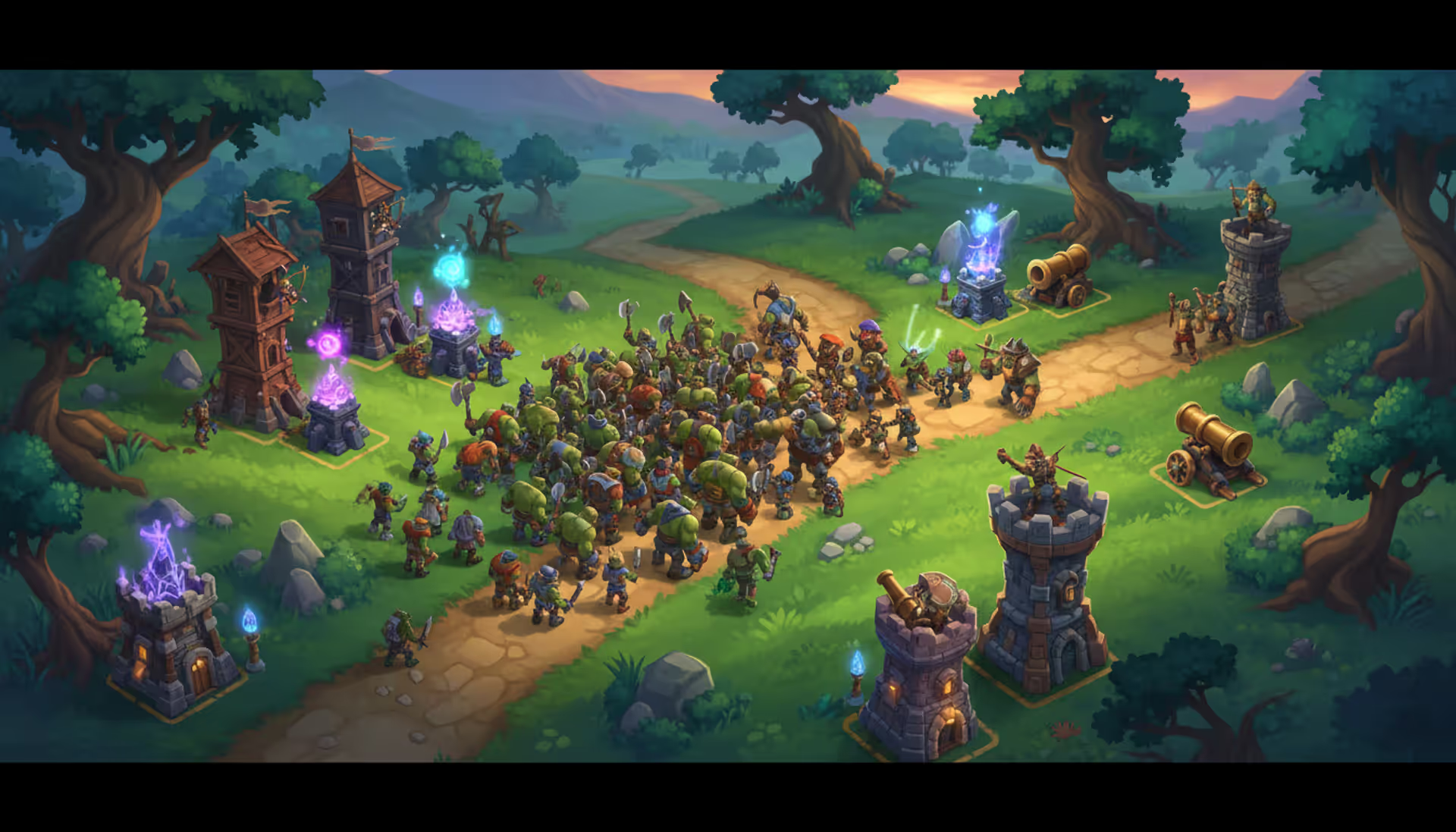
Tower defense games have carved out a permanent place in gaming culture. Whether defending against waves on your phone or settling in for PC marathons, the genre offers uniquely satisfying strategic depth. The best tower defense games balance accessible mechanics with rewarding complexity
Mobile gaming dominates with $120 billion in revenue and millions of daily players. This guide ranks the best mobile games across genres, evaluates monetization fairness, and reveals which titles respect your time and wallet in 2026
The iPhone transformed mobile gaming from simple time-killers into genuinely compelling experiences. This guide cuts through thousands of App Store options to identify games that respect your intelligence, wallet, and schedule—organized by how you actually shop for games
The content on this website is provided for general informational and educational purposes only. It is intended to explain concepts related to video games, gaming guides, builds, mobile gaming, multiplayer strategies, and gaming history.
All information on this website, including articles, guides, and examples, is presented for general educational and entertainment purposes. Gameplay outcomes, strategies, and performance may vary depending on player skill, game updates, and platform.
This website does not provide professional advice or guarantee game outcomes, and the information presented should not be used as a substitute for official game documentation or developer guidance.
The website and its authors are not responsible for any errors or omissions, or for any outcomes resulting from decisions made based on the information provided on this website.