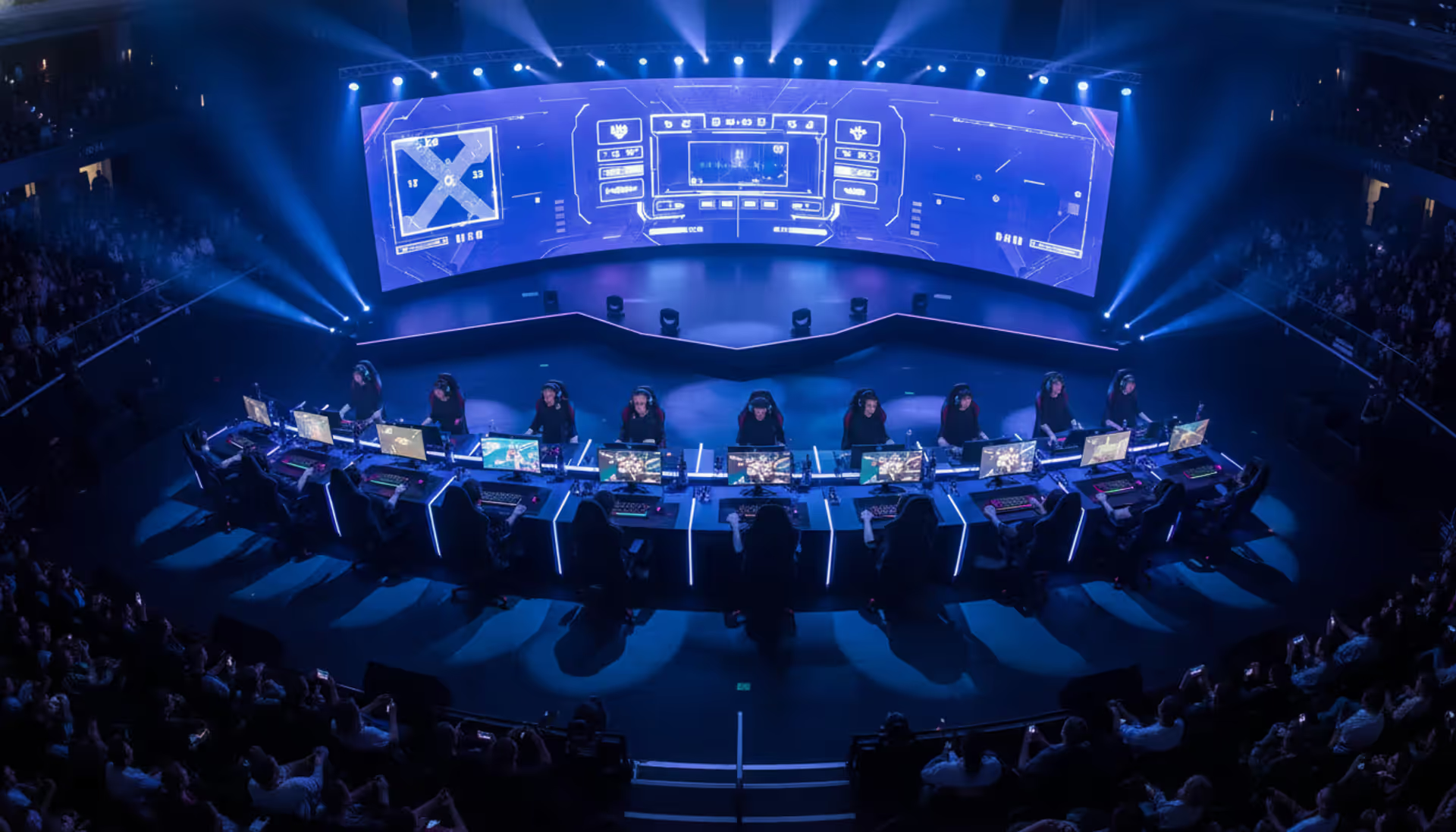
Professional esports tournament stage with players sitting at gaming monitors under blue and purple neon lighting, large screen in the background showing abstract competitive game interface
If you've spent any time in competitive gaming communities, you've heard players argue about what's "meta" and what isn't. Someone picks an unusual character in ranked, and the chat explodes with complaints about throwing the game. A patch drops, and suddenly entire strategies vanish overnight while new ones dominate. Understanding meta isn't just gaming jargon—it's the invisible rulebook that shapes how millions play, compete, and win.
Meta Definition and Origins in Gaming
Meta refers to the most effective strategies, characters, items, or team compositions that dominate competitive play at any given time. The term has two competing origin stories. Many players believe it's an acronym for "Most Effective Tactics Available," though linguists and game historians point to a more likely source: "metagame," derived from the Greek prefix meaning "beyond" or "about." A metagame describes the game outside the game—the strategies players develop about how to play, rather than the mechanics themselves.
In League of Legends, the meta definition gaming explained becomes clear when you look at champion selection. During early 2026, tank supports with high crowd control dominated the bottom lane because they synergized perfectly with the current itemization changes. That's meta. When Riot adjusted healing reduction items in patch 14.3, the entire support meta shifted within weeks, proving how fragile these dominant strategies can be.
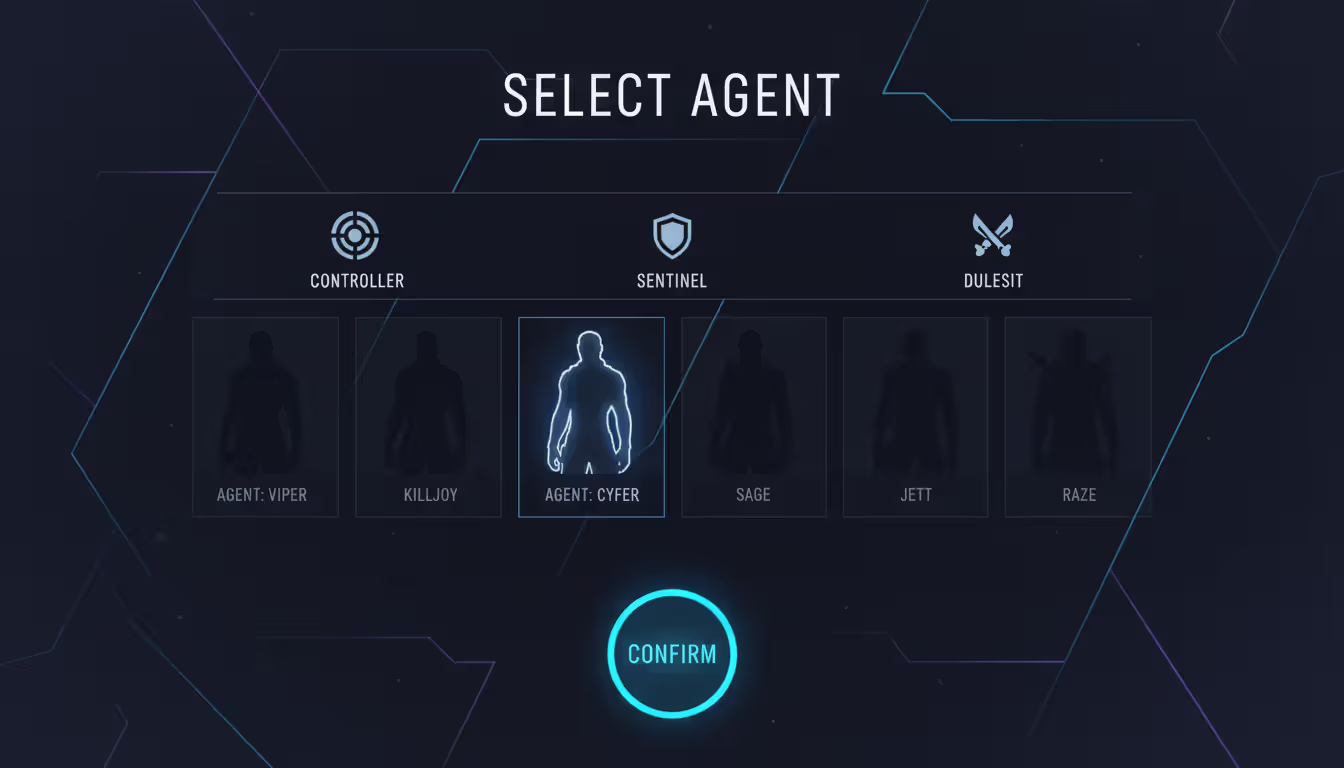
In Valorant, the meta might dictate that every team composition needs at least one controller agent for smoke coverage and one sentinel for site defense. Players who instalock five duelists aren't just making a questionable choice—they're ignoring the established meta that professional teams have refined through thousands of matches.
The concept isn't new. Even in early multiplayer games like StarCraft: Brood War, Korean professional players developed metagames around build orders and timing attacks. The difference today is speed—with millions of players analyzing data and sharing discoveries through streaming platforms, meta shifts happen faster than ever before.
Author: Ethan Rowland;
Source: canelomobile.com
How the Meta Works in Competitive Games
Meta emerges from the collective intelligence of a game's competitive community. When thousands of high-ranked players independently discover that a particular strategy wins more often, that strategy becomes meta through natural selection. Game balance, character kits, map design, and item interactions all create an ecosystem where certain approaches thrive while others struggle.
Take Overwatch 2 in 2026. After developers buffed projectile speed across several damage heroes, hitscan characters like Soldier: 76 saw decreased play rates at the highest ranks. Professional teams adapted by running dive compositions with Winston and D.Va to pressure backlines more aggressively. Within a month, the ladder meta followed suit. Players didn't coordinate this shift through some central authority—they simply copied what worked.
Author: Ethan Rowland;
Source: canelomobile.com
What Makes Something Meta
Several factors determine whether a strategy achieves meta status. Win rate matters, but it's not everything. A character might have a 52% win rate overall but dominate at the highest skill levels where execution matters most. Accessibility plays a role too—strategies that require less coordination naturally spread faster in solo queue environments.
Understanding current meta means recognizing these patterns. In Apex Legends, the Newcastle-Catalyst defensive setup became meta not because it had the highest kill potential, but because it consistently secured top-three finishes in ranked. Teams climbing the ladder prioritized placement points over aggressive plays, and the meta reflected that mathematical reality.
Counter-availability also shapes meta. If the top strategy has clear counters that are easy to execute, it won't maintain dominance. But when a strategy has no reliable counter or requires extreme coordination to beat, it calcifies into must-pick territory. That's when developers typically intervene.
The Difference Between Meta and Off-Meta Picks
Meta picks are characters, weapons, or strategies with proven success rates in the current game version. They're the safe choice, the statistically sound decision that your teammates expect and opponents respect. Off-meta picks are everything else—the forgotten champions, the niche strategies, the experimental builds that most players abandoned weeks ago.
The meta vs off-meta gaming divide creates tension in ranked environments. A player selecting an off-meta jungler in League of Legends might have a 60% win rate over 200 games, but teammates often dodge or flame before the match even starts. The social pressure to conform to meta picks can be intense, especially at ranks where players believe they're one good composition away from promotion.
Off-meta doesn't automatically mean bad. It means unproven at scale, situational, or requiring specific conditions to succeed. Sometimes off-meta picks counter the current meta perfectly but haven't been discovered yet. Other times, they're off-meta because they genuinely underperform, and no amount of skill compensates for the statistical disadvantage.
Why Meta Matters in Esports and Ranked Play
Professional players build careers on meta mastery. When a major tournament approaches, teams spend hundreds of hours practicing meta compositions, studying opponent tendencies within the meta, and developing counter-strategies that still respect meta fundamentals. A player who can't perform on meta champions becomes a liability, regardless of mechanical skill.
Why meta matters in esports becomes obvious during championship matches. At the 2025 League of Legends World Championship, teams that failed to adapt to the accelerated meta—which favored early-game aggression and objective trading—were eliminated in group stages. The gap between understanding the meta and merely knowing it exists can mean millions in prize money and sponsorship deals.
For ranked play, meta knowledge directly impacts climb speed. Two players with identical mechanical skill will have different win rates if one plays meta champions and the other doesn't. The math is brutal: if meta picks win 53% of games and your favorite off-meta pick wins 48%, you need to play significantly more games to reach the same rank.
Team composition requirements compound this effect. In games like Valorant, refusing to play meta agents forces teammates into awkward role coverage. If you instalock a third duelist when the team needs a controller, you've created a compositional disadvantage before the match starts. Your teammates aren't wrong to be frustrated—you've lowered everyone's win probability for personal preference.
Career implications extend beyond prize pools. Content creators and streamers who master meta shifts maintain viewership by staying relevant. A streamer known for a specific champion that falls out of meta must either adapt or watch their audience migrate to creators playing current content.
How Meta Shifts Happen in Online Games
Meta evolution follows predictable patterns, though the triggers vary. Patch updates are the most common catalyst. When developers adjust damage numbers, cooldowns, or resource costs, they ripple through the entire strategic ecosystem. A 5% damage nerf seems minor, but in a game where fights are decided by fractions of a second, it can eliminate a character from competitive viability.
Balance changes in early 2026 demonstrate this perfectly. When Riot reduced healing effectiveness in League of Legends patch 14.4, drain-tank champions like Aatrox and Vladimir dropped in priority. Teams shifted toward burst damage compositions that could eliminate targets before healing mattered. The meta didn't just adjust—it inverted.
Author: Ethan Rowland;
Source: canelomobile.com
New character or item releases force immediate meta shifts. When a new agent launches in Valorant with a unique ability set, professional teams race to discover optimal usage. The first team to master the new character gains a temporary competitive advantage. Within weeks, the entire meta reorganizes around either incorporating or countering the new addition.
Community innovation drives meta shifts even without developer changes. Players discover tech—unintended ability interactions or positioning tricks that change matchup dynamics. When one player demonstrates a new strategy in a high-profile tournament, thousands attempt to replicate it. If the strategy proves reproducible, it becomes meta through viral adoption.
How meta shifts in games also depends on information flow. In 2026, with real-time analytics tools and AI-assisted draft analysis, meta shifts complete their cycle faster than in previous years. A strategy that emerges in Korean professional play reaches North American solo queue within 48 hours. The global competitive community operates as a single, interconnected meta laboratory.
How Game Developers Respond to Meta Trends
Development teams monitor meta trends through multiple data sources: win rates across skill brackets, professional pick/ban rates, player sentiment on forums and social media, and internal playtesting. How developers respond to meta determines whether a game maintains competitive health or stagnates into solved states where the same strategies dominate indefinitely.
Riot Games employs a philosophy of "deliberate meta rotation." Rather than achieving perfect balance where all champions see equal play, they intentionally shift power between classes and archetypes each season. This keeps the game feeling fresh and forces professional players to maintain broad champion pools. Critics argue this creates artificial obsolescence; supporters claim it prevents stale metas.
Hotfixes address emergency situations when a character or strategy becomes so dominant that it warps the entire game. If a newly released character achieves a 60% win rate across all ranks, developers might deploy emergency nerfs within days rather than waiting for the next scheduled patch. These interventions acknowledge that some meta states are unhealthy for player experience.
Seasonal updates provide opportunities for major meta overhauls. Developers might rework entire systems—itemization, map layouts, or core mechanics—knowing it will completely reset the meta. These updates generate excitement and re-engagement from players who had optimized the previous meta to exhaustion.
Some developers take a hands-off approach, believing the community should solve meta problems organically. Fighting game developers typically intervene less frequently than MOBA developers, trusting that player innovation will eventually counter dominant strategies. This philosophy works when the game's mechanical depth supports multiple valid approaches.
The challenge developers face is distinguishing between healthy meta diversity and problematic dominance. A character with a 53% win rate might be perfectly balanced or slightly overtuned depending on context. If that character is also easy to execute and has few counters, the 53% becomes more concerning. Developer response to meta requires both statistical analysis and qualitative judgment about player experience.
Playing Off-Meta: Risks and Rewards
Meta is the conversation the community has with the developers through gameplay. We create systems, players optimize them, and their optimization tells us what to adjust next. It's a dialogue that never ends
— Mark Yetter
Off-meta strategies succeed when they exploit gaps in the current meta. If everyone prepares for the same five team compositions, the sixth composition—even if theoretically weaker—gains value through surprise and unfamiliarity. Professional teams sometimes deploy off-meta pocket picks in elimination matches, betting that opponents haven't practiced the specific counter-play.
One-trick players who master single off-meta characters can climb surprisingly high. Their deep expertise on an unusual champion compensates for the statistical disadvantage. They understand matchups that meta players have never encountered, creating information asymmetry. However, this strategy collapses at the highest levels where opponents can study your entire match history and prepare specific counters.
Innovation requires off-meta experimentation. Every current meta strategy was once an off-meta experiment that someone risked their ranked points to test. The player who discovered that tank Ekko worked in the top lane (briefly, before nerfs) didn't follow a guide—they experimented and shared their findings. Meta evolution depends on players willing to explore beyond established boundaries.
Author: Ethan Rowland;
Source: canelomobile.com
The social cost of off-meta play varies by game and rank. In casual modes, players tolerate experimentation. In ranked environments near promotion thresholds, that tolerance evaporates. You might have a brilliant off-meta strategy, but if your team mental-booms during champion select, the strategy never gets tested fairly.
Situational off-meta picks offer the best risk-reward ratio. If you're last pick and can see the enemy composition has specific weaknesses, an off-meta counter-pick might be optimal. You're not blindly ignoring meta—you're making a contextual decision based on the specific game state. This approach requires deep game knowledge and the confidence to trust your analysis over community consensus.
Meta vs Off-Meta: Quick Comparison
Aspect
Meta Picks
Off-Meta Picks
Win Rate Expectations
51-54% in balanced metas
45-50% typically, higher for specialists
Team Acceptance
High; teammates expect and build around them
Low to medium; often creates pre-game tension
Skill Requirements
Moderate; established guides and practice partners available
High; statistical disadvantage and social friction
Counter-Play
Well-known; opponents practiced against it
Unfamiliar; opponents may misplay from inexperience
Frequently Asked Questions About Gaming Meta
Is meta the same in every game?
No. Each game develops its own meta based on its unique mechanics, balance philosophy, and competitive community. The meta in a fighting game like Street Fighter 6 focuses on character matchups and frame data, while Dota 2's meta revolves around draft strategy and timing windows for different lineup compositions. Even within the same genre, metas differ significantly. What's meta in League of Legends rarely translates directly to Heroes of the Storm, despite both being MOBAs.
How often does the meta change?
Change frequency depends on developer patch cadence and community size. Games like Valorant and League of Legends see meaningful meta shifts every 2-4 weeks with regular patches. Fighting games might maintain stable metas for months between balance updates. Major meta overhauls typically coincide with seasonal updates or large content releases. In 2026, most competitive games aim for quarterly meta refreshes to maintain player engagement without creating constant instability.
Can casual players ignore the meta?
In unranked modes and casual play, absolutely. Meta matters most in competitive environments where win rate optimization is the primary goal. Casual players can enjoy off-meta picks without significant consequences. However, even in casual modes, understanding meta helps you recognize why certain strategies keep appearing and how to counter them. You don't need to follow meta, but knowing it exists improves your game literacy.
What was the first game to have a meta?
Gaming meta history traces back to early competitive games, though the term wasn't widely used. Chess has had metagame theory for centuries—opening theory and positional understanding that evolved beyond the rules themselves. In video games, arcade fighting games like Street Fighter II developed character tier lists and matchup knowledge in the early 1990s. StarCraft: Brood War formalized competitive meta in the late 1990s with build orders and timing attacks. The modern concept of rapidly shifting meta emerged with online games that could be patched and updated continuously.
Do single-player games have a meta?
Yes, though it functions differently. Speedrunning communities develop metas around optimal routes, glitch usage, and category-specific strategies. Roguelike games like Hades or Slay the Spire have metas around which upgrades and synergies offer the highest success rates. The difference is that single-player metas are cooperative—players share discoveries to help everyone improve—rather than competitive advantages. Single-player metas also remain stable longer since they're not disrupted by opponent adaptation.
How do I keep up with meta changes?
Follow patch notes from developers, watch high-level streamers and professional matches, and use community resources like tier list websites and subreddit discussions. Many games have dedicated meta-tracking sites that aggregate win rates and pick rates across different skill levels. Set aside time after major patches to read analysis from content creators who explain not just what changed, but why it matters strategically. Playing ranked regularly also keeps you immersed in meta shifts through direct experience.
Meta shapes competitive gaming at every level, from professional championships to your ranked climb. It's not a static rulebook but an evolving ecosystem that responds to patches, discoveries, and community consensus. Understanding what meta means in gaming gives you the framework to evaluate strategies, predict shifts, and make informed decisions about when to follow the crowd and when to innovate.
The tension between meta and off-meta play will always exist. Meta offers statistical safety and team acceptance; off-meta offers surprise and personal expression. The best players understand both, knowing when to respect established wisdom and when to trust their own analysis. As games continue evolving with faster patch cycles and global information sharing, meta literacy becomes as important as mechanical skill. You don't need to blindly follow every meta shift, but understanding why the meta exists and how it changes gives you a competitive edge that raw mechanics alone can't provide.
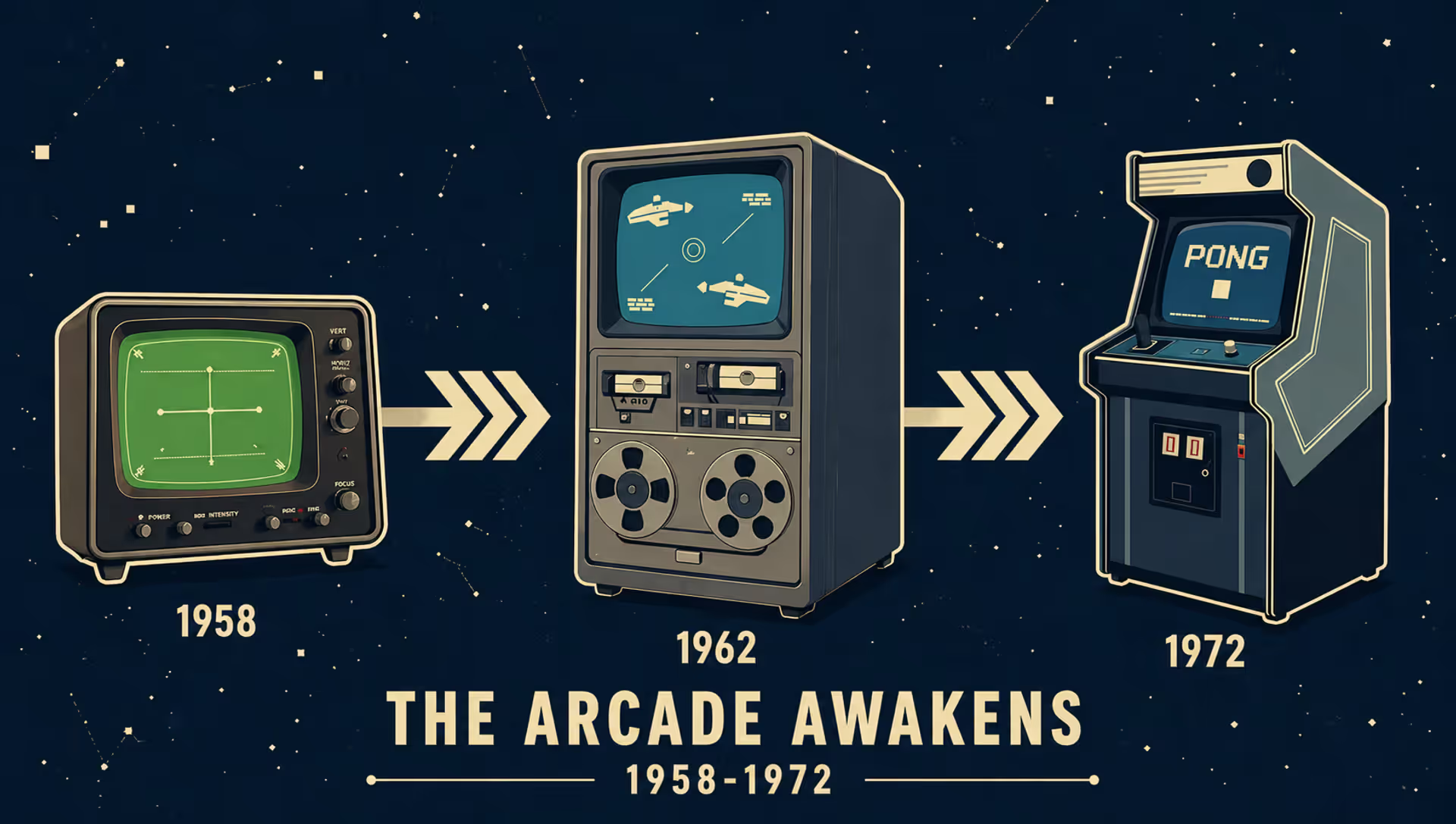
The first video game's creation date depends on your definition. Tennis for Two appeared in 1958, Spacewar! in 1962, and Pong in 1972. Each milestone contributed essential innovations that shaped the gaming industry we know today
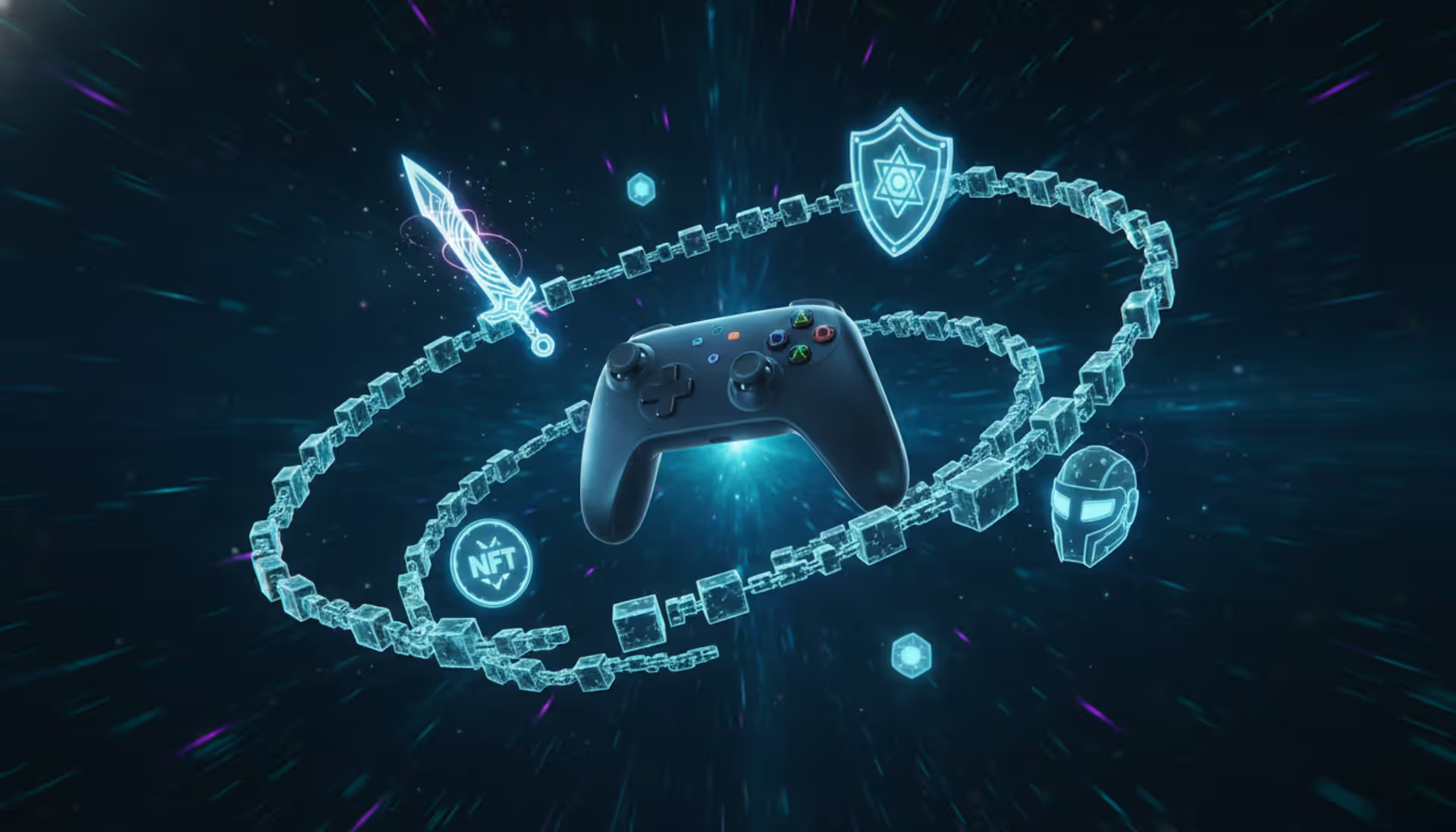
Crypto gaming merges blockchain with video games, letting players own assets as NFTs and earn cryptocurrency. Learn how blockchain technology powers games, the rise and fall of play-to-earn, types of crypto games, pros and cons, and whether they're worth your time in 2026
AFK stands for Away From Keyboard—a gaming term indicating a player has stepped away from their device. Understanding AFK meaning in games helps you avoid penalties, respect teammates, and navigate multiplayer etiquette across MOBAs, FPS games, and MMOs
Understand how video games receive age ratings, what ESRB symbols mean (E, T, M), how games are evaluated, content descriptors, PEGI vs ESRB differences, and why ratings matter for parents and gamers making informed choices
The content on this website is provided for general informational and educational purposes only. It is intended to explain concepts related to video games, gaming guides, builds, mobile gaming, multiplayer strategies, and gaming history.
All information on this website, including articles, guides, and examples, is presented for general educational and entertainment purposes. Gameplay outcomes, strategies, and performance may vary depending on player skill, game updates, and platform.
This website does not provide professional advice or guarantee game outcomes, and the information presented should not be used as a substitute for official game documentation or developer guidance.
The website and its authors are not responsible for any errors or omissions, or for any outcomes resulting from decisions made based on the information provided on this website.