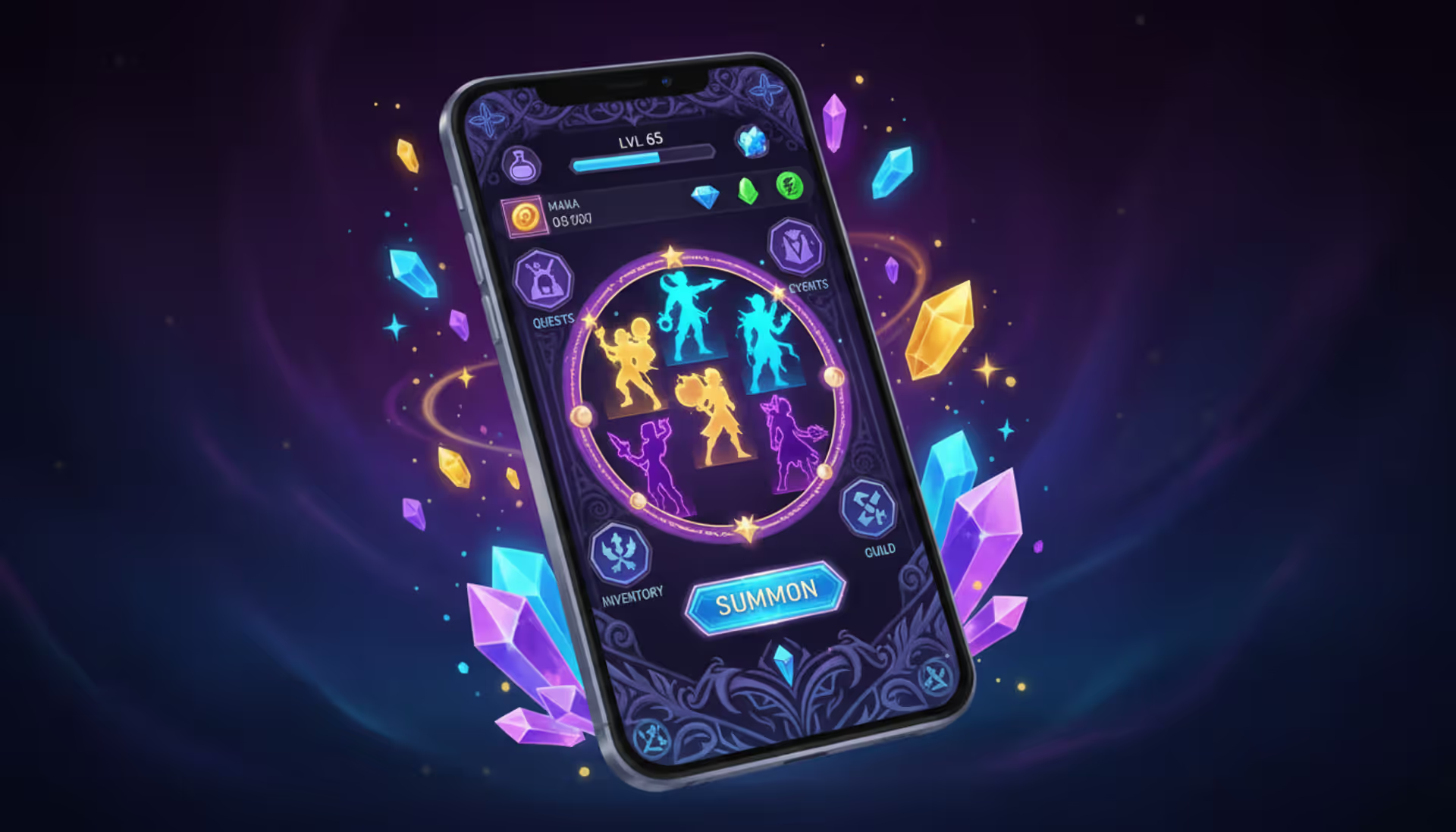
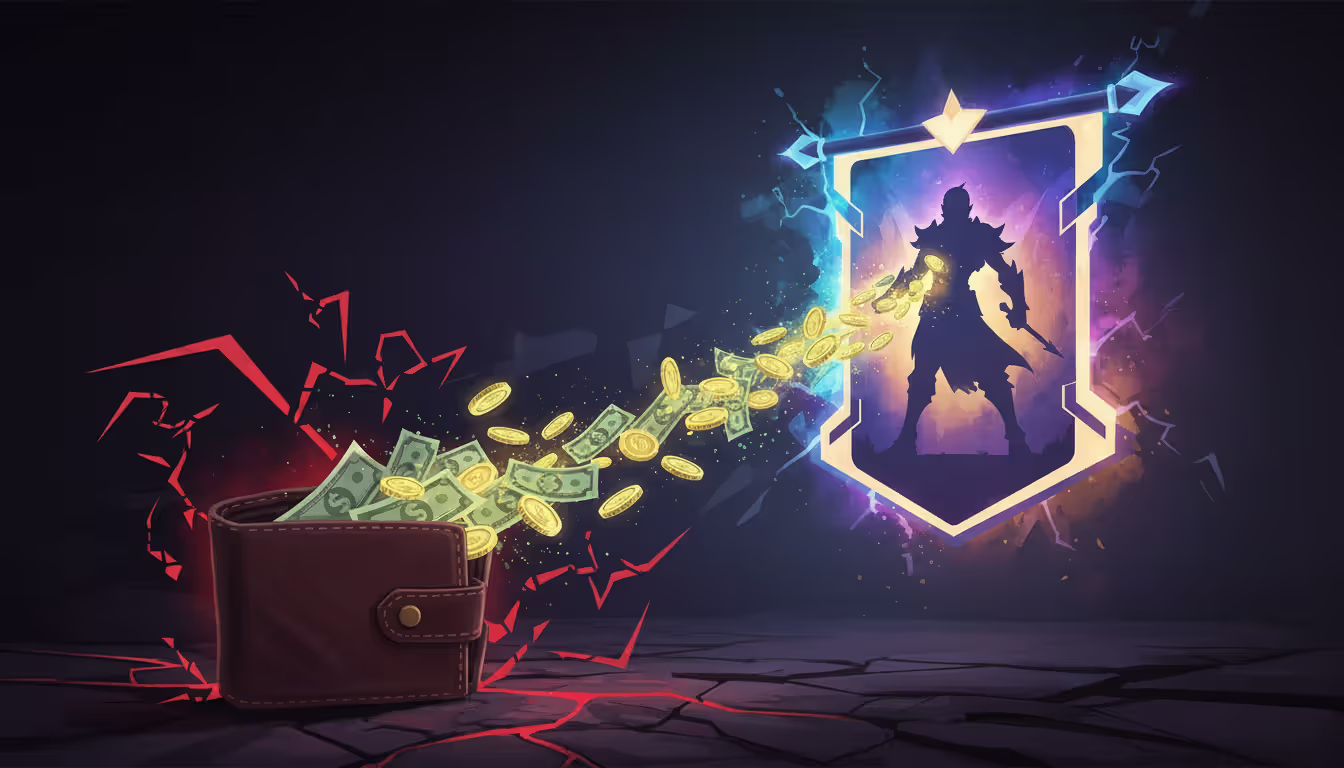
Smartphone displaying a fantasy mobile gacha game interface with glowing character silhouettes of different rarities surrounded by floating crystals and stars on a dark purple-blue gradient background
Gacha games have evolved from simple mobile diversions into complex RPGs with production values rivaling console titles. The challenge isn't finding a gacha game—it's finding one that respects your time and wallet while delivering compelling content. This guide identifies games that balance engaging mechanics with player-friendly monetization, helping you avoid predatory traps while experiencing the best the genre offers.
What Makes a Gacha Game Worth Playing
Gacha mechanics center on randomized character or item acquisition, borrowing their name from Japanese capsule-toy vending machines. Players spend in-game currency—earned through gameplay or purchased with real money—to "pull" from a pool of possible rewards. Each pull has assigned probabilities, typically with the most desirable characters or items appearing at rates between 0.5% and 3%.
The core gameplay loop involves collecting characters, upgrading them through materials and duplicates, then deploying them in battles or story content. Premium currency lets you pull more frequently, while stamina systems limit how much you can play in a single session. This creates a rhythm of logging in daily, completing tasks, accumulating resources, and periodically attempting to acquire new characters.
Quality gacha games distinguish themselves through several factors: transparent probability disclosure, meaningful free-to-play progression paths, engaging content beyond the summoning system, and monetization that enhances rather than gates core experiences. Predatory games hide rates, create artificial scarcity, and design content exclusively around the newest premium characters.
How Gacha Mechanics Work in Modern Mobile Games
Summon systems typically feature multiple currency types. Premium currency (often called gems, crystals, or similar) can be purchased or earned slowly through gameplay. Standard currency comes from daily missions and events. Most games price single pulls at 150-300 premium currency, with ten-pull bundles offering slight discounts.
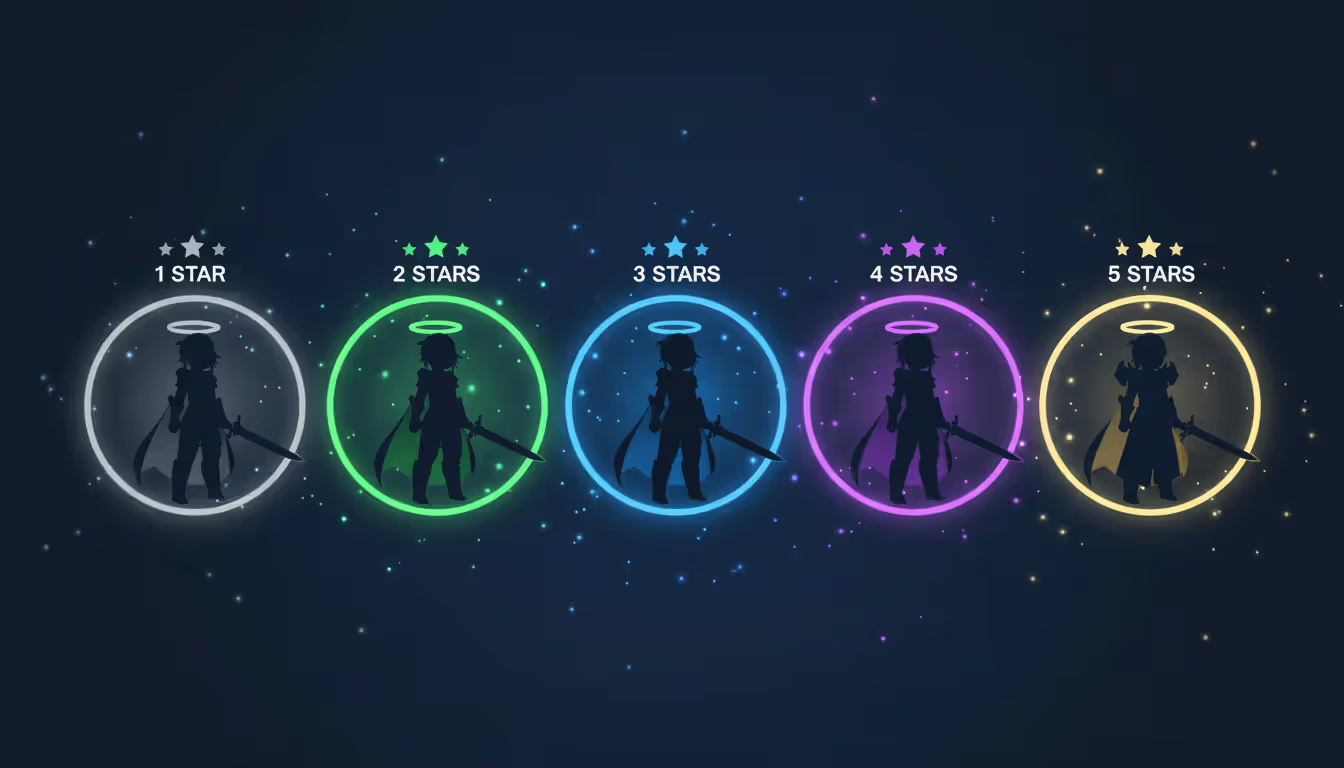
Rarity tiers usually range from one to five or six stars, with the highest rarities appearing at dramatically lower rates. A common distribution might show 3-star characters at 94% probability, 4-star at 5.5%, and 5-star at 0.5%. These rates must be disclosed in most regions due to consumer protection laws implemented between 2019 and 2024.
Author: Ethan Rowland;
Source: canelomobile.com
Pity systems guarantee a high-rarity pull after a specific number of attempts without one. Hard pity ensures you receive a top-tier character after perhaps 90 pulls, while soft pity gradually increases odds starting around pull 75. Some games feature separate pity counters for featured characters versus the general pool, requiring 180 pulls to guarantee a specific promoted unit.
Energy systems limit gameplay sessions by requiring stamina points for story missions, farming stages, and events. Energy regenerates over time—typically one point every five to ten minutes—with maximum caps ranging from 100 to 200. This creates natural stopping points and encourages spreading play across the day rather than marathon sessions.
Daily login rewards provide incremental currency, materials, and occasional free pulls. Streak bonuses incentivize consistent engagement, with monthly calendars offering premium currency totals equivalent to 5-20 pulls for players who log in every day.
Top Gacha Games with Strong Storylines
Honkai: Star Rail delivers a space-fantasy narrative with fully voiced dialogue and cinematic presentation. The turn-based combat system provides strategic depth without requiring constant attention, making it accessible for players who prioritize story. New players can experience the entire main narrative with starter characters, though limited-time events may reference characters from promotional banners.
Arknights combines tower defense gameplay with a dystopian science-fiction setting exploring themes of discrimination, pandemic response, and political intrigue. The writing assumes player intelligence, avoiding excessive exposition while building a complex world through operator profiles and event storylines. Lower-rarity operators remain viable in endgame content, reducing pressure to pull constantly.
Author: Ethan Rowland;
Source: canelomobile.com
Limbus Company offers a darker narrative inspired by literature and psychology, featuring a fixed roster of twelve characters with multiple identities unlocked through gameplay and pulls. The story-focused design means new content arrives as substantial chapters rather than fragmented events, though the challenging difficulty curve may frustrate casual players.
Reverse: 1999 presents a time-travel mystery with period aesthetics spanning multiple eras. The game emphasizes puzzle-solving and investigation alongside combat, with voice acting in multiple languages and references to historical events and cultural movements. Its relatively recent 2024 launch means a smaller content library but also less intimidation for newcomers.
Granblue Fantasy remains popular despite its 2014 launch, offering an expansive high-fantasy world with hundreds of story chapters. The browser-based format allows play across devices without downloads, though the interface shows its age. Free daily pulls during promotional periods can grant dozens of attempts monthly, offsetting the slower base currency accumulation.
Fate/Grand Order adapts the extensive Type-Moon universe into a time-traveling narrative visiting different historical periods and mythologies. Combat simplicity belies strategic depth in team composition and card selection. The game's generosity varies wildly—stingy premium currency distribution contrasts with frequent welfare servants (free event characters) who often outperform gacha equivalents.
Most Generous Gacha Games That Respect Your Time
Generosity in gacha games manifests through multiple factors: premium currency income, free pull frequency, pity system accessibility, and the viability of lower-rarity characters. A game offering abundant pulls means little if useful characters appear at 0.3% rates without pity protection.
Limbus Company provides all twelve base characters through story progression, with gacha focused on alternate identities and equipment. The season pass costs $10 and guarantees specific identities, while free players can spark (select) desired identities after accumulating enough pulls. Monthly currency income supports roughly 15-20 pulls without spending.
Arknights grants approximately 25-35 pulls monthly through missions, events, and login rewards, with pity carrying between banners. The 2% rate for 6-star operators doubles that of many competitors, and recruitment permits allow targeted acquisition of specific rarities through tag combinations. Many 4-star and 5-star operators remain meta-relevant years after release.
Author: Ethan Rowland;
Source: canelomobile.com
Honkai: Star Rail offers frequent events with premium currency rewards and a relatively accessible 90-pull hard pity. The game provides roughly 60-80 pulls monthly for active free players, though this requires completing all available content. Character trials let you test units before pulling, reducing buyer's remorse.
Azur Lane emphasizes collection over restriction, with build times and resource costs as primary limiters rather than premium currency scarcity. The 7% rate for highest-rarity ships means players regularly acquire powerful units, while retrofit systems upgrade older characters to modern power levels. Monetization focuses on cosmetic skins rather than character access.
Girls' Frontline similarly offers high acquisition rates for characters, with resources rather than premium currency as the bottleneck. The game respects player time by allowing resource accumulation during downtime and providing auto-battle for farming stages once manually cleared.
Understanding Gacha Game Tier Lists and Reroll Strategies
Tier lists rank characters by perceived power level, typically using S/A/B/C/D grades or numbered tiers. Creators evaluate characters based on multiple factors: base statistics, skill multipliers, team synergies, role availability, and content requirements. However, tier lists reflect specific contexts—a character dominating single-target boss fights might rank poorly for area-effect farming stages.
Limitations include creator bias, evolving metagames as new characters release, and varying resource availability. A character requiring five duplicate copies to reach full potential deserves different evaluation for free players versus spenders. Server differences also matter, as some games release content in different orders across regions, changing relative character value.
Rerolling involves repeatedly creating new accounts until the initial free pulls grant desired characters. The process varies by game but generally follows these steps:
Complete the tutorial and any mandatory story sections until you receive premium currency or free pulls
Use all available pulls on the current banner featuring your target character
If unsuccessful, delete the account or game data and restart
Repeat until you acquire your target, then link the account to prevent loss
Rerolling makes sense when starter pulls significantly impact long-term progression, the target character remains meta-relevant for months, and the process takes under 20 minutes per attempt. It's less worthwhile when games offer guaranteed strong characters through beginner banners, when reroll time exceeds an hour per attempt, or when power creep quickly obsoletes launch characters.
Some games actively discourage rerolling through device-linked accounts, limited initial currency, or extended tutorials. Others tacitly accept it by providing substantial early pulls and simple account creation. Check community resources for game-specific reroll guides, as optimal targets and methods vary significantly.
The gacha model works because it taps into the same reward pathways as slot machines, but wraps them in progression systems that feel skill-based.The best developers balance that dopamine loop with actual gameplay depth—the worst ones make the slot machine the entire experience
— Mark Chen
How to Avoid Pay-to-Win Traps in Gacha Games
Red flags indicating predatory monetization include PvP content with substantial rewards requiring the newest characters, limited-time characters never returning to availability, equipment gacha separate from character gacha, and VIP systems providing permanent gameplay advantages. Games hiding probability rates or using confusing currency conversions similarly warrant caution.
Enjoying gacha games without spending requires setting clear boundaries. Decide in advance whether you'll remain completely free-to-play or allow occasional spending on high-value packs. Many players adopt a "welcoming banner only" rule, spending $5-30 on discounted beginner packs but nothing afterward.
Treat premium currency as a limited resource requiring strategic deployment. Pulling on every banner guarantees you'll miss characters you actually want when they appear. Identify your priorities—meta strength, favorite character designs, specific gameplay roles—and save for banners matching those criteria.
Author: Ethan Rowland;
Source: canelomobile.com
Avoid the sunk cost fallacy. Spending $50 chasing a character doesn't justify spending another $50 when you still don't have them. Set per-banner limits and walk away when reached, regardless of how close you feel to pity. The character will likely return in six to twelve months on a rerun banner.
Recognize that gacha games employ professional psychologists and behavioral economists to maximize spending. Limited-time offers create artificial urgency. Discounted "first purchase" bonuses exploit anchoring bias. Showcasing other players' pulls triggers social proof and FOMO. Understanding these tactics reduces their effectiveness.
Free-to-play viability depends heavily on your content goals. Clearing story content and casual modes rarely requires premium characters. Competitive PvP rankings and the highest difficulty challenges often do. Adjust your expectations to match your spending level rather than forcing yourself to compete in all content tiers.
Frequently Asked Questions About Gacha Games
Are gacha games gambling?
Legally, most jurisdictions don't classify gacha games as gambling because you always receive something of nominal value, even if it's not what you wanted. Psychologically, the mechanics mirror gambling through variable reward schedules and randomized outcomes. The distinction matters less than recognizing the addictive potential and setting personal limits accordingly.
What does pity system mean?
Pity systems guarantee a high-rarity pull after a specific number of attempts without one. Hard pity provides absolute certainty—your 90th pull will definitely be a 5-star character. Soft pity gradually increases odds starting before the hard pity threshold, making late pulls more likely to succeed. Pity typically carries between banners of the same type but resets when you pull the featured character.
How much do people spend on gacha games?
Spending varies enormously. Surveys suggest 60-70% of gacha players never spend money, while the top 1% of spenders ("whales") account for 50-60% of total revenue. Moderate spenders might invest $5-30 monthly on value packs. Serious enthusiasts could spend $100-500 monthly. Extreme cases exceed $1,000 monthly, with documented instances of individuals spending six figures on single games.
Can you enjoy gacha games for free?
Absolutely, though your experience depends on the specific game and your content goals. Story-focused games like Arknights and Honkai: Star Rail provide full narrative access without spending. Competitive PvP modes often favor spenders, but many games offer enjoyable PvE content where strategy and investment time matter more than roster depth. Set realistic expectations about competitive rankings and focus on personal progression rather than leaderboard positions.
What is rerolling?
Rerolling means creating new accounts repeatedly until initial free pulls grant desired characters. Players complete the tutorial, use all available starting currency, then delete the account and restart if unsuccessful. This trades time for a stronger starting position but only makes sense when the target character significantly impacts long-term progression and the process takes under 30 minutes per attempt.
Which gacha game is best for beginners?
Arknights offers excellent beginner experience through generous currency, strong lower-rarity characters, and forgiving difficulty curves in early content. Honkai: Star Rail provides polished presentation and accessible turn-based combat with substantial story content playable using starter characters. Limbus Company grants all base characters through progression, eliminating early gacha pressure. Avoid games with complex equipment systems, multiple gacha pools, or PvP focus until you understand core mechanics.
The best gacha games balance compelling content with respect for player investment—both financial and temporal. Prioritize games with transparent rates, accessible pity systems, and meaningful progression paths for free players. Strong narratives and engaging gameplay loops ensure you're enjoying an actual game rather than a glorified slot machine.
Success in gacha games comes from setting clear boundaries and understanding psychological manipulation tactics. Decide your spending limits before emotional investment makes rational decisions harder. Focus on games aligning with your priorities, whether that's story depth, strategic gameplay, or collection completion.
The gacha model isn't inherently exploitative, but it requires more self-awareness than traditional gaming. Approach these games with clear goals, realistic expectations about free-to-play limitations, and willingness to walk away when monetization crosses your personal lines. The right gacha game can provide months or years of entertainment—just ensure you're playing the game rather than letting it play you.
Mobile gaming has evolved into a multi-billion dollar industry reaching billions of players globally. Understanding which titles dominate requires examining download counts, engagement patterns, revenue streams, and viral momentum across platforms and regions
Most mobile games feel like shallow time-wasters, but quality titles exist across every genre. Learn what makes mobile games genuinely fun, how to avoid pay-to-win traps, and find games matching your style—whether you want quick casual sessions, addictive progression, or group play with friends
Tower defense games have carved out a permanent place in gaming culture. Whether defending against waves on your phone or settling in for PC marathons, the genre offers uniquely satisfying strategic depth. The best tower defense games balance accessible mechanics with rewarding complexity
Mobile gaming dominates with $120 billion in revenue and millions of daily players. This guide ranks the best mobile games across genres, evaluates monetization fairness, and reveals which titles respect your time and wallet in 2026
The content on this website is provided for general informational and educational purposes only. It is intended to explain concepts related to video games, gaming guides, builds, mobile gaming, multiplayer strategies, and gaming history.
All information on this website, including articles, guides, and examples, is presented for general educational and entertainment purposes. Gameplay outcomes, strategies, and performance may vary depending on player skill, game updates, and platform.
This website does not provide professional advice or guarantee game outcomes, and the information presented should not be used as a substitute for official game documentation or developer guidance.
The website and its authors are not responsible for any errors or omissions, or for any outcomes resulting from decisions made based on the information provided on this website.