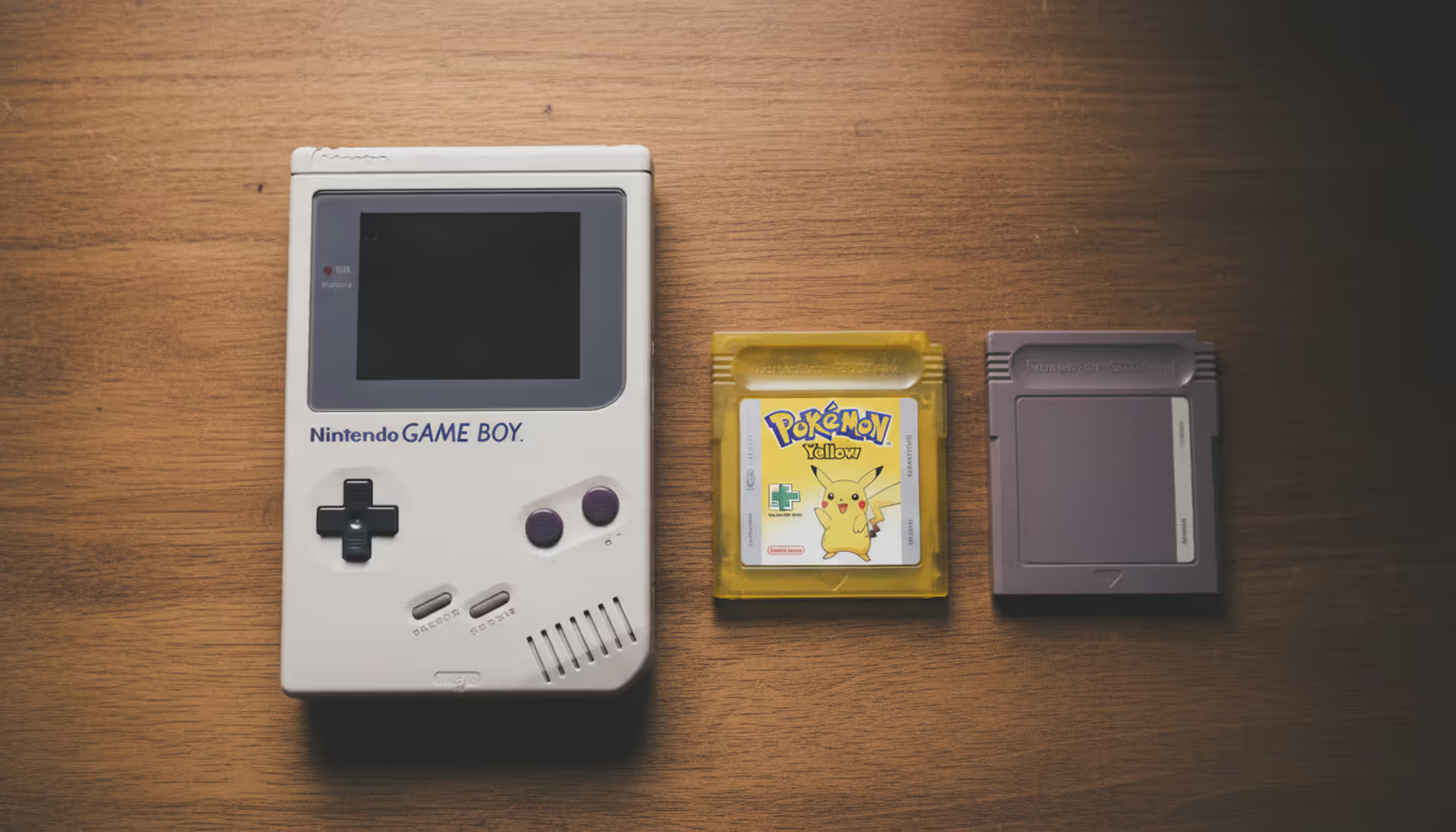
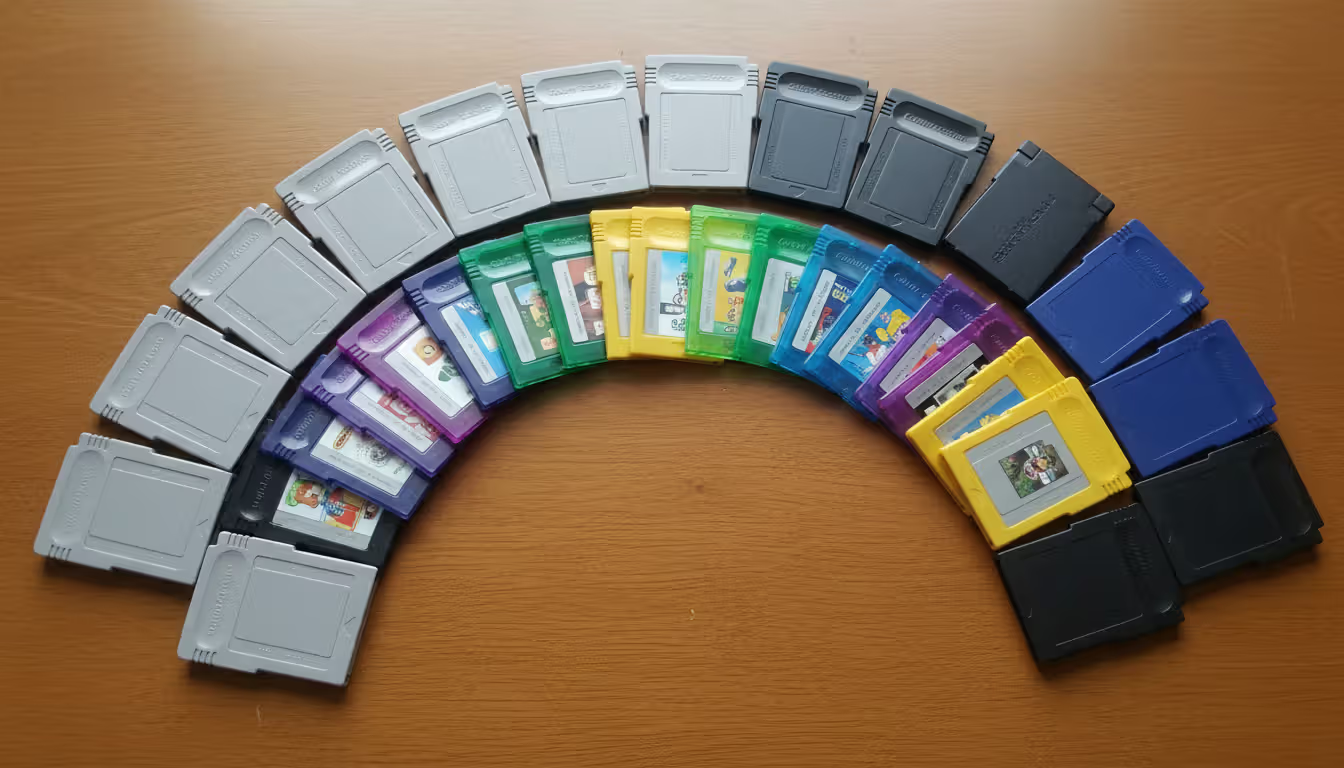
Original Nintendo Game Boy console in classic gray color lying on a table next to Tetris and Pokemon game cartridges, top-down view with soft natural lighting
When Nintendo released the Game Boy in 1989, the company bet on gameplay over graphical power—a strategy that paid off spectacularly. While competitors like the Sega Game Gear and Atari Lynx boasted color screens and superior specs, the Game Boy's monochrome display, legendary battery life, and rock-solid game library made it the undisputed champion of portable gaming.
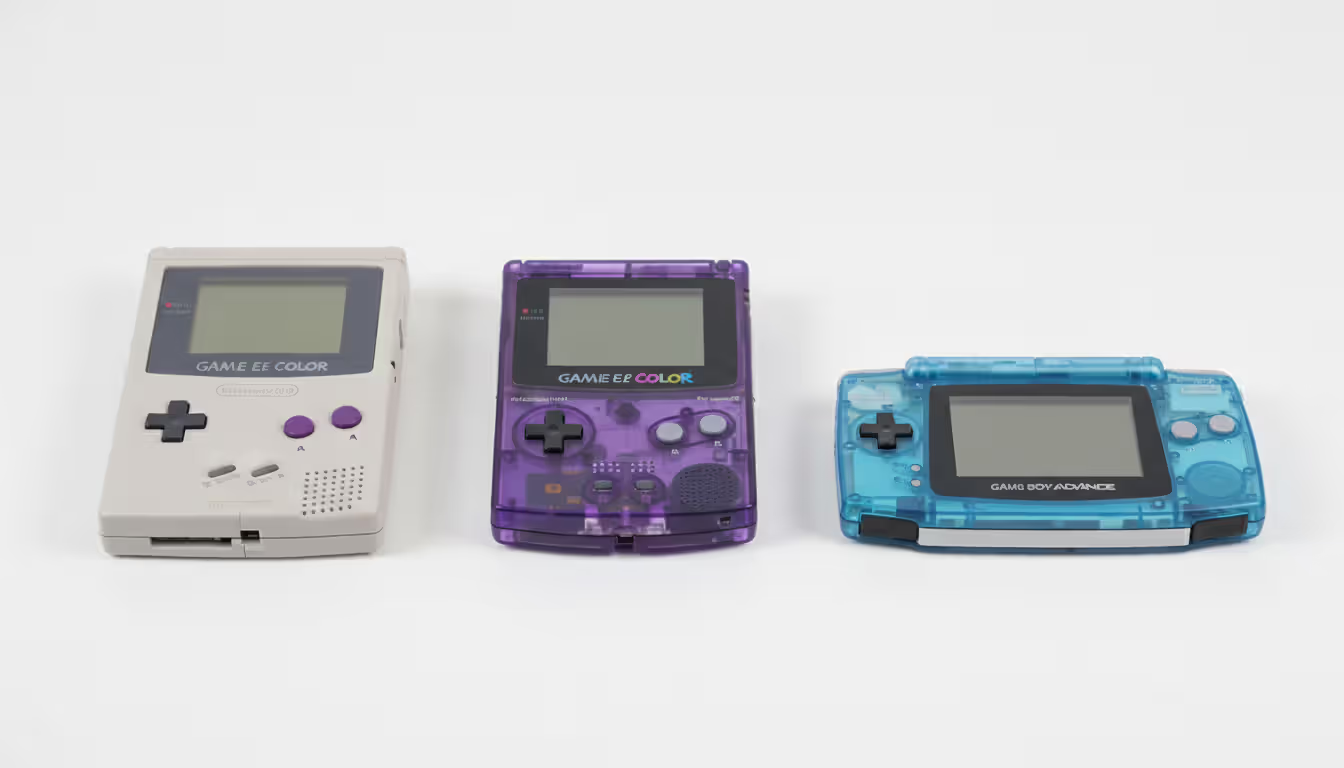
The original Game Boy sold over 118 million units across its various iterations (Game Boy, Game Boy Pocket, Game Boy Color) before the Game Boy Advance added another 81 million to that total. This wasn't just commercial success—it was cultural dominance. The device appeared in backpacks, living rooms, and even medical waiting rooms throughout the 1990s and early 2000s.
Understanding which games sold the most copies reveals more than just numbers. These titles shaped how developers approached handheld gaming, influenced franchise directions that continue in 2026, and created memories for millions of players who grew up with Nintendo's gray brick in their hands. The bestsellers weren't always the most technically impressive—they were the most accessible, addictive, and perfectly suited to gaming on the go.
Top 10 Bestselling Game Boy Games by Sales Numbers
The commercial titans of the Game Boy family represent a fascinating mix of puzzle games, platformers, and one franchise that absolutely dominated the charts. Here are the ten games that moved the most units worldwide:
Game Title
Platform
Release Year
Units Sold (Millions)
Genre
Pokémon Red/Blue/Green
Game Boy
1996 (JP), 1998 (US)
47.52
RPG
Tetris
Game Boy
1989
35.00
Puzzle
Pokémon Gold/Silver
Game Boy Color
1999 (JP), 2000 (US)
23.10
RPG
Super Mario Land
Game Boy
1989
18.14
Platformer
Pokémon Crystal
Game Boy Color
2000 (JP), 2001 (US)
6.39
RPG
Pokémon Yellow
Game Boy
1998 (JP), 1999 (US)
14.64
RPG
Super Mario Land 2: 6 Golden Coins
Game Boy
1992
11.18
Platformer
Pokémon Ruby/Sapphire
Game Boy Advance
2002 (JP), 2003 (US)
16.22
RPG
Pokémon FireRed/LeafGreen
Game Boy Advance
2004
12.00
RPG
The Legend of Zelda: Link's Awakening
Game Boy
1993
6.00
Action-Adventure
The Pokémon franchise claims seven of the ten spots, demonstrating its stranglehold on the platform. Red, Blue, and Green versions combined sold nearly 48 million copies—a figure that seems almost impossible for a handheld RPG released when most Americans had never heard of the franchise.
Tetris holds the runner-up position largely due to its bundling strategy. Nintendo included the puzzle game with most original Game Boy units in North America and Europe, introducing millions to Alexey Pajitnov's falling blocks. Many buyers got their first taste of the addictive gameplay before they even purchased a second cartridge.
The Mario platformers performed exactly as expected from Nintendo's flagship character. Super Mario Land launched alongside the Game Boy itself, giving early adopters a showcase for what the system could do. Its sequel improved on nearly every aspect and introduced Wario, who would become a franchise unto himself.
What Made These Gameboy Titles So Popular
Commercial success on this scale doesn't happen by accident. Several factors converged to turn these games into record-breakers.
Pick-up-and-play accessibility defined the best performers. Tetris requires no tutorial—you see falling blocks, you rotate them, you understand the goal within seconds. Super Mario Land follows the same "run right and jump" formula that made the NES games household names. Even Pokémon, with its deeper systems, starts players with simple choices and gradually introduces complexity.
Author: Tyler Vance;
Source: canelomobile.com
Perfect fit for portable play sessions mattered enormously. Game Boy owners played in cars, on lunch breaks, and during commercial breaks. Games that could be enjoyed in five-minute bursts or hour-long sessions thrived. Pokémon battles took just long enough to feel satisfying but rarely dragged. Tetris rounds ended quickly, encouraging "just one more game" syndrome.
Franchise power and brand recognition gave certain titles massive advantages. Mario was already a superstar when the Game Boy launched. Nintendo leveraged that recognition brilliantly, making Super Mario Land a system-seller. Pokémon worked differently—it built its empire on Game Boy, then expanded to anime, cards, and merchandise. By the time Gold and Silver arrived, kids were already obsessed with catching them all.
Bundling strategies artificially inflated some numbers but also created genuine fans. Yes, Tetris benefited from pack-in status, but many of those forced owners became devoted players. The game's quality justified its ubiquity. Nintendo repeated this strategy selectively, understanding that bundling a mediocre game would hurt the system's reputation.
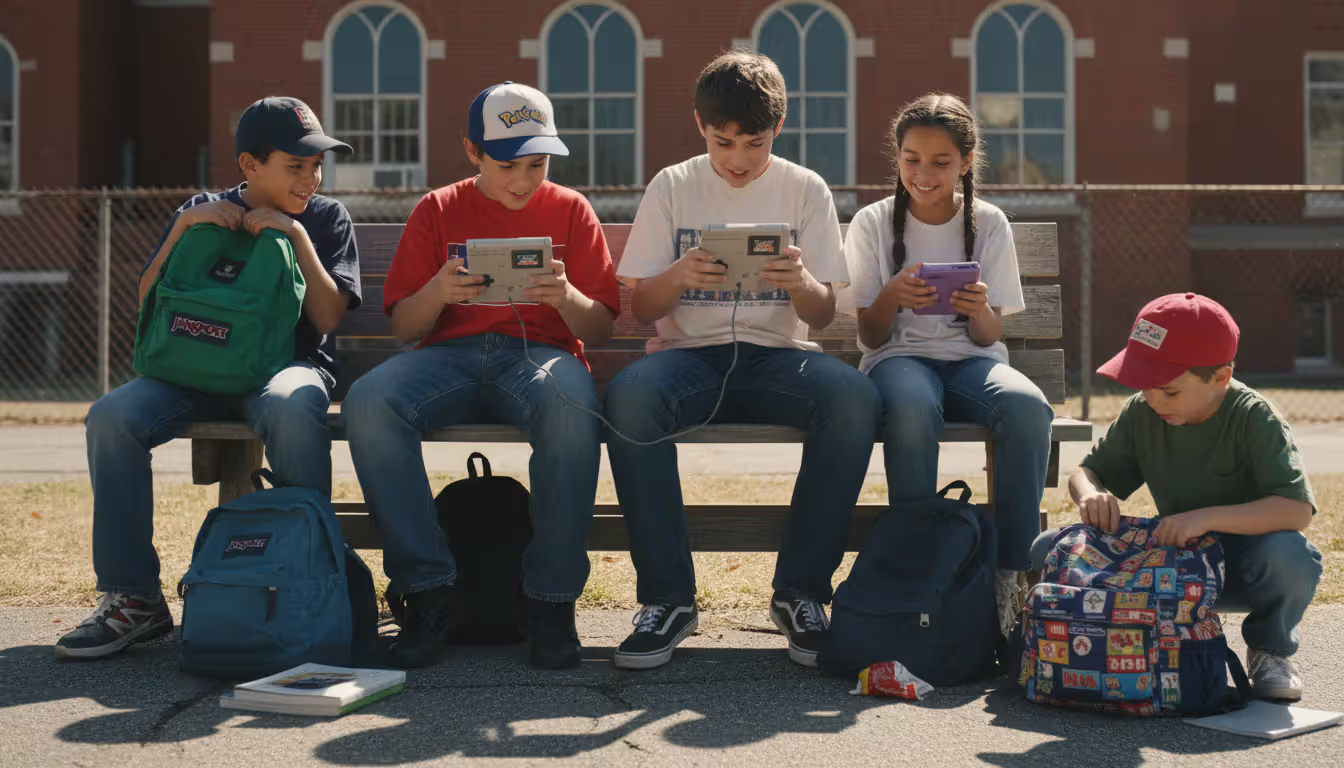
Cultural timing played an underestimated role. Pokémon arrived in the US market during 1998, right as the internet was becoming mainstream but before smartphones existed. Schoolyard trading and battling created organic viral marketing. Kids couldn't just download a guide—they shared tips, rumors, and strategies face-to-face. This social element turned a good game into a phenomenon.
Regional variations added replay value. Pokémon's version differences (exclusive creatures in Red versus Blue) forced players to trade with friends or buy multiple copies. Some households purchased two Game Boys and both versions just so siblings could complete their Pokédexes. This seemingly small design choice probably added millions to the sales figures.
Best Selling Games by Gameboy Platform
Original Game Boy Top Sellers (1989–1998)
The original gray brick established the template for portable gaming success. Its top performers shared certain traits: simple controls, clear objectives, and gameplay that survived the monochrome screen's limitations.
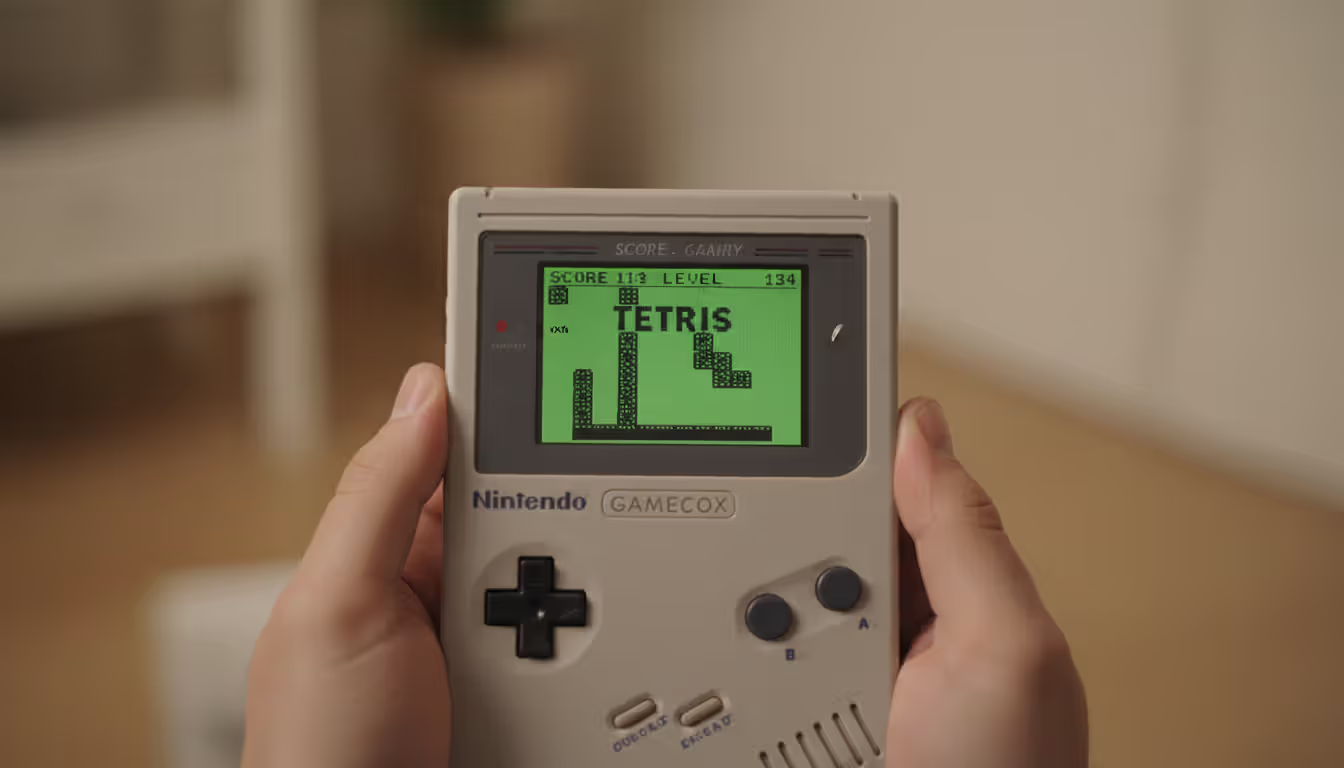
Tetris (35 million) dominated through bundling but earned its place through addictive design. The game's Soviet origins and Nintendo's aggressive licensing fight with Atari created publicity that money couldn't buy. Players who initially dismissed it as "just blocks" found themselves playing for hours, chasing high scores that always seemed within reach.
Pokémon Red/Blue (47.52 million combined) transformed the platform's final years into its most profitable period. By 1996, the Game Boy was considered dated technology. Then Pokémon arrived in Japan, and suddenly the seven-year-old hardware became essential again. The US release two years later triggered similar mania, extending the original Game Boy's commercial viability well into 1999.
Author: Tyler Vance;
Source: canelomobile.com
Super Mario Land (18.14 million) succeeded by delivering familiar gameplay in a new package. Gunpei Yokoi's team created Egypt-themed and Easter Island-themed worlds that felt fresh while maintaining the series' core mechanics. The game's brevity—experienced players can finish it in under an hour—actually worked in its favor, encouraging replays and speedruns.
Game Boy Color Bestsellers (1998–2003)
The Game Boy Color's backward compatibility with original Game Boy games complicated its identity, but exclusive Color titles found massive audiences.
Pokémon Gold/Silver (23.10 million) leveraged the Color's capabilities while remaining playable on original hardware. The games added 100 new creatures, a day/night cycle, and a return trip to the Kanto region from Red/Blue. This last feature essentially gave players two games in one—a value proposition that justified the purchase even for those who'd spent hundreds of hours on the first generation.
Pokémon Crystal (6.39 million) sold significantly fewer copies despite being objectively better than Gold/Silver. The enhanced version arrived after many fans had already invested in one of the earlier pair. Its animated sprites and battle frontier additions appealed to completionists but couldn't match the sales of the mainline releases.
The Legend of Zelda: Link's Awakening DX (color-enhanced version) found new audiences among players who'd skipped the original Game Boy release. The addition of a color-coded dungeon and photo shop quests gave returning players reasons to revisit Koholint Island.
Game Boy Advance Chart-Toppers (2001–2008)
Author: Tyler Vance;
Source: canelomobile.com
The Game Boy Advance's 32-bit processor enabled near-Super Nintendo quality graphics in a portable form. Its bestsellers reflected both new ambitions and comfortable nostalgia.
Pokémon Ruby/Sapphire (16.22 million) launched the third generation with 135 new creatures and a tropical Hoenn region. The games' inability to trade with previous generations frustrated some players, but the fresh start attracted newcomers intimidated by the 251 creatures already in existence.
Pokémon FireRed/LeafGreen (12.00 million) brought the original games to the Advance with updated graphics and quality-of-life improvements. Players who'd worn out their Red and Blue cartridges jumped at the chance to revisit Kanto with running shoes and a wireless adapter for trading.
Pokémon Emerald (7.06 million) followed the Crystal template, enhancing Ruby/Sapphire with additional content and both legendary mascots available in one game. The Battle Frontier provided endgame content that kept competitive players engaged for years.
Platform
Top Game
Units Sold (Millions)
Second Place
Units Sold (Millions)
Third Place
Units Sold (Millions)
Game Boy
Pokémon Red/Blue/Green
47.52
Tetris
35.00
Super Mario Land
18.14
Game Boy Color
Pokémon Gold/Silver
23.10
Pokémon Crystal
6.39
Link's Awakening DX
5.00*
Game Boy Advance
Pokémon Ruby/Sapphire
16.22
Pokémon FireRed/LeafGreen
12.00
Pokémon Emerald
7.06
*Estimate includes original Game Boy version sales
How Gameboy Sales Shaped Gaming History
The commercial performance of Game Boy titles fundamentally altered Nintendo's business strategy and the broader gaming industry. When Pokémon Red and Blue rescued the aging Game Boy from obsolescence, Nintendo learned that software could extend hardware lifecycles far beyond normal expectations. This lesson influenced the company's approach to the Nintendo DS and 3DS, where key releases arrived years into each system's life to maintain momentum.
The franchise model that Pokémon perfected—annual or biannual releases with incremental improvements and version differences—became a template for other publishers. The sports game industry had used similar strategies, but Pokémon proved the model worked for RPGs and single-player experiences. By 2026, nearly every major publisher releases games in series with predictable schedules, knowing that established fanbases will return for familiar experiences with new content.
The Game Boy's commercial success wasn't about technical superiority—it was about understanding what portable gaming actually meant to players. Nintendo created a library where the best games respected your time, fit your lifestyle, and didn't require a wall outlet every two hours. That philosophy still guides handheld and mobile game design decades later
— Steven L. Kent
The sales figures also validated Nintendo's "gameplay over graphics" philosophy during an era when competitors obsessed over processor speeds and screen technology. The Game Gear's backlit color screen looked impressive in stores, but the Game Boy's 30-hour battery life won in real-world use. This reinforced Nintendo's tendency to use older, cheaper, proven technology rather than chase cutting-edge specs—a strategy visible in the Switch's use of mobile processors when competitors pushed for raw power.
Several franchises owe their existence to Game Boy's commercial environment. Wario debuted in Super Mario Land 2 and spawned his own series. Kirby found mainstream success on the platform. Even Pokémon itself—now Nintendo's second-most valuable franchise—might not exist without the Game Boy's install base and trading capabilities.
The collectible and trading aspects that made Pokémon a phenomenon influenced game design across genres. Developers realized that social features and player interaction could drive sales as effectively as graphics or story. This thinking eventually led to achievement systems, online multiplayer focus, and the live-service model dominating gaming in 2026.
Author: Tyler Vance;
Source: canelomobile.com
Frequently Asked Questions About Gameboy Games
What is the #1 best-selling Game Boy game of all time?
Pokémon Red, Blue, and Green versions combined hold the record at 47.52 million copies sold worldwide. When counted separately by region, Pokémon Red and Blue (the US/European versions) sold approximately 31 million copies, while Green (Japan-exclusive) added millions more. Tetris comes in second place at 35 million copies, though many of those were bundled with the console itself rather than purchased separately.
Which Pokemon game sold the most copies on Game Boy?
The original Pokémon Red and Blue versions remain the bestselling Pokémon games across all Game Boy platforms. Gold and Silver take second place at 23.10 million, followed by Ruby and Sapphire at 16.22 million. Yellow version, which featured Pikachu as a starter and followed the anime's storyline more closely, sold 14.64 million copies. The remakes FireRed and LeafGreen moved 12 million units on the Game Boy Advance.
How many games were released for the original Game Boy?
Approximately 1,046 games received official releases for the original Game Boy worldwide, including Game Boy Color titles that maintained backward compatibility. The US market saw around 700 officially released titles, while Japan received several hundred exclusives that never left the region. The library spans puzzle games, RPGs, platformers, sports titles, and even productivity software like calendars and organizers.
Are Game Boy games still valuable today?
The collectible market for Game Boy games has grown significantly since 2020. Complete-in-box copies of Pokémon games regularly sell for $100-300 depending on condition and version. Rare titles like "Trip World" or limited releases can command $500-1,000 or more. Even common games in good condition with original packaging fetch $20-50. However, loose cartridges of sports games and common titles often sell for just $5-15. Authenticity matters tremendously—reproduction cartridges flood the market, particularly for expensive Pokémon games.
What was the last game released for Game Boy Advance?
The final licensed Game Boy Advance game released in North America was "Samurai Deeper Kyo" in February 2008, more than two years after the Nintendo DS had replaced the Advance as Nintendo's primary handheld. In Japan, "Rhythm Tengoku" (released in August 2006) is often cited as the last major release. Europe saw "Moto Racer Advance" arrive in 2007. These late releases targeted collectors and hardcore fans rather than mainstream audiences, as most developers had shifted focus to the DS's dual screens and touch controls.
Why did certain Game Boy games sell better in different regions?
Regional preferences and marketing timing created dramatic sales variations. Pokémon launched in Japan in 1996 but didn't reach the US until 1998, creating a two-year gap where Japanese sales dominated. The anime series aired in the US before the games released, building unprecedented hype that drove American sales beyond even Japanese numbers. Sports titles like Madden NFL sold primarily in North America, while Japan saw exclusive releases of anime-based games and visual novels that never left the region. Europe often received games months after US releases, dampening launch momentum. Cultural differences mattered too—RPGs performed better in Japan, while puzzle and action games found broader Western audiences.
The best-selling Game Boy games succeeded by understanding the platform's unique strengths and players' actual needs. Tetris proved that simple mechanics and addictive gameplay could sell tens of millions of copies. The Mario platformers delivered familiar quality in a portable package. And Pokémon—the franchise that dominated the sales charts across all three Game Boy platforms—created a social experience that turned solo gaming into a shared cultural phenomenon.
These games didn't just sell well; they defined what portable gaming could be. They proved that handheld systems weren't inferior cousins to home consoles but rather a distinct medium with its own design requirements and opportunities. The lessons learned from these bestsellers continue influencing game development in 2026, from mobile gaming's focus on short play sessions to the Switch's hybrid approach that honors the Game Boy's legacy.
For collectors, players, and industry observers, these sales figures represent more than commercial success. They're a record of which games resonated most strongly with audiences, which franchises earned their place in gaming history, and which design philosophies proved timeless. The Game Boy family sold over 200 million units across its various models, but these specific games—these bestsellers—are what people remember and still play decades later.
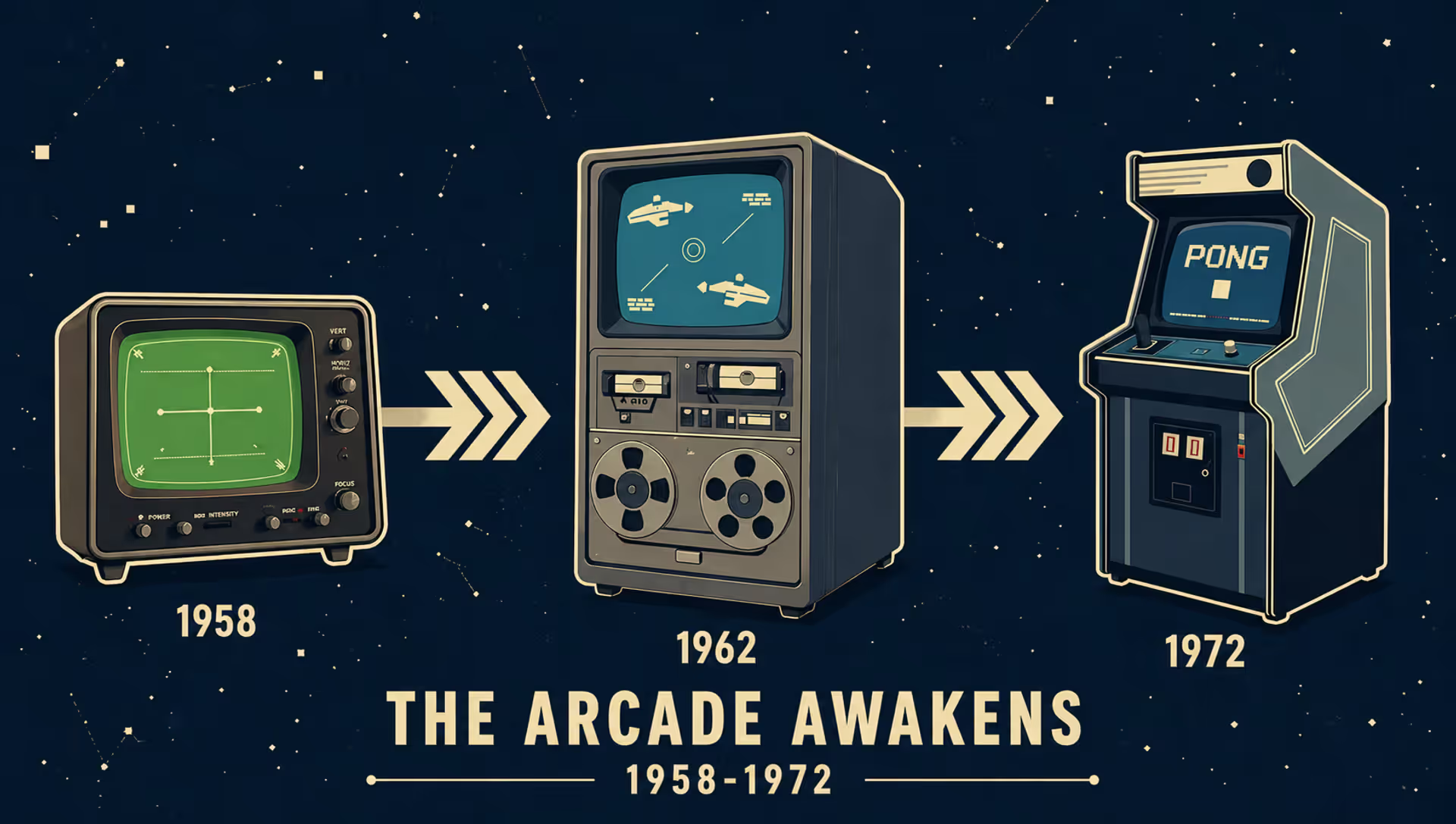
The first video game's creation date depends on your definition. Tennis for Two appeared in 1958, Spacewar! in 1962, and Pong in 1972. Each milestone contributed essential innovations that shaped the gaming industry we know today
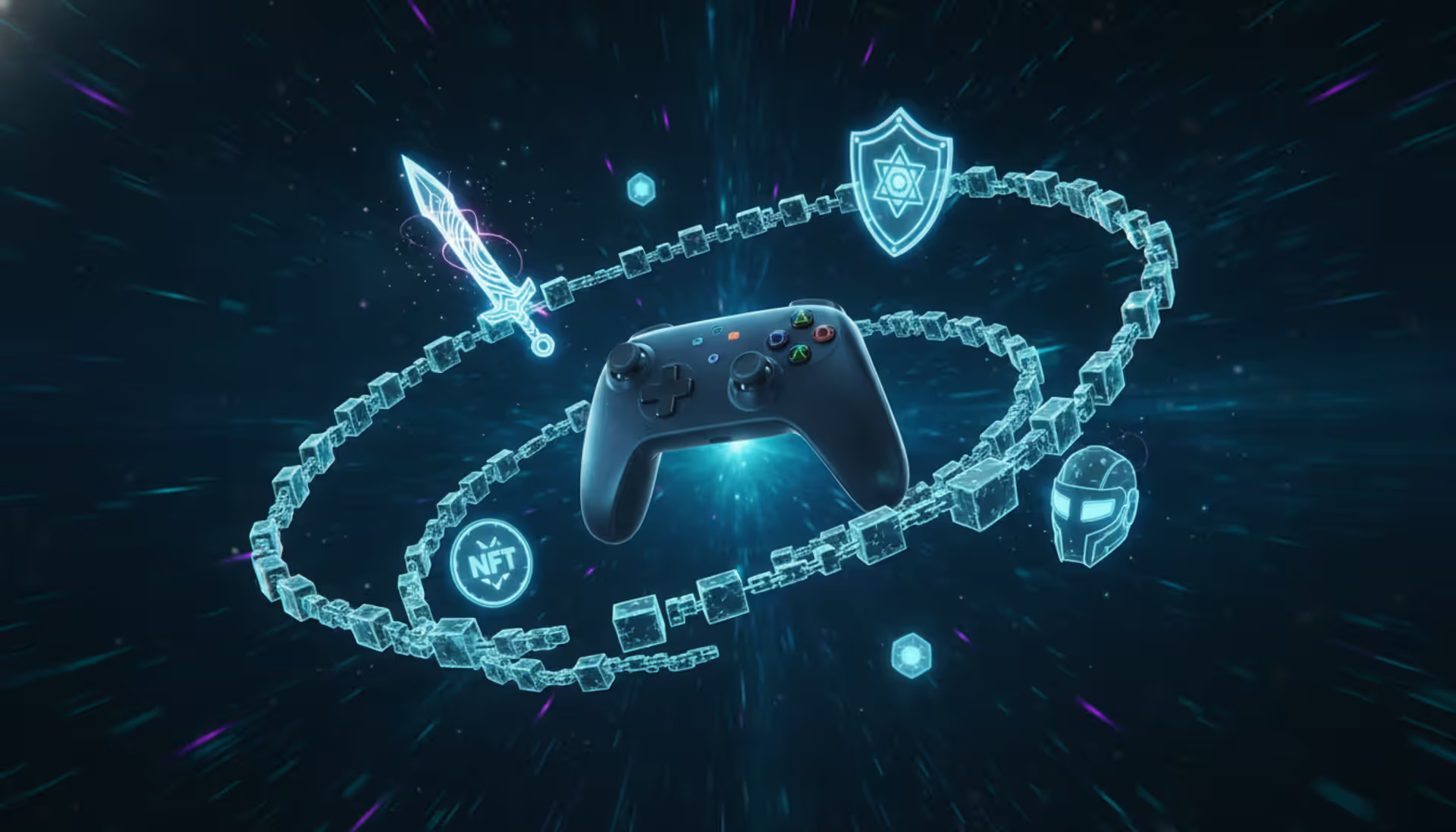
Crypto gaming merges blockchain with video games, letting players own assets as NFTs and earn cryptocurrency. Learn how blockchain technology powers games, the rise and fall of play-to-earn, types of crypto games, pros and cons, and whether they're worth your time in 2026
AFK stands for Away From Keyboard—a gaming term indicating a player has stepped away from their device. Understanding AFK meaning in games helps you avoid penalties, respect teammates, and navigate multiplayer etiquette across MOBAs, FPS games, and MMOs
Meta refers to the most effective strategies, characters, and tactics dominating competitive play. Understanding gaming meta isn't just jargon—it's the invisible rulebook shaping how millions play, compete, and win across League of Legends, Valorant, Overwatch, and other competitive titles
The content on this website is provided for general informational and educational purposes only. It is intended to explain concepts related to video games, gaming guides, builds, mobile gaming, multiplayer strategies, and gaming history.
All information on this website, including articles, guides, and examples, is presented for general educational and entertainment purposes. Gameplay outcomes, strategies, and performance may vary depending on player skill, game updates, and platform.
This website does not provide professional advice or guarantee game outcomes, and the information presented should not be used as a substitute for official game documentation or developer guidance.
The website and its authors are not responsible for any errors or omissions, or for any outcomes resulting from decisions made based on the information provided on this website.