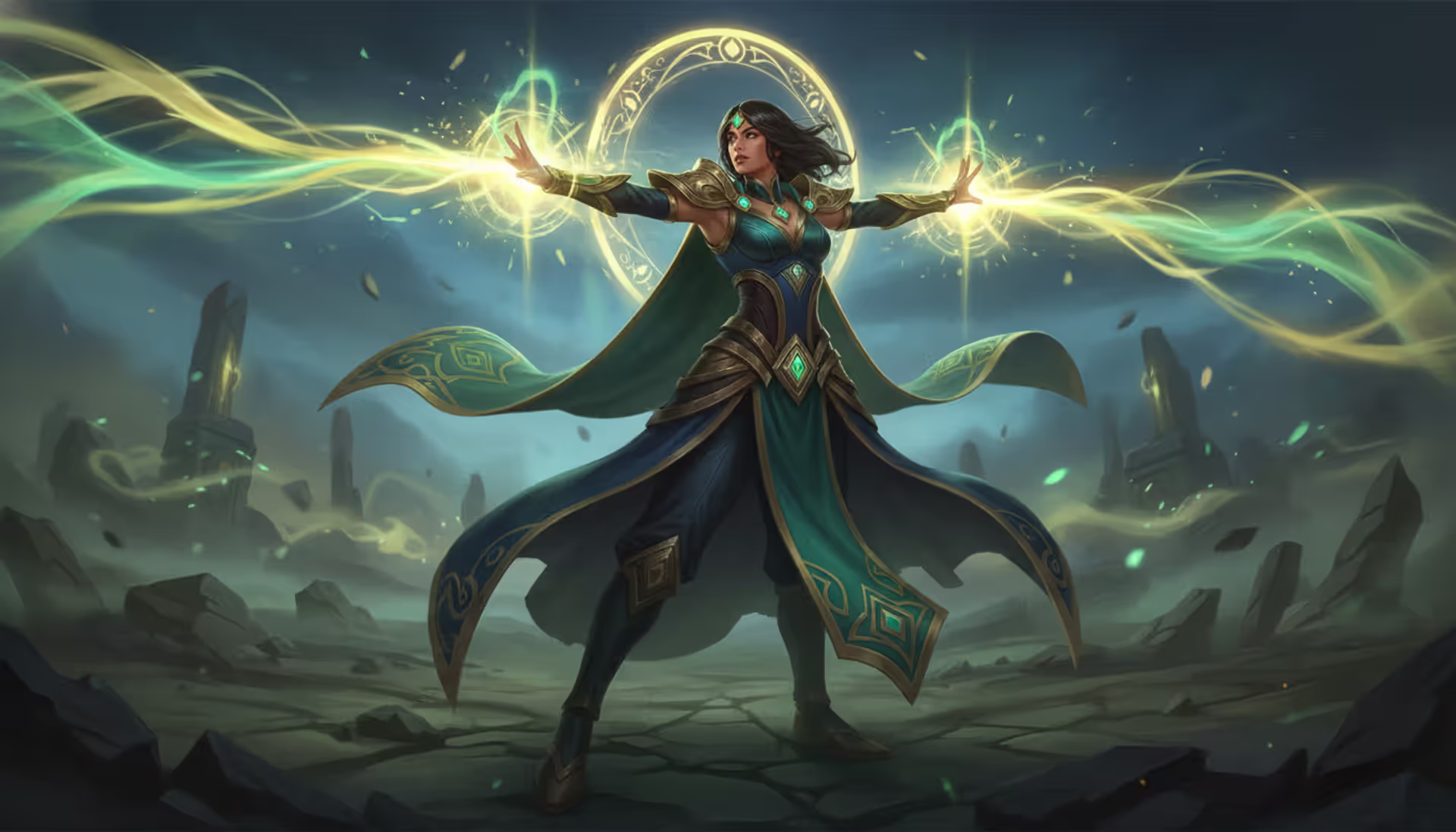
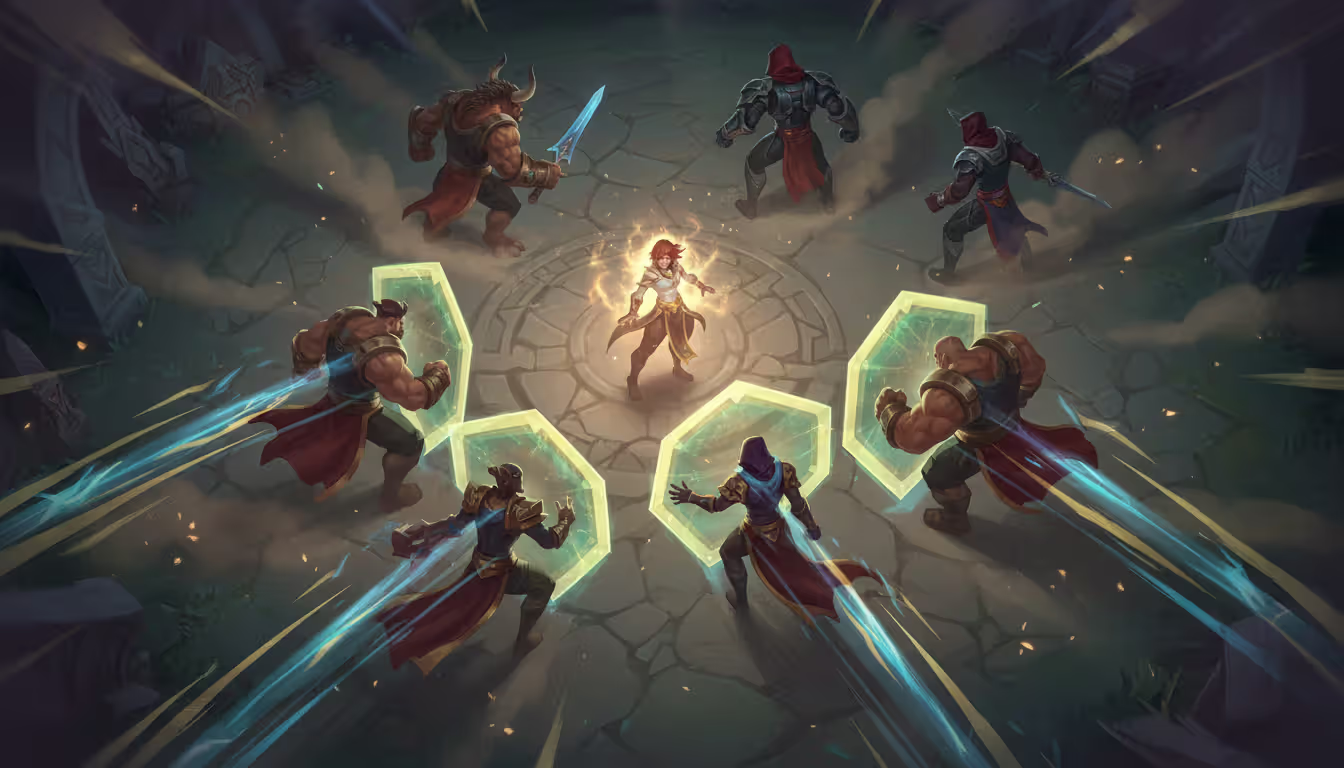
Let's be real—Karma's toolkit lets you do things most champions can't even dream of. You've got an ultimate ability at level one. You can shield your entire team while making them run faster than a caffeinated Rammus. And you can poke enemies so hard they'll think twice about walking up to that cannon minion. Whether you're protecting your ADC in bot lane or slinging damage from mid, Karma adapts to whatever your team comp throws at you.
The trick? Knowing when to blast someone with empowered damage versus when to save that Mantra charge for a clutch team shield. Get this decision wrong and you're just another support spamming abilities. Get it right and you'll single-handedly swing teamfights that looked unwinnable three seconds ago.
Understanding Karma's Abilities and Passive
Karma's entire identity centers on choice. Every time Mantra comes off cooldown, you're making a decision that could determine the next skirmish's outcome.
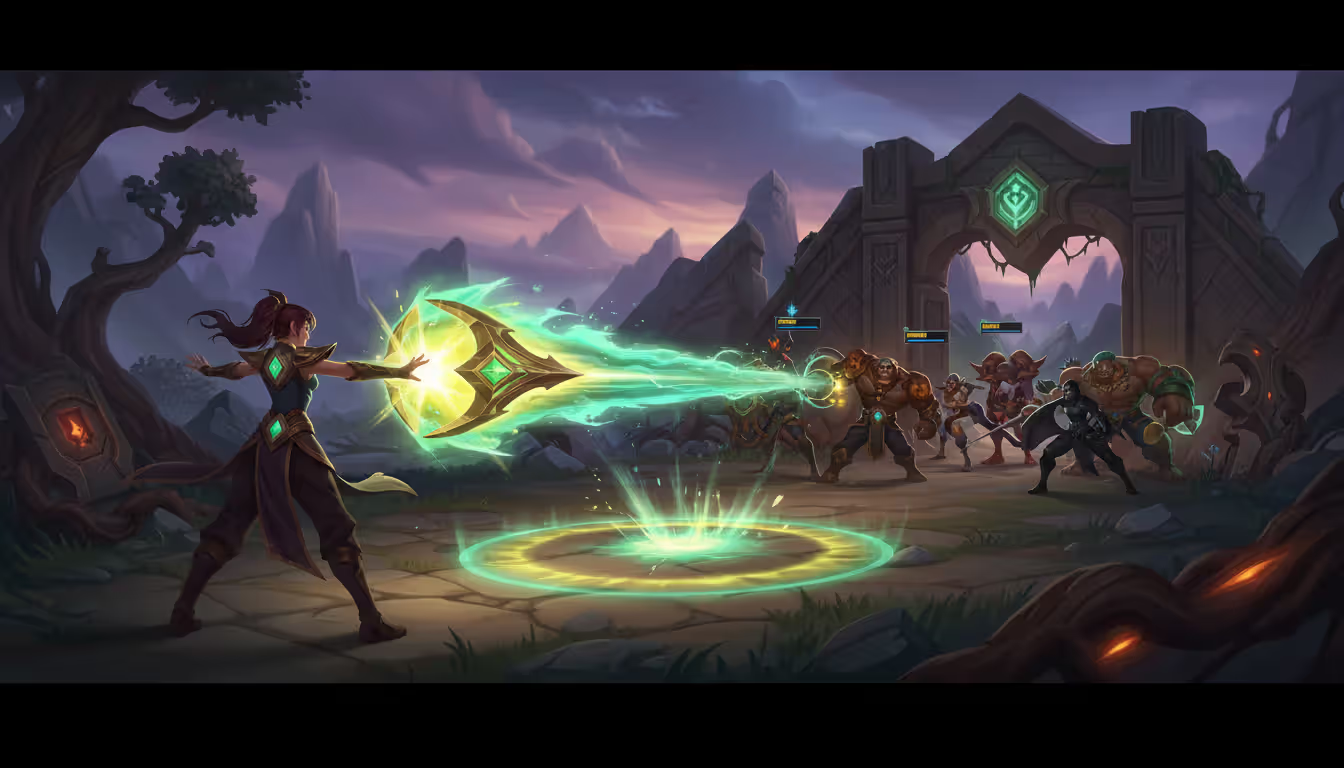
Start with Q (Inner Flame). You launch a projectile that detonates on contact, damaging everything in a small radius around the impact point. Here's what separates average Karma players from good ones: the explosion happens behind your target too. That Caitlyn hiding behind her support? Hit the Nautilus and watch the explosion damage catch her anyway. Most players don't angle their Qs to exploit this splash damage.
W (Focused Resolve) creates a tether between you and an enemy champion. If they don't break it within two seconds, they get rooted. The damage scales with how much health they're missing, which sounds backward for a support ability until you realize it turns you into a legitimate duelist against low-health targets trying to escape. The root lasts longer the longer the tether stayed connected—1.4 seconds if they break it late, a full 2 seconds if they never broke it at all.
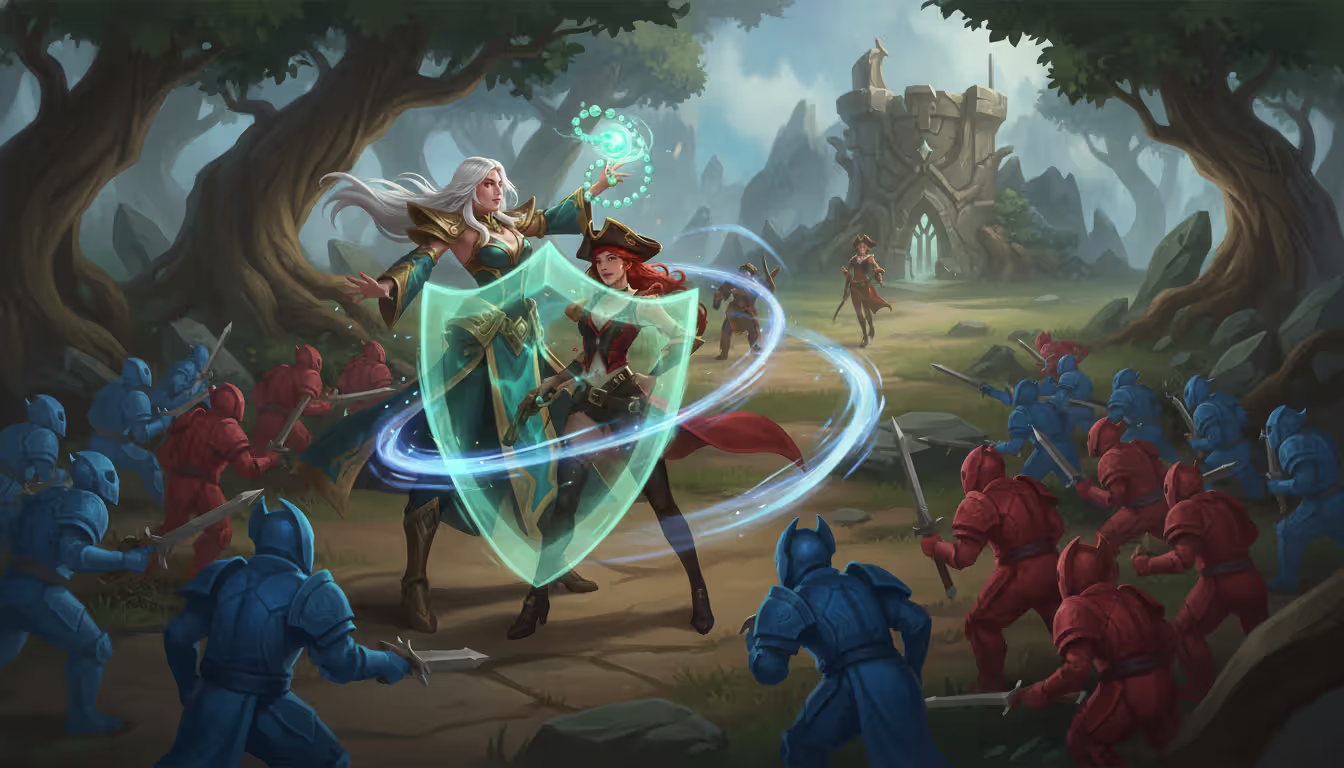
E (Inspire) throws a shield on yourself or an ally while cranking their movement speed for 1.5 seconds. That duration matters more than you'd think. It's long enough to sidestep one Thresh hook or close the gap on a fleeing Ezreal, but not long enough to waste on nothing. Cast this preemptively, not after your ADC already ate the Blitzcrank grab.
Author: Jordan Kessler;
Source: canelomobile.com
Mantra (R) – Empowered Ability Mechanics
Mantra doesn't go on cooldown until you actually use it to empower an ability. It just sits there, available from level one, waiting for you to make the call.
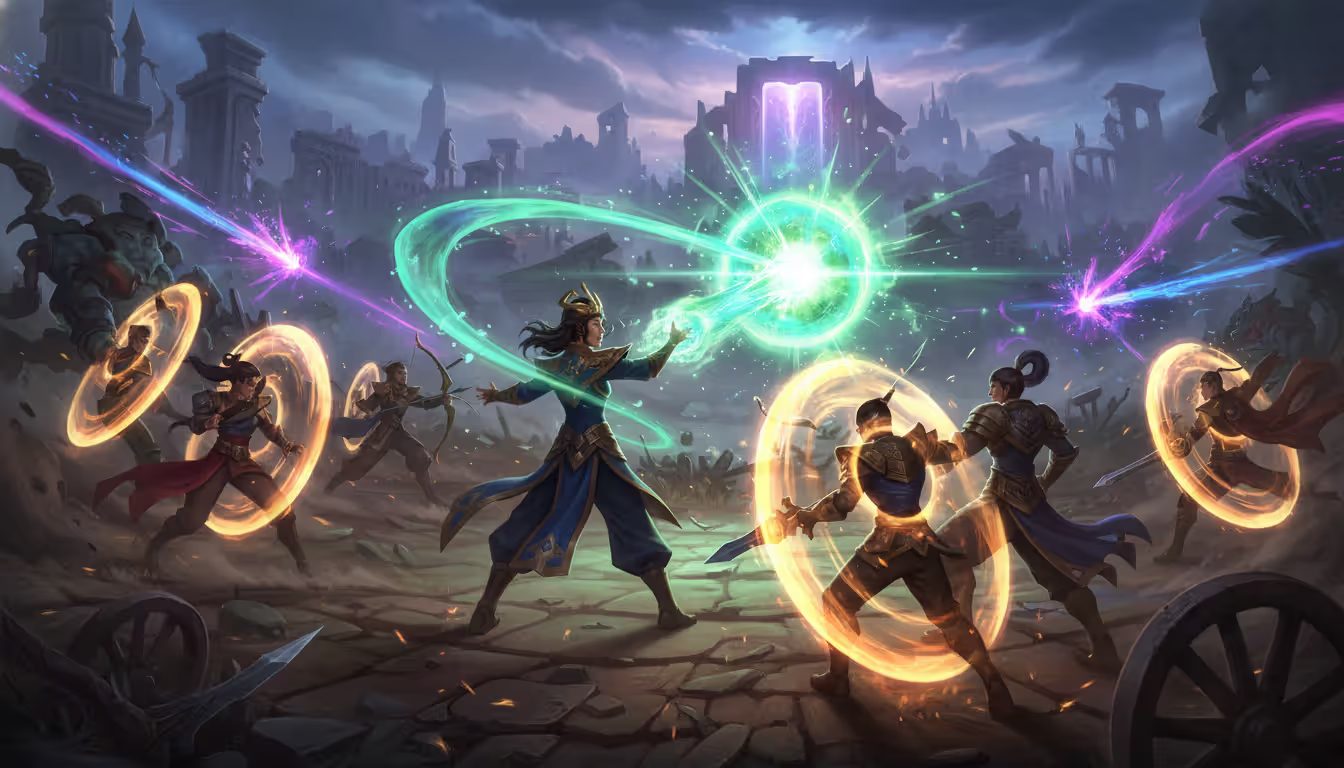
Mantra-Q (Soulflare) detonates twice. First explosion on impact, second explosion creates a slow zone that lingers. Combined damage output reaches disgusting levels—we're talking 600+ damage to multiple champions at two items. The slow zone persists for 1.5 seconds, turning it into makeshift zone control around Baron pit or Dragon.
Mantra-W (Renewal) adds a self-heal based on your missing health when the tether completes. Against a Zed who just ulted you, landing this can heal you for 300-400 HP while also rooting him. Suddenly you're not dead, and he's stuck in place while your team collapses on him.
Mantra-E (Defiance) transforms a single-target shield into an AOE shield that hits everyone near your initial target. The secondary shield amount isn't as strong as the primary one, but shielding four teammates for 150 each while making them all run faster wins fights. Period.
Gathering Fire Passive Breakdown
Here's how Karma gets multiple Mantras in one teamfight: Gathering Fire shaves 2 seconds off Mantra's cooldown every single time your abilities connect with an enemy champion. Land a Q on two people? That's 4 seconds back. Hit three enemies with that empowered shield? 6 seconds returned.
Do the math. Mantra's base cooldown at level 11 is around 24 seconds. In a 15-second teamfight where you hit Q twice (both hitting two enemies) and E once (hitting three allies means it probably damaged someone via Aery or items), you've reduced Mantra's cooldown by 14 seconds. You'll have it up again before the fight even ends.
This passive rewards aggression. Sit back and only shield, you get one Mantra per fight. Play aggressively, land abilities on cooldown, you get three or four. The difference between these two approaches is the difference between winning and losing.
Author: Jordan Kessler;
Source: canelomobile.com
Core Items and Build Paths for Karma
Your item path splits hard depending on whether you're support or mid. They share ability haste and AP priorities, but the gold difference changes everything else.
Support Karma starts Spellthief's Edge—you'll proc it constantly with your Q poke. Your first major purchase needs to be Shurelya's Battlesong. Yes, other mythics exist. No, you shouldn't build them. Shurelya's active combined with Mantra-E creates a speed boost so powerful your frontline can literally run down the enemy backline. I've seen Darius players catch Ezreal with this combo. Ezreal.
Second item depends on enemy comp. If they've got Soraka, Yuumi, or anyone building Moonstone, grab Chemtech Putrifier—the grievous wounds application from your shields and damage abilities shuts down their entire strategy. If your team has multiple AP champions who actually deal damage, Staff of Flowing Water shares AP between all of you, effectively giving everyone a free component item.
Boot choice actually matters. Ionian Boots of Lucidity gives you the most Mantra casts mathematically, but dying because you didn't buy Plated Steelcaps against that 10/0 Draven means you cast zero Mantras. Context beats math.
Late game options include Ardent Censer (if your ADC is Jinx, Kog'Maw, or Twitch), Redemption (for the massive AOE heal and shield power), or Cosmic Drive (if you keep getting dove and need the movement speed plus survivability).
Mid Lane Karma builds like she means it. Luden's Companion first for the burst damage and magic penetration. The proc helps you waveclear, and the flat penetration keeps your poke relevant against anyone building Mercury's Treads. Shadowflame second item amplifies damage against shields and low-health targets—perfect for a poke champion who spends most fights chunking people to 40% HP.
Zhonya's Hourglass isn't optional, it's mandatory. You have no dash, no blink, no escape besides movement speed. Against any competent assassin or diver, Zhonya's active is the only thing keeping you alive when they flash on you.
Void Staff becomes necessary once enemies start stacking MR. Rabadon's Deathcap works as a sixth item victory lap purchase when you're already stomping.
Situational picks: Banshee's Veil against Ashe or Morgana (spell shield blocks their engage), Morellonomicon against drain tanks (Aatrox, Warwick, etc.).
Role
Core Items
Total Cost
Power Spike
Win Condition
Support
Shurelya's Battlesong, Staff of Flowing Water, Redemption
Keystones completely change your laning phase and scaling trajectory.
Support Karma takes Summon Aery in roughly 95% of matchups. Aery procs when you damage enemies and when you shield allies, giving you value no matter what you're doing. The shield travels to your target, applies, then returns to you—in extended fights you can proc Aery six or seven times. Sorcery primary tree gives you Manaflow Band (solves mana problems by 10 minutes), Transcendence (ability haste at level 8), and Scorch (extra burn damage on every Q).
Inspiration secondary with Biscuit Delivery and Cosmic Insight. Biscuits provide mana sustain during those drawn-out laning phases against poke matchups. Cosmic Insight reduces everything—Flash, Ignite, Shurelya's active, all your item actives. You get more value from this rune than almost any other secondary option.
Stat shards: double Adaptive Force, then Armor against AD lanes or Magic Resist against AP lanes.
Mid Lane Karma prefers Arcane Comet because the damage ceiling is higher and your Q's slow makes it nearly unmissable. Same Sorcery tree setup, though you can swap Scorch for Gathering Storm if you think the game goes past 30 minutes (it probably won't, but sometimes your team just won't end).
Secondary tree choices get interesting. Domination with Taste of Blood and Ultimate Hunter gives you sustain in lane plus maximum Mantra uptime. Precision with Presence of Mind and Cut Down works against tankier comps where you need the sustained damage. I've even seen high-ELO players run Resolve secondary with Bone Plating and Overgrowth against assassins, though that's matchup-specific.
Role
Keystone
Primary Tree
Secondary Tree
Stat Shards
Support
Summon Aery
Sorcery: Manaflow Band, Transcendence, Scorch
Inspiration: Biscuit Delivery, Cosmic Insight
Adaptive + Adaptive + Armor or MR
Mid Lane
Arcane Comet
Sorcery: Manaflow Band, Transcendence, Scorch or Gathering Storm
Domination: Taste of Blood, Ultimate Hunter
Adaptive + Adaptive + Health
Soulflame Build Strategy
"Soulflame build" refers to prioritizing Mantra-Q usage over Mantra-E in most situations. You become an artillery cannon, chunking enemies from range rather than protecting your team.
This isn't a different item build—it's a mindset shift. You're looking for opportunities to land empowered Qs on grouped enemies, dealing massive AOE damage that forces them off objectives or into bad fights. Works best when your comp already has frontline and engage covered. If you're the only thing between a fed Irelia and your ADC, maybe don't Soulflame build that game.
Item-wise, you're maximizing magic penetration and cooldown reduction. Luden's Companion, Shadowflame, Void Staff form your damage core. Cosmic Drive adds survivability through movement speed while maintaining high ability haste.
Team comps that enable Soulflame: poke-oriented lineups with Jayce, Nidalee, Ezreal, Xerath. Comps that want to control objectives through attrition rather than hard engage. If your team wants to siege turrets and force enemies into bad recalls, Soulflame excels.
Author: Jordan Kessler;
Source: canelomobile.com
Against tank-heavy enemy comps, reconsider this approach. Poking a 4000 HP Cho'Gath doesn't accomplish much. You'll need to pivot toward utility and save Mantras for shielding.
Soulflame peaks mid-game around Dragon and Herald contests. One well-placed empowered Q from fog of war can deal 500-700 damage to three people, essentially winning the fight before it starts. I've watched enemy teams completely abandon Dragon attempts after eating a single Soulflare because they couldn't afford to fight at that HP deficit.
Poke and Shield Playstyle Techniques
Karma players who only use abilities are leaving 30% of their damage on the table. Your auto-attack matters.
Trading Patterns in Lane
Standard Karma trade: Q to poke, auto-attack while they're slowed from your Q, W if they try to trade back, E yourself to speed away before their support can engage. Against melee supports, you can be absolutely brutal. Auto them every single time they walk up for relic shield procs. They take a free auto, then when they back off, Q them. They can't trade back effectively because of range difference.
Against ranged supports like Lux or Morgana, respect their CC abilities. Don't walk forward to auto-attack their ADC if Morgana still has Q available. Save your E for dodging that binding rather than using it on cooldown for the movement speed.
Mana management separates elo brackets. At level 3, you have roughly 400 mana. Each Q costs 50-65 mana. That's six Qs before you're out of gas. Stop throwing abilities at the 3000 HP Alistar who doesn't care if you Q him. Wait for the ADC to walk up, then punish them.
Mantra-E Shield Timing and Positioning
Mantra-E has a 0.25-second cast time. If you're reacting to damage you've already seen, you're too late. You need to predict enemy cooldowns and pre-shield before the damage window opens.
Watch for positioning tells. Enemy ADC steps forward aggressively? Their support probably has engage available. Enemy mid laner appears in your vision? Your mid laner is probably safe for the next 30 seconds because you know where their threat is.
In teamfights, position where Mantra-E's 600-unit radius catches multiple allies. That's roughly the size of Morgana's ultimate circle. Too far back and you shield two people. Too far forward and you die before casting anything.
The movement speed duration is exactly long enough to dodge one skillshot or reposition once. Use it to help your team kite backward against divers or speed your frontline forward during engages. Don't waste it when nobody's in immediate danger—that's a 12-second cooldown you just threw away.
Author: Jordan Kessler;
Source: canelomobile.com
Role-Specific Tips for Support vs Mid Lane
Support Karma dominates lane then transitions into utility. Your damage becomes irrelevant after 25 minutes, which means you need to create advantages early. Harass relentlessly levels 1-6. You outrange most bot lane duos and your Q costs less mana than their engage abilities. Force them to base or play so far back they miss CS.
Roam mid around level 6-7 when you hit Mantra. Your empowered Q damage plus your mid laner's burst deletes squishies. Even if you don't get the kill, burning Flash or forcing a recall creates advantages.
Teamfight priority shifts completely from damage to utility. Mantra-E your frontline as they engage, follow with Q slows to prevent escapes, save W for peeling divers. You're not the damage source anymore—you're the reason your damage sources don't die.
Mid Lane Karma needs to treat herself as a primary damage threat, not a support with extra gold. Max Q first, E second, W last. Waveclear becomes excellent after Luden's, allowing you to shove and roam.
Against assassins (Zed, Talon, Fizz), rush Seeker's Armguard before completing Luden's. The armor value keeps you alive through their all-in. Yes, it delays your power spike. No, that doesn't matter if you're dead.
Against control mages (Orianna, Viktor, Syndra), you won't kill them in lane unless they massively misplay. Shove waves and roam bot or top. Create advantages elsewhere because going even in CS against them is actually losing—they outscale you.
Specific matchup notes: Syndra can stun you mid-W channel (annoying). Yasuo's windwall blocks Q but not W or E (bait it with autos first). LeBlanc can W-dash your Q hitbox (wait for her to use W aggressively, then punish). Fizz's E invulnerability ignores your entire combo (hold abilities until after he uses it, or you just wasted your Mantra).
Karma's versatility comes from knowing when to empower your poke versus when to save Mantra for a game-changing shield. The best Karma players don't follow a script—they read the game state and adapt their Mantra usage to what their team needs in that specific moment
— Dr. Karen Overall
FAQ
What is the best ability max order for Karma support?
Max Q first, E second, W last. Take one point in W at level 4 for the tether utility, but don't rank it up further until you've maxed your other abilities. Q gives you lane pressure and waveclear—your primary trading tool from levels 1-9. E scales better for teamfight protection than additional W ranks, which only reduces cooldown and slightly increases damage. You're not playing Karma for her W damage.
Should I build AP or utility items on Karma?
Depends entirely on your role. Support Karma prioritizes utility items with ability haste: Shurelya's, Staff of Flowing Water, Redemption. You don't have the gold income to afford expensive AP items, and your team needs the utility more than they need your damage. Mid lane Karma builds full AP with Luden's, Shadowflame, Void Staff because you're occupying a damage-dealing role in your team comp. Building utility from mid lane means your team lacks a damage source.
When should I use Mantra on Q vs. E?
Use Mantra-Q when poking before objectives start, when enemies group up for AOE damage, or when you're ahead and can play aggressively without risk. Use Mantra-E when your team engages, when you need to save multiple allies simultaneously, or when you're behind and playing defensively. Quick rule: Mantra-Q during poke phases and laning, Mantra-E during actual 5v5 teamfights. The exception is when you're so far ahead you can one-shot carries with Soulflare—then you Mantra-Q during fights too.
Is Karma better in mid lane or support?
Support Karma is stronger in the current meta. She provides excellent lane pressure early and transitions into teamfight utility that benefits almost every team comp. Mid lane Karma works situationally but requires your team to have damage from other sources (jungle, top, ADC) since you fall off compared to traditional mages like Syndra or Orianna. Pick mid Karma when your team already has a tank and needs poke/utility, not when you need to be the primary carry. Also, mid Karma gets punished harder by assassin matchups because you're alone in lane.
How does Karma's passive reduce Mantra cooldown?
Gathering Fire cuts 2 seconds off Mantra's cooldown each time your abilities damage an enemy champion. This reduction stacks per champion hit—hit three champions with one Q and you get 6 seconds back instantly. Works with all three basic abilities, so maintaining consistent poke damage through Q and landing W tethers dramatically increases your Mantra uptime. In extended fights, you can realistically cast Mantra three to four times if you're hitting abilities consistently. Missing your Qs means fewer Mantras means less impact.
What counters Karma in lane?
Hard engage supports destroy Karma if they land their CC. Nautilus, Leona, Thresh, Blitzcrank—if they hook you or stun you, you're dead. You have no dash or blink to escape. Sustain supports like Soraka and Sona can heal through your poke, negating your entire laning advantage. In mid lane, assassins with gap closers (Zed, Fizz, Katarina, Akali) can all-in you before you kite away. Against these matchups, position more conservatively, save E for dodging their engage tools rather than using it on cooldown, and ward your flanks so you see them coming.
Karma works because she gives you options. Bad players follow a script: always Mantra-Q, always build the same items, always play the same way. Good players adapt their build, runes, and Mantra usage to whatever their team comp needs and whatever the enemy comp threatens.
Support Karma focuses on dominating lane early, then transitions into teamfight utility with well-timed shields and speed boosts. Mid lane Karma emphasizes sustained poke damage and zone control around objectives. The Soulflame approach maximizes damage output but requires team compositions built around poke and siege. Her shield-focused playstyle enables aggressive engages or saves carries during teamfights.
Neither approach wins every game. The players who climb with Karma switch between these styles fluidly based on what each specific game demands.
Start with fundamentals: land Q consistently, shield before damage arrives (not after), track your passive cooldown reduction to maximize Mantra casts. Once those basics become muscle memory, focus on higher-level decisions—reading team comps, timing Mantra usage for maximum impact, positioning to affect the most allies with AOE shields. Karma's skill ceiling is deceptively high, and time invested into understanding her nuances pays off at every rank from Silver to Challenger.
Xilonen is one of Genshin Impact's most versatile Geo supports. This comprehensive guide covers optimal artifact sets, weapon choices, talent priorities, team compositions, and whether to build her as support or DPS, with detailed constellation breakdowns and expert tips
Master Windwalker Monk with this comprehensive BiS guide. Learn optimal stat priorities (Versatility > Crit > Mastery), acquire best-in-slot gear for each slot, understand tier set bonuses, execute the proper rotation, and configure essential WeakAuras for maximum DPS
Tingyun remains one of the most accessible and versatile support characters in Honkai: Star Rail. This guide covers her best light cones, optimal relic builds, team compositions, eidolon value, and advanced tips to maximize her ATK buffs and energy generation across all content
Syndra remains one of the most rewarding mages for players who master sphere manipulation. This comprehensive guide covers optimal rune configurations, core AP builds, essential combos, and matchup strategies that separate good Syndra players from great ones in 2026
The content on this website is provided for general informational and educational purposes only. It is intended to explain concepts related to video games, gaming guides, builds, mobile gaming, multiplayer strategies, and gaming history.
All information on this website, including articles, guides, and examples, is presented for general educational and entertainment purposes. Gameplay outcomes, strategies, and performance may vary depending on player skill, game updates, and platform.
This website does not provide professional advice or guarantee game outcomes, and the information presented should not be used as a substitute for official game documentation or developer guidance.
The website and its authors are not responsible for any errors or omissions, or for any outcomes resulting from decisions made based on the information provided on this website.