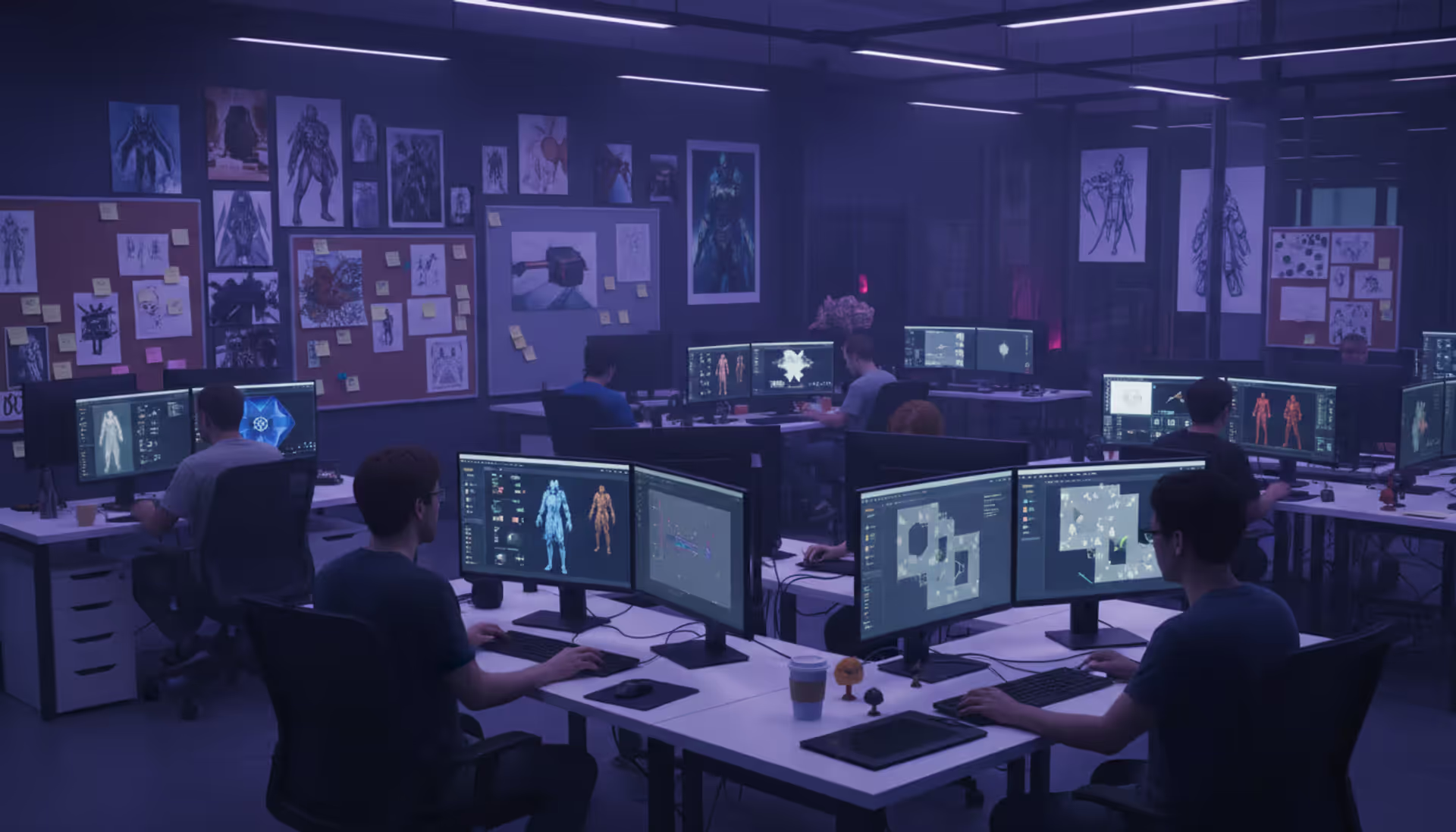
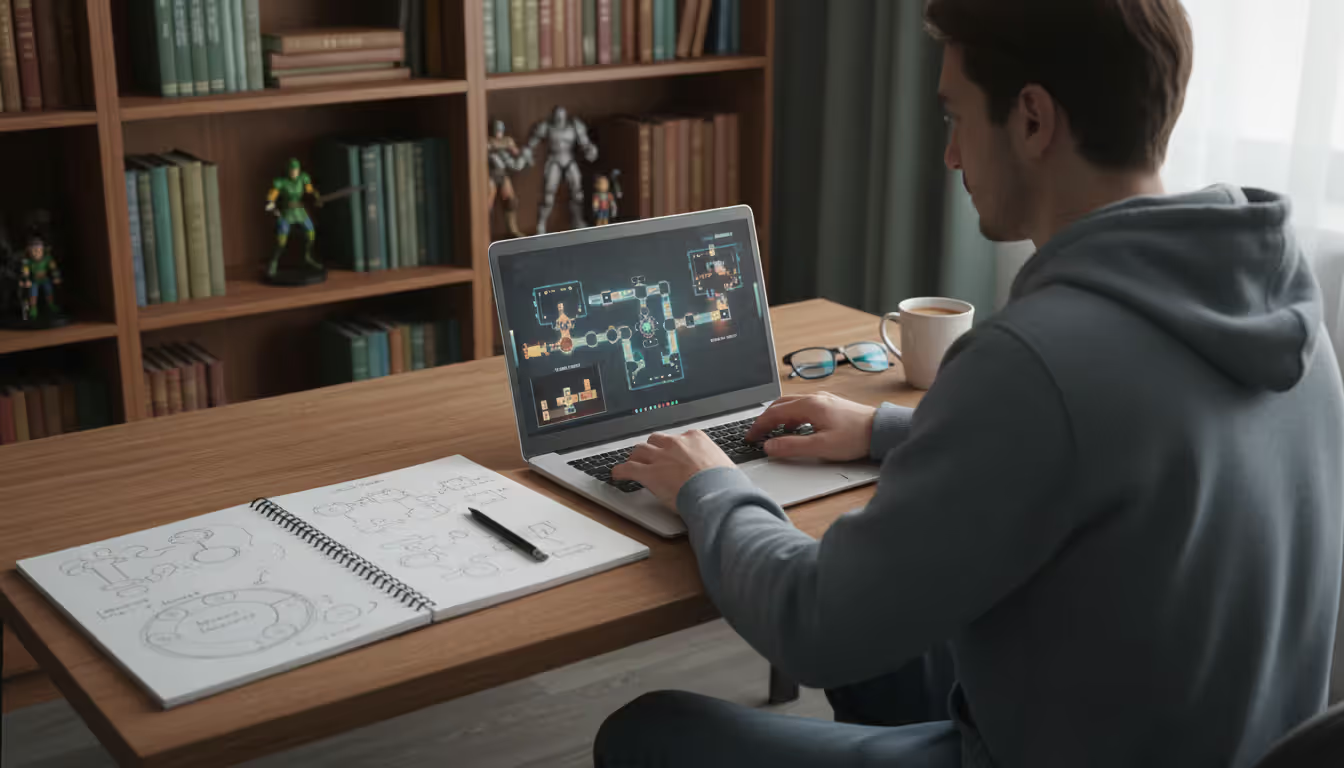
A modern game development studio with designers working at large monitors displaying 3D level prototypes, concept art on walls, and soft blue-purple neon ambient lighting
The worlds, mechanics, and experiences that hook millions of players don't just happen—they're methodically crafted through creative vision mixed with technical know-how and relentless problem-solving. Video game designers architect the gameplay systems, progression curves, and split-second decisions that keep players engaged. Here's what sets game design apart from other creative work: players aren't just watching or reading. They're making choices, and those choices need to matter.
The role looks nothing like it did in the 1980s. Today's designers operate within teams that might include fifty or two hundred people, constantly juggling artistic ambition against technical realities, budget constraints, and what players actually want (versus what they say they want). They spend their days writing specifications, building rough prototypes, analyzing playtest data, and coordinating with programmers, artists, and producers to transform abstract concepts into playable experiences.
If you're thinking about this career—or you're just curious how your favorite games actually get made—understanding what designers really do each day, what skills separate great ones from mediocre ones, and how this role differs from related positions gives you the full picture.
Video Game Designer Role and Responsibilities
Here's what designers don't do: play games all day. What they actually do involves spreadsheets, documentation, meetings, and testing the same mechanic thirty times to see if it finally clicks.
Designers create the blueprints defining how games function, feel, and respond to what players do. Core responsibilities center on designing game mechanics—the rules and systems governing player interaction. Maybe you're determining how a character's movement speed affects combat balance. Or you're designing an economy system for a multiplayer game that won't spiral into runaway inflation. Designers sketch these systems on paper first, using prototyping tools or even physical materials before anyone writes code.
Documentation eats up more time than you'd expect. Design documents outline features, mechanics, progression systems, and user flows—reference materials for everyone on the team. A level designer might write ten pages specifying enemy placement, resource distribution, and pacing for one mission. A systems designer maintains living spreadsheets tracking hundreds (sometimes thousands) of item statistics, constantly tweaking values based on player behavior data.
A great game designer doesn't just create fun—they create meaningful choices. Every button press, every decision point, every risk-reward calculation should matter to the player. That's what separates a forgettable game from one people remember for years
— Jane McGonigal
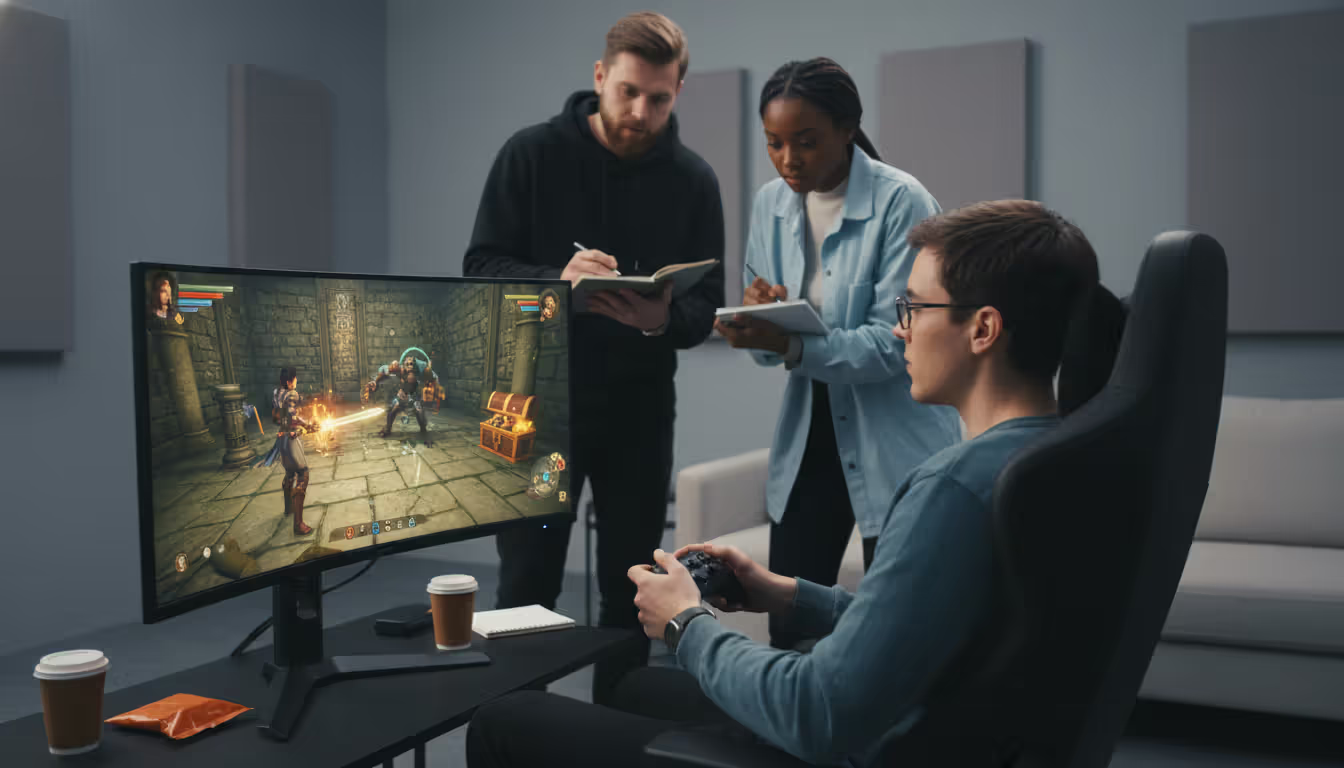
Playtesting and iteration form the actual backbone of design work. You watch players struggle with tutorials, breeze through supposedly challenging sections, or exploit strategies you never imagined. You collect feedback, spot patterns, and adjust accordingly. You might observe twenty different players attempting the same puzzle, noting exactly where each person gets confused, then redesign the hint system three separate times before it works intuitively.
Studio size dramatically changes what "game designer" means day-to-day. At a fifteen-person indie studio? One designer handles narrative, systems, and level design simultaneously while also responding to community feedback on Discord. At a AAA studio with three hundred employees? Designers specialize intensely—one person spends eighteen months exclusively designing boss encounters. Another focuses solely on crafting systems.
Collaboration defines everything. Designers work constantly with programmers to understand what's technically feasible, with artists to ensure mechanics support visual storytelling, and with producers to hit milestone deadlines without derailing the schedule. Proposing a new feature means considering implementation time, asset requirements, testing needs, and whether it fits within the project's scope and budget.
Author: Tyler Vance;
Source: canelomobile.com
Game Designer vs Game Developer
People confuse these roles because responsibilities overlap and studios use inconsistent terminology. The distinction matters, though—each role needs different skill sets and contributes differently to what ships.
Role
Primary Focus
Key Responsibilities
Required Skills
Typical Deliverables
Game Designer
Player experience and game systems
Designing mechanics, balancing systems, writing documentation, building prototypes
Creative thinking, systems analysis, clear communication, basic scripting
Working code, technical systems, development tools, bug fixes
Game designers tackle the "what" and "why" questions. What should players experience when they level up? Why does this weapon deal more damage than that one? They define intended player experiences, then create systems producing those experiences. A designer working on a stealth game decides the game should make players feel clever, then designs mechanics—hiding spots, enemy patrol patterns, distraction tools—that create opportunities for clever play.
Game developers handle the "how" questions. How do we make AI patrol convincingly? How do we optimize this system to maintain 60 frames per second? They translate design intentions into functional code. When a designer specifies that enemies should detect players based on line-of-sight and sound, developers build the raycasting system, audio propagation model, and alert state machine making it work.
The relationship works best as genuine partnership. Designers who understand programming constraints propose more implementable ideas. Developers who grasp design intent build systems supporting iteration and flexibility. A designer sketches out a gravity manipulation mechanic. A developer implements it, then suggests technical possibilities the designer hadn't considered, sparking new design ideas neither would've discovered working alone.
Some studios use "game developer" as an umbrella term covering designers, programmers, artists, and other roles. Context matters. When job listings specify "gameplay programmer" or "technical designer," they're clarifying the distinction. Technical designers bridge both worlds, possessing solid scripting skills alongside design sensibility.
Essential Skills for Game Designers
Successful designers combine creative vision with analytical rigor. Loving games isn't enough—you need to understand why certain mechanics work, how players think, and how to communicate complex systems clearly to people who don't live inside your head.
Technical Skills and Software
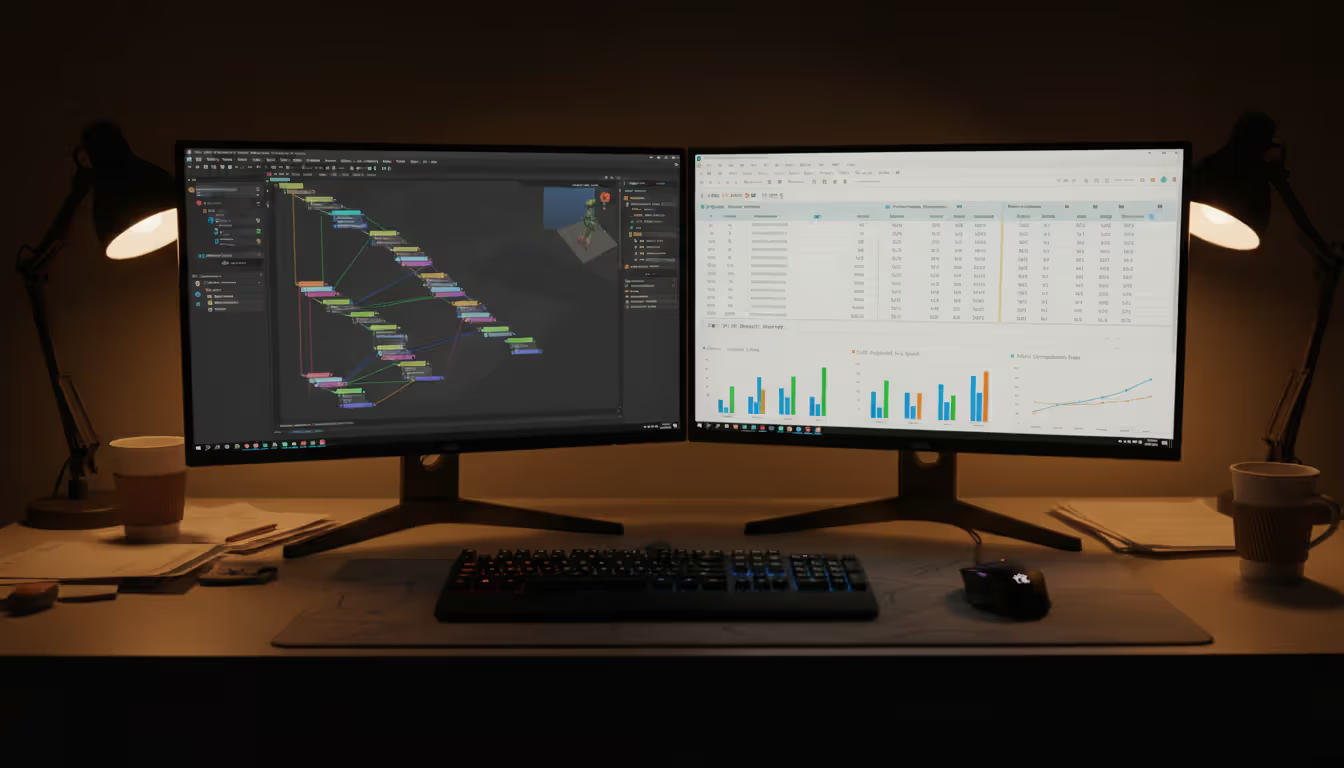
Designers need working knowledge of game engines, even when they're not writing production code. Unity and Unreal Engine dominate the industry. Understanding their capabilities, limitations, and workflows helps designers propose features that won't require three programmers and six months. Many designers learn visual scripting systems like Unreal's Blueprints or Unity's Bolt, letting them prototype mechanics without programmer support.
Spreadsheet mastery proves surprisingly critical. Excel or Google Sheets become design tools for balancing systems, tracking variables, and modeling progression curves. Designing a role-playing game? You might maintain spreadsheets calculating damage formulas across hundreds of abilities, ensuring no combination breaks the game. Comfort with formulas, data visualization, and basic statistics separates competent designers from exceptional ones.
Version control systems like Git or Perforce enable collaboration without people overwriting each other's work. Designers working in shared project files need to understand branching, merging, and conflict resolution. Documentation tools—Confluence, Notion, Google Docs—organize design knowledge and keep teams aligned across months or years.
Many designers pick up basic 3D modeling or level editing to prototype ideas quickly. Building a rough level in ProBuilder or blocking out a space with primitive shapes lets you test pacing and spatial relationships before artists create final assets. You're not aiming for production-quality work—you want rapid iteration.
Author: Tyler Vance;
Source: canelomobile.com
Creative and Problem-Solving Abilities
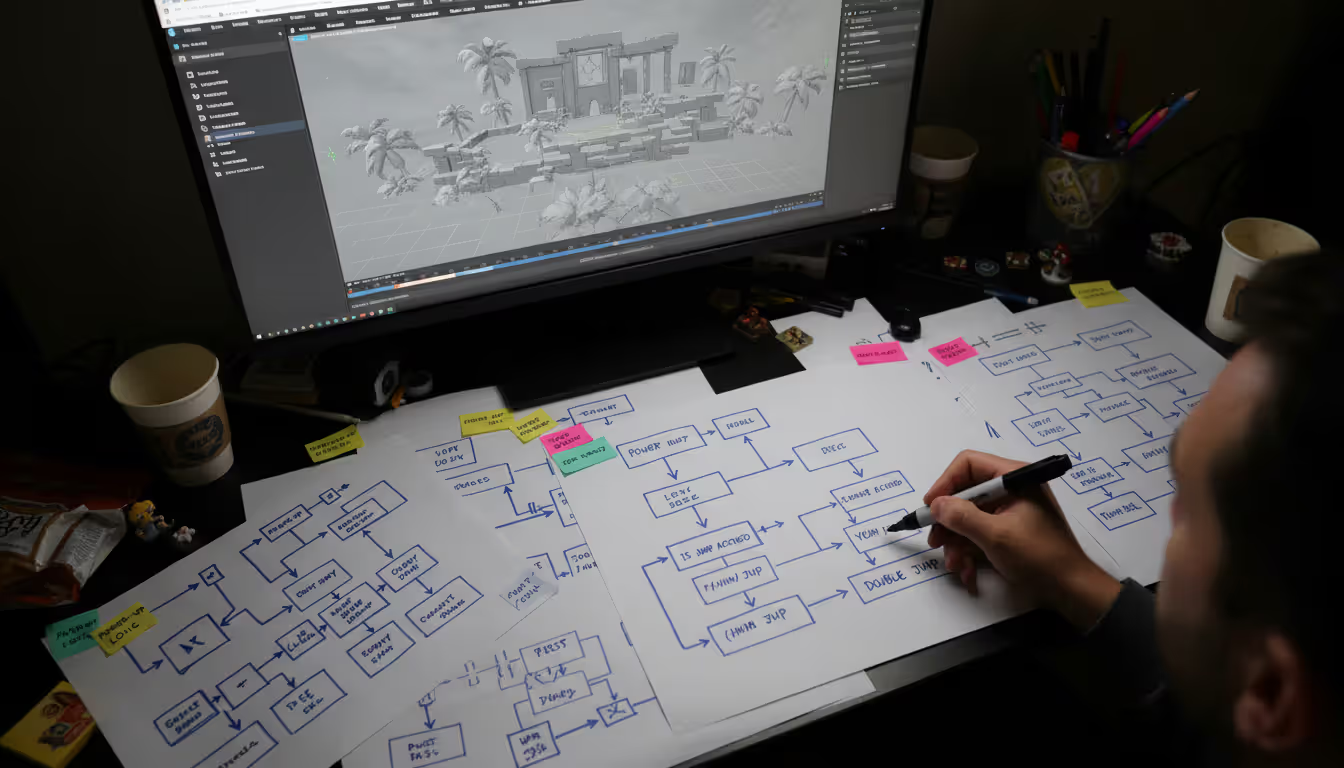
Systems thinking separates designers from other creative roles. You must envision how individual mechanics interact, creating emergent behaviors and unintended consequences. Adding a double-jump ability ripples through level design, combat balance, speedrunning potential, and accessibility considerations. Strong designers trace these ripple effects before implementation.
Understanding player psychology proves essential. You study how people learn, what motivates continued play, and how difficulty curves maintain engagement without triggering frustration. You recognize that players will optimize the fun out of games if given the chance, so you design systems aligning optimal strategy with enjoyable play.
Communication skills matter more than most people expect. Designers spend substantial time explaining ideas to teammates, advocating for features, and justifying design decisions to stakeholders. Writing clear, comprehensive documentation that programmers and artists can reference months later prevents miscommunication and wasted effort. Verbal communication during meetings, pitches, and playtesting debriefs requires translating creative vision into actionable tasks.
Tolerance for iteration defines professional designers. First ideas rarely work perfectly. You must accept feedback without getting defensive, kill features you love when data shows they're not working, and redesign systems multiple times. Emotional attachment to specific solutions sabotages the iterative process producing great games.
Analytical skills help you interpret playtesting data, user metrics, and player feedback. Understanding why players behave certain ways—not just what they do—enables targeted improvements. If players skip cutscenes, is the story actually bad, or is the pacing wrong? If they abandon the game at level three, what specific moment caused frustration?
The Game Design Process from Concept to Launch
Game design follows iterative cycles rather than linear paths. While broad phases stay consistent, teams constantly loop back, revising earlier work based on new discoveries.
Conceptualization starts by identifying the core experience. What emotion should players feel? What makes this game worth making? Designers explore reference games, identify mechanics supporting the intended experience, and determine what makes their approach unique. Pitching a puzzle game? You might identify "the satisfaction of recognizing patterns" as the core experience, then brainstorm mechanics creating pattern-recognition challenges.
Pre-production involves rapid prototyping of core mechanics. Designers build rough versions—sometimes in different engines, sometimes on paper, sometimes with physical materials—to test whether ideas actually work before committing resources. Testing a deck-building mechanic? You might prototype it with physical cards before any digital implementation. Failed prototypes get discarded quickly. Successful ones move forward.
Documentation formalizes designs for the production team. Design documents specify exactly how systems function, often including flowcharts, pseudocode, and edge-case handling. A combat system document might detail hit detection, damage calculation, status effects, animation integration, and UI feedback. Clarity prevents misunderstandings wasting development time.
Production means designers work alongside the team as features get built. You answer questions, make decisions about unforeseen issues, and adjust designs based on technical realities. When a programmer reports that your proposed AI behavior would tank performance, you revise the approach. When an artist shows how an environment looks, you might adjust level layout to better showcase the visuals.
Playtesting happens continuously but intensifies as features near completion. Early playtests use team members and focus on basic functionality—does the mechanic work as intended? Later tests bring in external players matching your target audience, revealing assumptions you made incorrectly. You observe silently, noting where players struggle, where they lose interest, and where they find unintended solutions.
Balancing and polish eat up the final months before launch. You adjust numbers, tweak difficulty curves, and refine pacing based on accumulated data. You might adjust enemy health values across the entire game, making early encounters slightly easier and late encounters more challenging based on player success rates. Polish addresses small frustrations—improving tutorial clarity, adjusting camera angles, refining UI responsiveness.
Launch and post-launch don't end the design process. Live-service games require ongoing balance updates, new content, and system refinements based on player behavior at scale. Even single-player games often receive patches addressing issues that only emerged with millions of players exploring every possibility.
Author: Tyler Vance;
Source: canelomobile.com
Specializations Within Game Design
As games grew more complex, design roles specialized. Entry-level designers often start as generalists, then specialize once they identify strengths and interests.
Specialization
Main Focus
Daily Tasks
Required Experience
Level Designer
Environment layout and pacing
Blocking out spaces, placing enemies and items, testing flow, adjusting difficulty
Basic 3D software knowledge, spatial reasoning, understanding of pacing
Narrative Designer
Story integration and dialogue
Writing dialogue, designing story branches, integrating narrative with mechanics
Designing menus, optimizing information hierarchy, improving accessibility
User psychology, prototyping tools, visual communication
Level Designer
Level designers craft the spaces players navigate and the challenges they encounter within those spaces. They determine enemy placement, resource distribution, environmental storytelling, and pacing within individual levels or missions.
Work begins with blockouts—rough geometry defining space and flow. You might spend weeks iterating on a blockout, testing how long traversal takes, whether sightlines create interesting combat scenarios, and whether players naturally discover intended paths. Only after the blockout works do artists create final assets.
Level designers balance challenge and accessibility. They create difficulty through encounter design rather than just inflating enemy health. Well-designed levels introduce mechanics safely, increase complexity gradually, and provide mastery moments where players apply learned skills creatively.
Technical understanding helps level designers work within performance budgets—understanding polygon counts, draw calls, and optimization techniques. They collaborate closely with environment artists, ensuring aesthetic goals and gameplay needs align.
Narrative Designer
Narrative designers integrate story with gameplay, ensuring narrative moments enhance rather than interrupt the experience. Unlike traditional writers, they design branching dialogue systems, determine how player choices affect story outcomes, and write content adapting to gameplay variables.
Daily work includes writing dialogue, designing conversation trees, collaborating with voice actors and audio teams, and ensuring story pacing matches gameplay pacing. You might write multiple versions of a scene depending on which characters survived previous missions, requiring systematic tracking of story states.
They work within technical constraints. Dialogue systems have limitations—number of branches, variables tracked, voice acting budgets. Narrative designers maximize emotional impact within these constraints, finding creative solutions when ideal narrative approaches prove technically infeasible.
Author: Tyler Vance;
Source: canelomobile.com
Strong narrative designers understand game mechanics, designing stories that give gameplay context and meaning. They recognize that environmental storytelling—details players discover exploring the world—often resonates more than exposition-heavy cutscenes.
Systems Designer
Systems designers create the mathematical and logical frameworks governing game mechanics. They design progression systems, economies, crafting mechanics, and combat formulas. Their work determines how numbers interact throughout the game.
Spreadsheets become primary tools. Working on a strategy game? You might maintain interconnected spreadsheets tracking unit costs, production times, combat statistics, and tech tree progression. The goal: ensuring no single strategy dominates all others. You run simulations, test edge cases, and adjust values iteratively.
Systems designers need strong analytical skills and comfort with mathematics. They understand probability, expected value calculations, and how to model complex interactions. Designing a loot system? You're calculating drop rates so desired items feel rare but obtainable—balancing grind against the risk of devaluing items through abundance.
They collaborate with other designers to ensure systems support intended experiences. You might realize the economy system undermines tension in a survival game because players accumulate resources too easily, then redesign resource generation to maintain scarcity.
How to Start a Career in Game Design
Breaking into game design requires demonstrating design thinking and ability to contribute immediately. Formal education helps but matters less than portfolio quality and practical skills.
Education paths vary widely. Traditional four-year game design degrees provide comprehensive foundations, teaching theory, tools, and providing portfolio development time. Shorter programs, bootcamps, and online courses offer focused skill-building for career changers. Self-teaching remains viable—many successful designers learned through personal projects, online resources, and community feedback.
The degree itself matters less than what you learned and can demonstrate. A designer with a philosophy degree and a strong portfolio of mods and game jams might outcompete a game design graduate with weak portfolio pieces. Employers evaluate design thinking, not credentials.
Building your portfolio becomes the critical factor. Create playable demonstrations of your design skills. Mod existing games, participate in game jams, build prototypes in accessible engines. Document your process—explain problems you solved, iterations you made, and why final designs work. A portfolio showing one polished, thoughtful project beats five half-finished ideas.
Focus portfolio pieces on specific skills. A level design portfolio might showcase three distinct levels demonstrating pacing, environmental storytelling, and combat encounter design. A systems design portfolio might include a balanced ability system with documentation explaining design decisions and balance considerations.
Entry-level positions often start as QA testers, associate designers, or level designers on smaller projects. These roles provide industry experience, professional connections, and opportunities to demonstrate design thinking. Many designers spend one to three years in adjacent roles before transitioning to design positions.
Networking accelerates career progression. Attend game development conferences, participate in local game dev meetups, engage with design communities online. Here's the reality: most jobs get filled through personal connections and referrals rather than public applications reaching hundreds of candidates. Building relationships with other developers creates opportunities.
Career progression timelines typically span several years. Budget one to two years building foundational skills and portfolio pieces, then another one to three years in entry-level positions before reaching mid-level designer roles. Senior and lead positions typically require five-plus years of experience. Specialization often develops three to five years into a career after exposure to various design disciplines.
Geographic flexibility helps. Major game development hubs—Los Angeles, Seattle, Austin, Montreal—offer more opportunities but more competition. Remote work expanded significantly post-pandemic, though many studios still prefer hybrid or in-office arrangements for collaborative roles like design.
Frequently Asked Questions About Game Design Careers
Do you need a degree to become a video game designer?
No degree is strictly required, but it helps. Many designers enter the field through game design programs, computer science degrees, or unrelated education supplemented by self-teaching. What matters most is demonstrable design ability through portfolios, shipped projects, or mods. A strong portfolio can overcome lack of formal education, though degrees may help pass initial resume screening at larger studios. Consider education an accelerator rather than a requirement—it provides structure, feedback, and networking but isn't the only path.
How much do video game designers make?
Salaries vary significantly by experience, location, and studio size. Entry-level designers in 2026 typically earn $55,000–$75,000 annually. Mid-level designers with three to six years of experience average $80,000–$110,000. Senior and lead designers at major studios can earn $120,000–$180,000 or more, particularly in high-cost areas like San Francisco or Seattle. Indie studios generally pay less but may offer equity or profit-sharing. Remote positions sometimes adjust salaries based on employee location. Specializations like systems design or technical design often command higher salaries due to required technical expertise.
What's the difference between a game designer and a game artist?
Game designers create gameplay systems, mechanics, and player experiences. Game artists create visual assets—characters, environments, animations, UI elements. Designers work primarily with documents, spreadsheets, and prototyping tools, focusing on how games play. Artists work with 3D modeling software, illustration tools, and animation programs, focusing on how games look. The roles collaborate closely—designers specify what's needed functionally, artists create assets fulfilling those needs while enhancing visual appeal. Some overlap exists in UI/UX design, where visual design and usability intersect, but core responsibilities differ substantially.
How long does it take to become a professional game designer?
Plan on two to four years from starting serious study to landing your first professional design role. This includes one to two years building foundational skills, creating portfolio pieces, and learning industry-standard tools, then additional time job searching and potentially working in adjacent roles like QA. Reaching mid-level designer positions typically takes another two to four years of professional experience. Career progression isn't strictly linear—exceptional portfolio work or successful indie releases can accelerate timelines, while competitive markets or geographic limitations might extend them. Continuous learning remains essential throughout your career as tools, platforms, and player expectations evolve.
Can you work remotely as a video game designer?
Remote options expanded after the pandemic, though practices vary by studio. Some companies operate fully remotely, others require hybrid arrangements, and some prefer in-office collaboration for design roles. Design positions involve substantial collaboration, making communication and coordination crucial regardless of location. Remote designers need strong written communication skills, self-direction, and comfort with digital collaboration tools. Entry-level positions more frequently require in-office presence for mentorship and learning, while experienced designers find more remote opportunities. Geographic flexibility increases options—being willing to relocate or work specific hours for time zone alignment expands possibilities.
What software do game designers use most?
Unity and Unreal Engine dominate for prototyping and implementation. Designers use these engines' visual scripting tools (Blueprints, Bolt) to build playable prototypes. Microsoft Excel and Google Sheets prove essential for systems design, balancing, and tracking variables. Documentation tools like Confluence, Notion, or Google Docs organize design knowledge. Communication platforms—Slack, Discord, Microsoft Teams—facilitate collaboration. Diagramming tools like Lucidchart or Miro help visualize systems and flows. Version control systems (Git, Perforce) manage file collaboration. Many designers also learn basic 3D tools like Blender or ProBuilder for level blockouts. The specific stack varies by studio, but comfort with collaborative digital tools remains universal.
Video game designers shape interactive experiences through systematic thinking, iterative refinement, and collaborative problem-solving. The role demands more than passion for games—it requires understanding player psychology, balancing complex systems, and communicating vision across multidisciplinary teams.
Success in game design comes from building demonstrable skills, creating portfolio pieces showcasing design thinking, and understanding the collaborative nature of game development. Whether you specialize in crafting intricate levels, designing compelling narratives, or balancing complex systems, the core skills remain consistent: analytical thinking, creative problem-solving, and the ability to iterate based on feedback.
The field continues evolving with new technologies, platforms, and player expectations. Designers who stay curious, embrace continuous learning, and focus on creating meaningful player experiences find rewarding careers bringing interactive worlds to life. Start small, build your skills through practical projects, and remember that every successful designer began exactly where you are now—with enthusiasm and a willingness to learn.
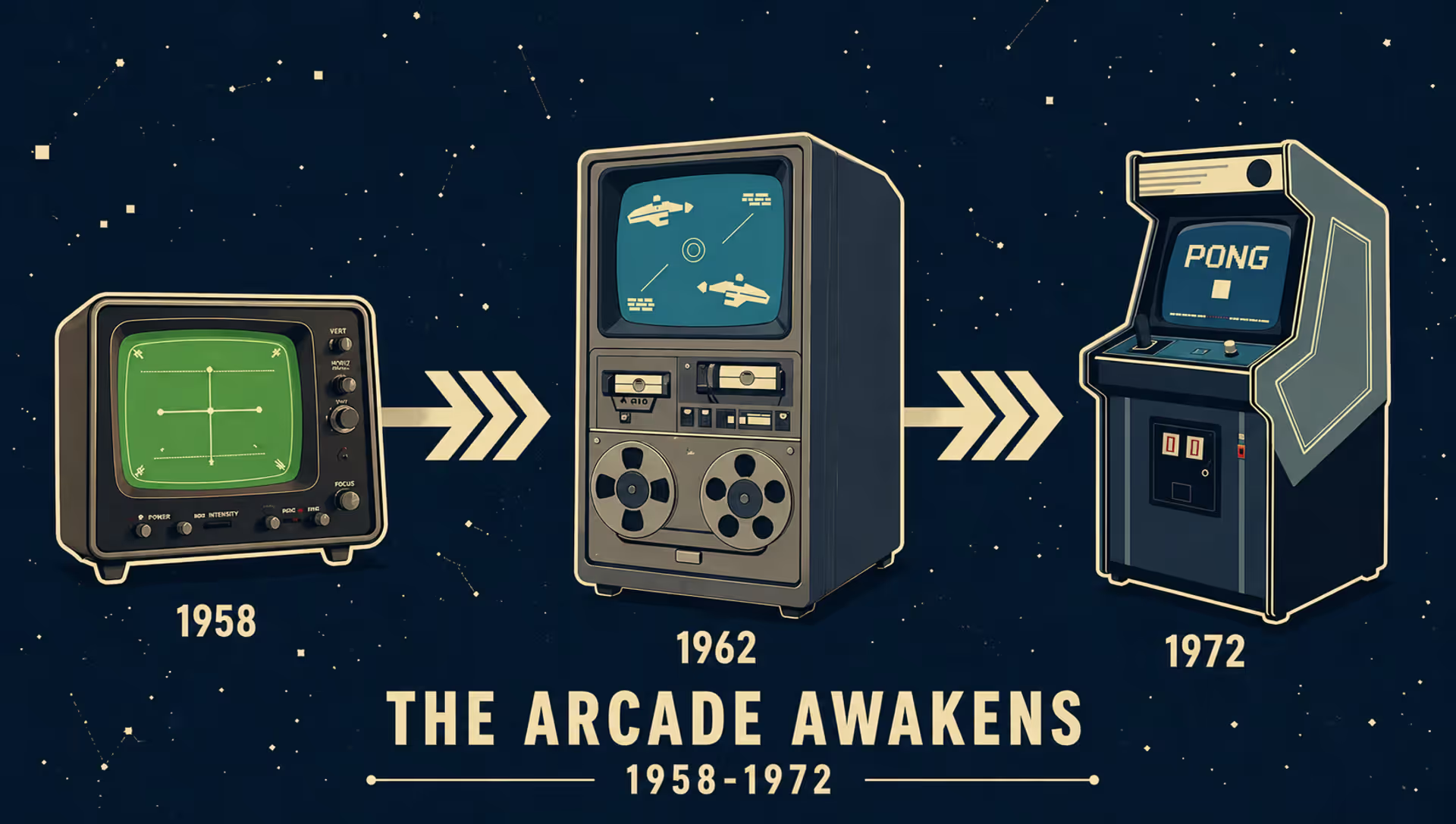
The first video game's creation date depends on your definition. Tennis for Two appeared in 1958, Spacewar! in 1962, and Pong in 1972. Each milestone contributed essential innovations that shaped the gaming industry we know today
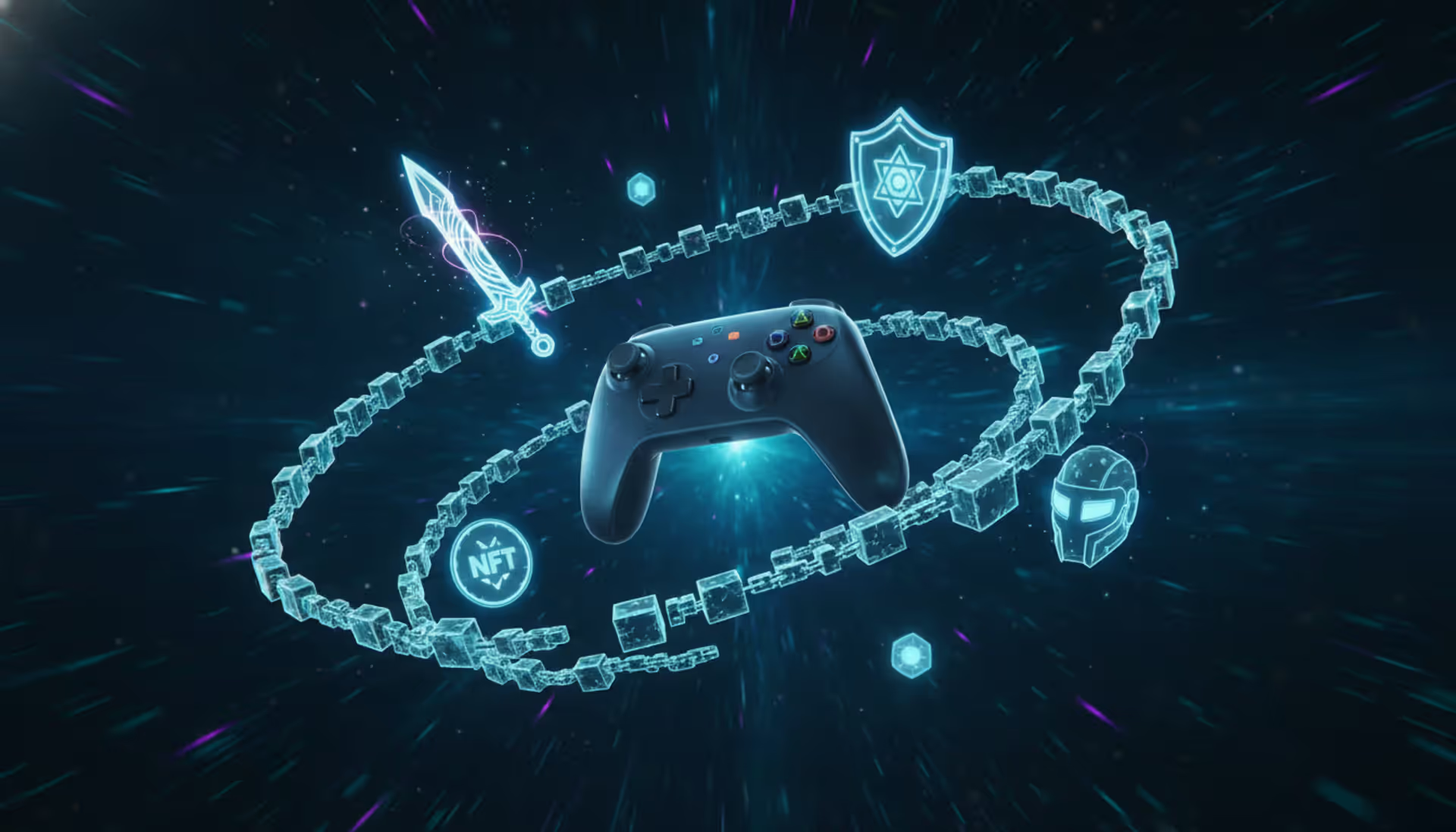
Crypto gaming merges blockchain with video games, letting players own assets as NFTs and earn cryptocurrency. Learn how blockchain technology powers games, the rise and fall of play-to-earn, types of crypto games, pros and cons, and whether they're worth your time in 2026
AFK stands for Away From Keyboard—a gaming term indicating a player has stepped away from their device. Understanding AFK meaning in games helps you avoid penalties, respect teammates, and navigate multiplayer etiquette across MOBAs, FPS games, and MMOs
Meta refers to the most effective strategies, characters, and tactics dominating competitive play. Understanding gaming meta isn't just jargon—it's the invisible rulebook shaping how millions play, compete, and win across League of Legends, Valorant, Overwatch, and other competitive titles
The content on this website is provided for general informational and educational purposes only. It is intended to explain concepts related to video games, gaming guides, builds, mobile gaming, multiplayer strategies, and gaming history.
All information on this website, including articles, guides, and examples, is presented for general educational and entertainment purposes. Gameplay outcomes, strategies, and performance may vary depending on player skill, game updates, and platform.
This website does not provide professional advice or guarantee game outcomes, and the information presented should not be used as a substitute for official game documentation or developer guidance.
The website and its authors are not responsible for any errors or omissions, or for any outcomes resulting from decisions made based on the information provided on this website.