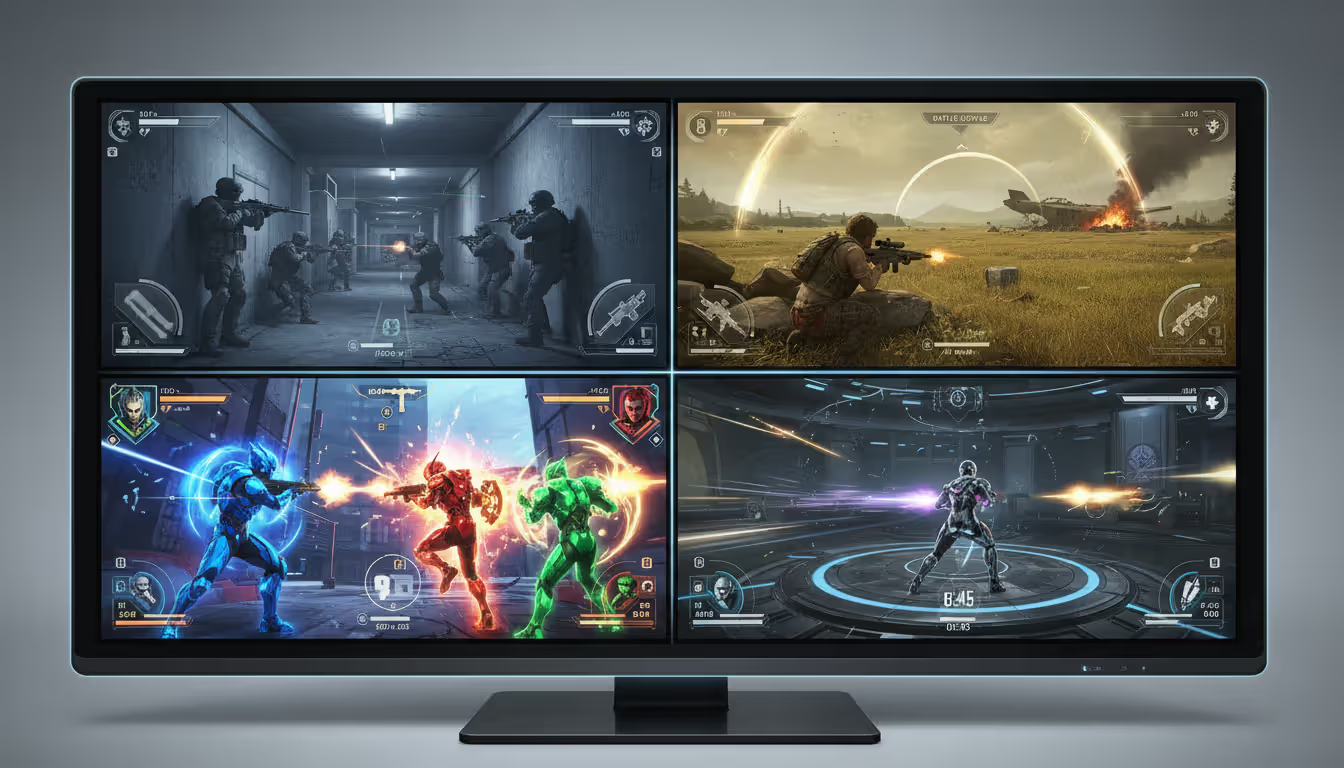
Shooter games represent one of gaming's most enduring and diverse genres, spanning everything from hyper-realistic military simulations to fast-paced arcade mayhem. Whether you're picking up a controller for the first time or looking to branch out from your usual favorites, understanding the landscape of shooter games helps you find experiences that match your preferences and skill level.
What Are Shooter Games and Why Are They Popular
Shooter games are video games where the primary gameplay mechanic involves using ranged weapons—typically guns—to eliminate opponents or targets. The genre emerged in the early 1990s with titles like Wolfenstein 3D and Doom, which established the foundation for what would become a multi-billion dollar segment of the gaming industry.
The evolution from simple corridor shooters to sprawling battle royales happened gradually. Early games focused on single-player campaigns against AI enemies. Quake introduced competitive multiplayer in 1996, creating the template for online shooter communities. Counter-Strike refined tactical team-based gameplay in the early 2000s. Call of Duty 4: Modern Warfare revolutionized progression systems in 2007. Each milestone expanded what shooters could offer.
What drives shooter popularity? Several factors work together. The skill ceiling is high enough to reward practice without being impenetrable to newcomers. Matches typically last 10-30 minutes, fitting modern play sessions. Social elements let friends team up or compete against each other. The variety within the genre means someone who dislikes one shooter type might love another.
Player motivations vary widely. Some chase competitive rankings and the satisfaction of outplaying opponents. Others enjoy the tactical problem-solving of coordinating with teammates. Many appreciate the escapism of inhabiting a soldier, space marine, or superhero. The genre accommodates casual players looking for quick entertainment and dedicated enthusiasts treating it like a sport.
The shooter genre succeeds because it provides immediate feedback and clear goals. You see an enemy, you react, and you instantly know if you succeeded or failed. That loop of challenge and mastery keeps players engaged for thousands of hours
— Jason West
First Person vs Third Person Shooters
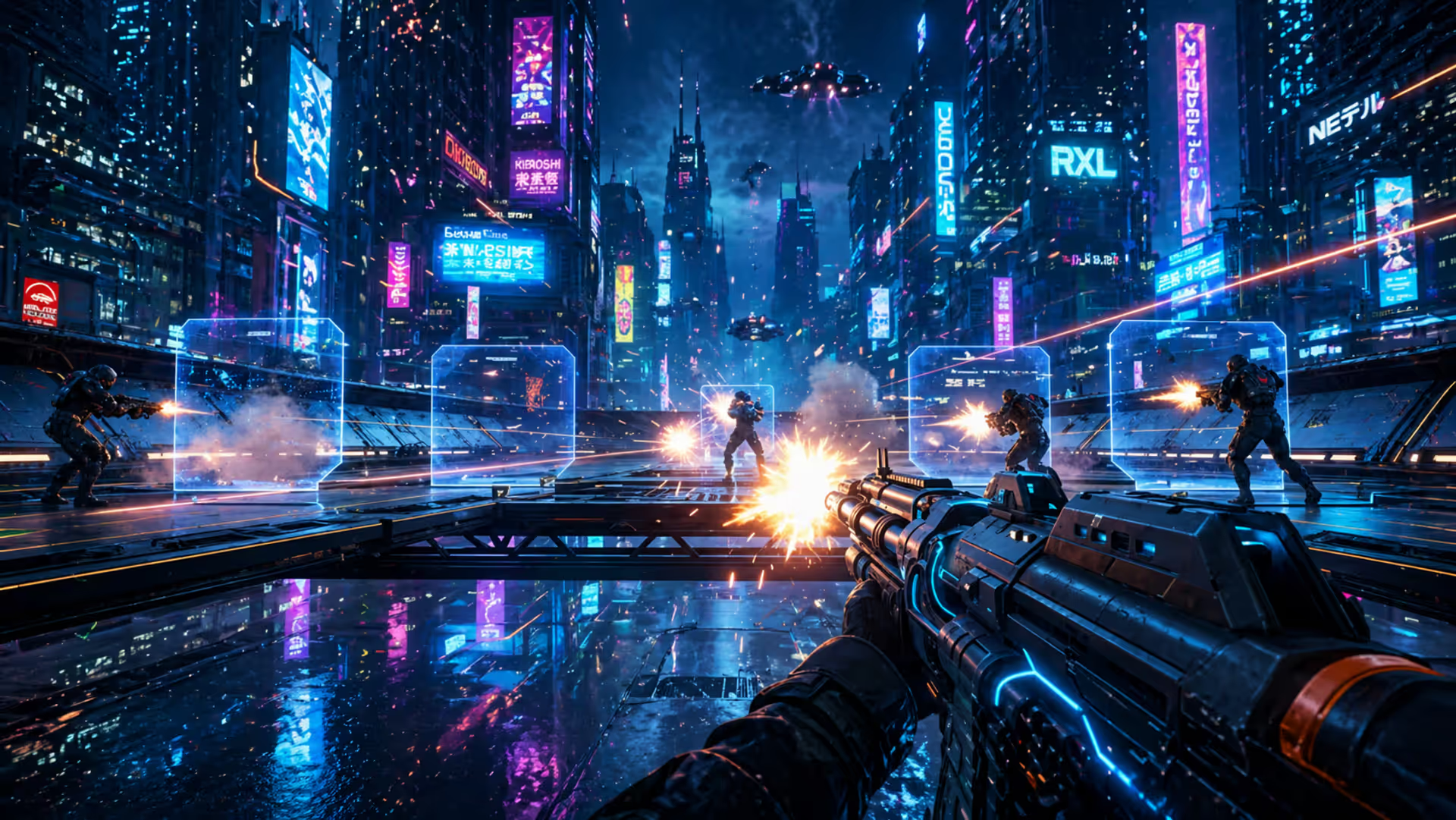
The camera perspective fundamentally shapes how a shooter feels and plays. First-person shooters (FPS) display the game world from the character's eyes, showing only your weapon and hands. Third-person shooters (TPS) pull the camera back, showing your character from behind or over the shoulder.
First-person perspective creates stronger immersion and situational intensity. When you round a corner in an FPS, you experience the same limited sightlines as your character. This restriction makes close-quarters combat more tense and unpredictable. Aiming feels more direct since your crosshair represents exactly where you're looking. Games like Counter-Strike 2, Valorant, and Call of Duty use this perspective to emphasize quick reflexes and precise aim.
Third-person perspective trades some immersion for tactical awareness. You can see around corners by positioning the camera, spot enemies approaching from angles your character couldn't see, and maintain better spatial awareness during movement. Character customization matters more when you constantly see your avatar. Cover systems work more intuitively since you can see your character's position relative to obstacles. Fortnite, The Division 2, and Gears of War demonstrate how this perspective enables different tactical approaches.
Aspect
First-Person Shooters
Third-Person Shooters
Perspective
Through character's eyes
Camera behind/over shoulder
Tactical Advantages
More precise aiming, stronger immersion
Better spatial awareness, corner peeking
Immersion Level
Higher sensory immersion
Better character connection
Popular Examples
Counter-Strike 2, Valorant, Apex Legends (hybrid)
Fortnite, The Division 2, Warframe
Learning Curve
Steeper for spatial awareness
Easier orientation, harder aim compensation
The perspective affects muscle memory and skill transfer. Players who master FPS aiming often struggle when switching to TPS because the camera position changes how you lead moving targets. Conversely, TPS veterans sometimes feel disoriented by the limited field of view in first-person games.
Some modern shooters blur these lines. Apex Legends uses first-person for normal play but switches to third-person when you're downed or using certain abilities. This hybrid approach attempts to capture benefits from both perspectives.
Major Types of Shooter Games Explained
The shooter genre splits into distinct subgenres, each with unique mechanics, pacing, and player expectations. Understanding these categories helps identify which games will match your interests.
Military Shooter Games
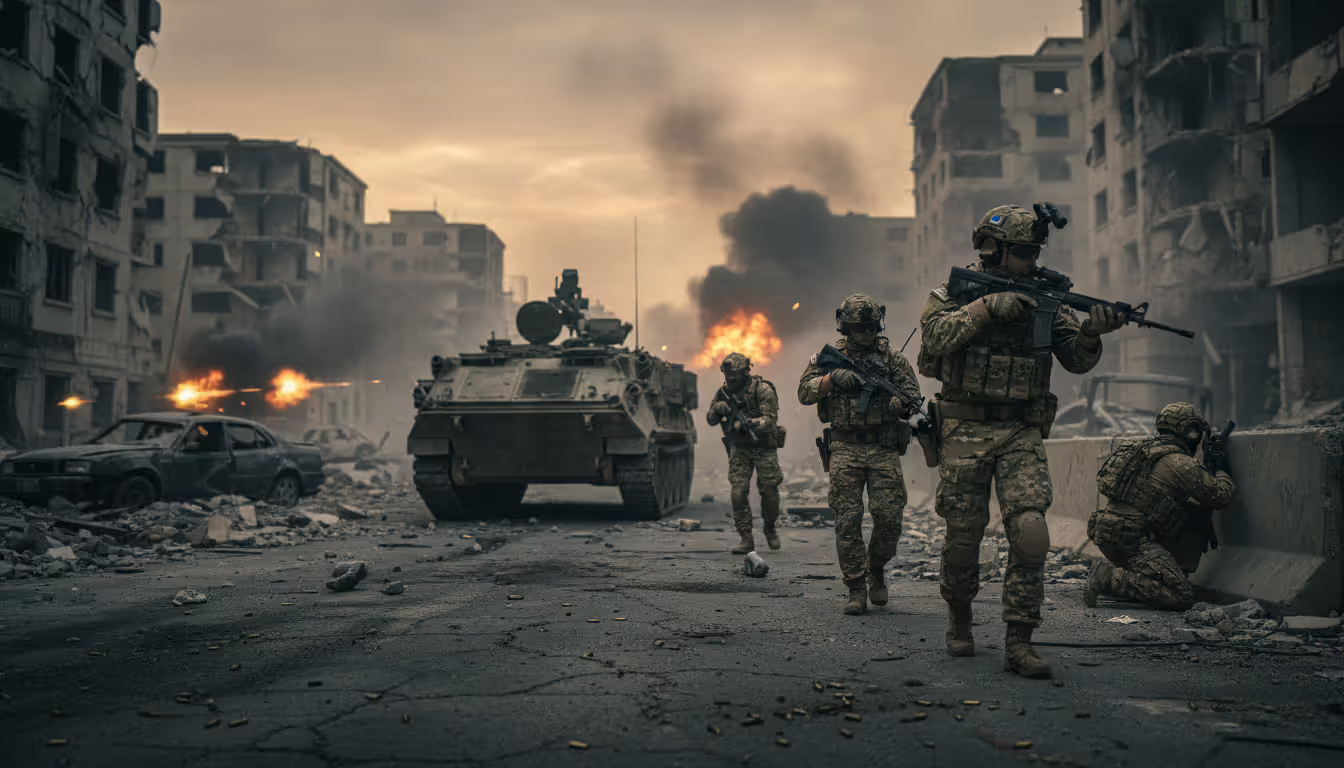
Military shooters simulate modern or historical warfare with varying degrees of realism. These games typically feature authentic weapons, military equipment, and combat scenarios based on real or plausible conflicts.
Call of Duty and Battlefield represent the mainstream military shooter experience. They balance realism with accessibility, offering fast respawn times, regenerating health, and arcade-style movement alongside recognizable weapons and military settings. Matches feel intense but forgiving enough for casual play.
The campaigns often follow soldiers through dramatic wartime scenarios, while multiplayer modes emphasize large-scale battles with vehicles, air support, and destructible environments. The appeal lies in experiencing military power fantasy without the complexity of true simulations.
These games refresh annually or bi-annually, incorporating current military technology and historical conflicts that resonate with players. The production values—graphics, sound design, motion capture—typically set industry standards.
Author: Megan Crosley;
Source: canelomobile.com
Tactical Shooter Explained
Tactical shooters prioritize realism, teamwork, and strategic planning over fast reflexes. They feature realistic damage models (often one-shot kills), limited health regeneration, and punishing consequences for mistakes.
Rainbow Six Siege exemplifies competitive tactical shooters. Attackers and defenders use unique operators with specialized gadgets, reinforced walls, destructible floors, and careful drone reconnaissance. A single mistake ends your round, forcing deliberate movement and communication.
Squad and Insurgency: Sandstorm push realism further with proximity voice chat, minimal HUD elements, and realistic ballistics. You coordinate with teammates using actual compass directions and landmarks rather than minimap markers.
The learning curve is steep. New players often die without understanding what happened or where the shot came from. Success requires map knowledge, sound awareness, and team coordination. Matches move slowly, with long periods of setup punctuated by brief, lethal firefights.
This subgenre appeals to players who enjoy outsmarting opponents through positioning and coordination rather than pure mechanical skill. The tension of permanent death (until the next round) creates memorable moments when plans succeed or fail spectacularly.
Battle Royale Shooters
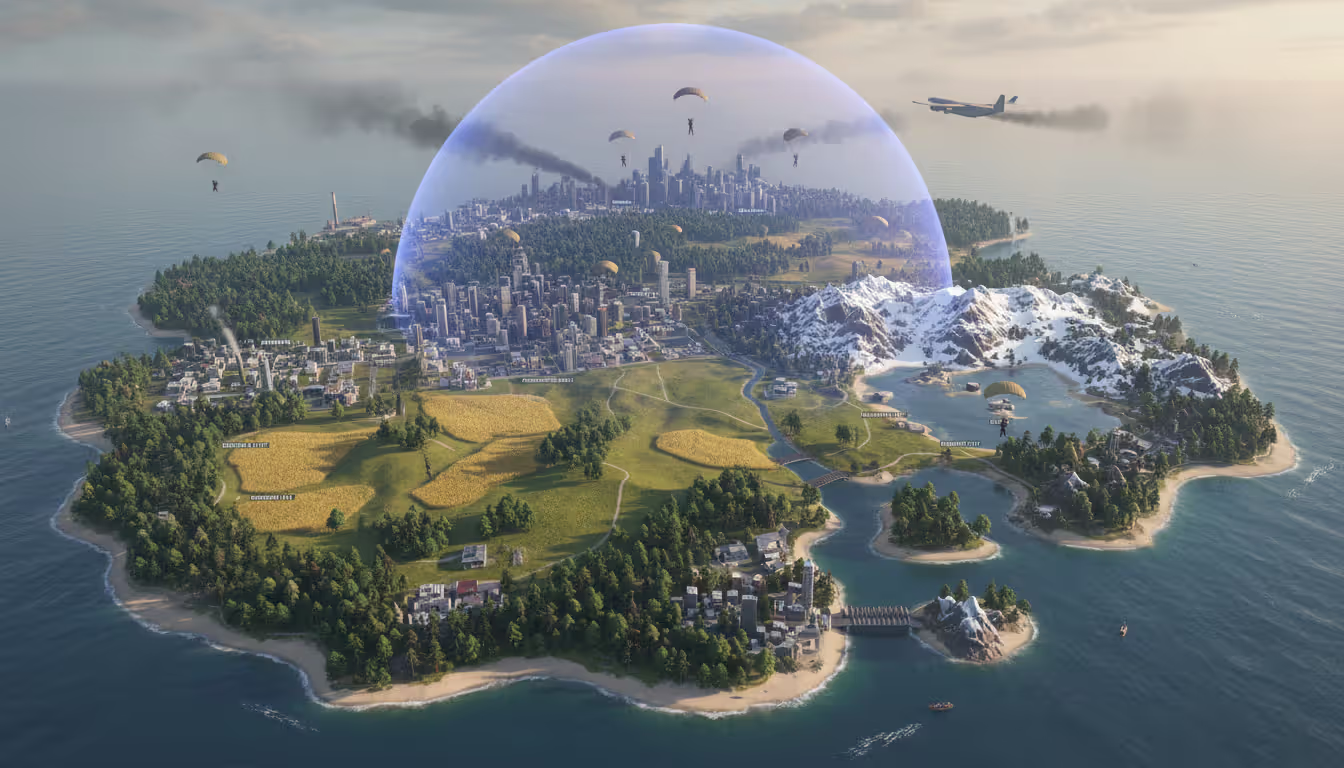
Battle royale games drop dozens or hundreds of players onto a large map where they scavenge weapons and equipment while a shrinking safe zone forces encounters. The last player or team standing wins.
Fortnite, Apex Legends, and PUBG popularized this format, each adding distinct mechanics. Fortnite introduced building, letting players construct defensive structures mid-combat. Apex Legends added hero abilities and a respawn system. PUBG maintained a more grounded, realistic approach.
The format creates natural tension through scarcity and elimination. Early game emphasizes looting and positioning. Mid-game involves rotating toward safe zones while avoiding or taking fights. End-game compresses remaining players into small areas for intense final battles.
Matches last 20-35 minutes, significantly longer than traditional shooters. This time investment makes victories more rewarding but defeats more frustrating. The randomness of loot spawns and safe zone locations means adaptability matters as much as mechanical skill.
Battle royales accommodate various playstyles. Aggressive players hunt for kills and better loot. Passive players avoid combat until necessary. Strategic players focus on optimal positioning for final circles.
Author: Megan Crosley;
Source: canelomobile.com
Hero Shooters Overview
Hero shooters feature distinct characters with unique abilities, weapons, and roles. Rather than everyone having access to the same equipment, your character choice determines your capabilities and team role.
Overwatch 2 and Valorant lead this category. Overwatch emphasizes ability usage and team composition, with tanks, damage dealers, and healers working together. Valorant combines hero abilities with Counter-Strike-style tactical shooting, where abilities enhance gunplay rather than replace it.
Team composition matters significantly. A balanced team covers weaknesses and enables coordinated strategies. Playing without a healer or tank often leads to defeat regardless of individual skill.
The appeal comes from finding characters that match your preferred playstyle. Players who struggle with precise aiming might excel with characters emphasizing abilities or supportive roles. The variety keeps gameplay fresh as you learn different characters.
However, hero shooters require understanding multiple characters to counter opponents effectively. You need to know what each hero can do, their cooldown timings, and how to exploit their weaknesses.
Arena and Arcade Shooters
Arena shooters emphasize fast movement, quick respawns, and skill-based combat without loadouts or progression systems. Players spawn with basic weapons and compete for power weapons and power-ups placed around symmetrical maps.
Quake Champions and Diabotical maintain this classic formula. Movement techniques like strafe-jumping and rocket-jumping raise the skill ceiling dramatically. Map control determines who accesses powerful weapons, creating strategic objectives beyond simple kills.
The pacing is relentless. You respawn within seconds and immediately re-engage. Success depends on mechanical skill, map knowledge, and item timing rather than team coordination or strategic planning.
This subgenre has a smaller but dedicated player base. The skill gap between beginners and veterans is massive, making these games challenging entry points for new players. However, they offer the purest test of shooter fundamentals.
Shooter Game Mechanics Guide
Understanding core mechanics helps you improve across different shooters and recognize what makes each game feel distinct.
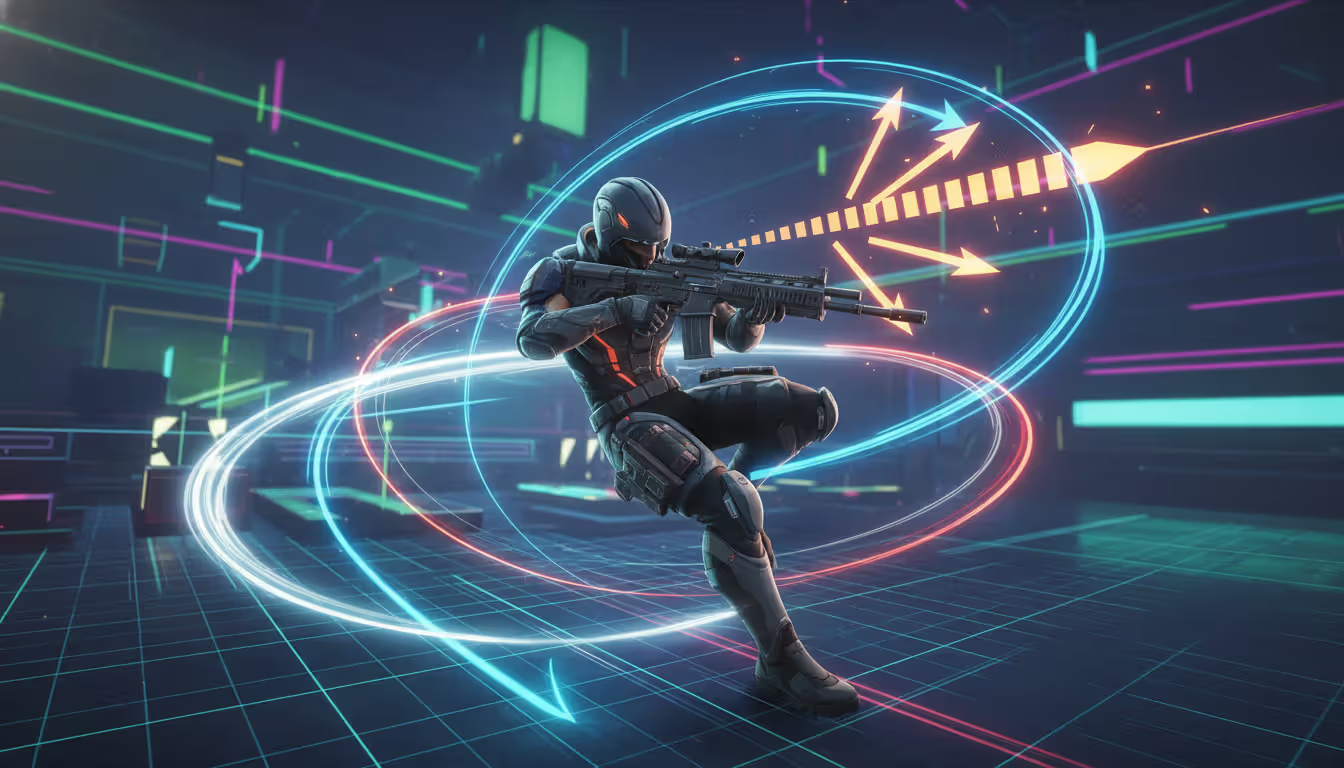
Aiming and recoil systems determine how weapons behave. Some games use hitscan, where bullets instantly hit whatever your crosshair covers. Others use projectile physics, requiring you to lead moving targets and account for bullet drop over distance. Recoil patterns might be random (spray and pray) or fixed (learnable patterns you can compensate for). Counter-Strike features learnable spray patterns that skilled players memorize. Apex Legends uses more random recoil that's harder to control perfectly.
Movement mechanics dramatically affect gameplay pace and skill expression. Basic movement includes walking, sprinting, and crouching. Advanced mechanics like slide-jumping, bunny-hopping, or wall-running create skill gaps. Titanfall 2's parkour system lets skilled players maintain momentum across entire maps. Tactical shooters limit movement speed to emphasize positioning over mobility.
Author: Megan Crosley;
Source: canelomobile.com
Health and damage models range from realistic to arcade-style. Realistic games feature location-based damage (headshots kill instantly, limb shots do less damage) and permanent injuries. Arcade games use regenerating health that refills when you avoid damage briefly. Some games combine both: you have regenerating shields over permanent health. These systems determine whether you can take multiple fights consecutively or must reset between engagements.
Loadout and weapon systems vary between predetermined loadouts and customizable options. Some games let you build custom classes with specific weapons, attachments, and equipment. Others restrict choices to maintain balance or force adaptation. Battle royales make you work with whatever you find. The depth of customization affects how much time you spend theorycrafting optimal builds versus playing.
Map design and spawn systems control pacing and fairness. Three-lane maps (popularized by Call of Duty) create predictable flow with flanking routes. Open maps reward positioning and sightline control. Spawn systems might flip based on team positions, use fixed locations, or randomize within zones. Poor spawn systems lead to "spawn camping" where players repeatedly kill opponents as they appear.
How to Choose the Right Shooter Game for You
Finding the right shooter requires honest assessment of your preferences, constraints, and goals.
Assess your skill level and time commitment. If you're completely new to shooters, starting with a forgiving game like Overwatch 2 or Apex Legends helps you learn fundamentals without constant frustration. These games offer characters and playstyles that don't require perfect aim. If you can only play a few hours weekly, avoid games requiring constant practice to maintain skills. Battle royales and casual modes accommodate irregular schedules better than competitive ranked systems.
Author: Megan Crosley;
Source: canelomobile.com
Consider playstyle preferences. Do you prefer fast-paced action or methodical planning? Arcade shooters and Call of Duty offer constant action with minimal downtime. Tactical shooters like Rainbow Six Siege reward patience and strategy. Do you enjoy teamwork or solo performance? Hero shooters and tactical games emphasize coordination, while battle royales and arena shooters let individual skill carry harder.
Ask yourself about failure tolerance. Battle royales mean one death ends a 20-minute match. Respawn-based games let you bounce back from mistakes immediately. Some players find permanent death thrilling; others find it frustrating.
Platform and hardware requirements matter more than many players expect. Competitive shooters demand high frame rates (144+ FPS) and low input lag for optimal performance. Console versions work fine for casual play but create disadvantages in cross-platform competitive modes against PC players using mouse and keyboard. Budget builds can run older shooters like CS2 or Valorant, which are optimized for performance. Modern military shooters and battle royales require more powerful hardware for acceptable performance.
Controller versus mouse and keyboard affects which games suit you. Mouse aiming provides precision advantages in traditional shooters. Controllers work well for games with aim assist and movement-heavy mechanics. Some shooters separate input methods in matchmaking; others mix them.
Community and competitive scene influence long-term enjoyment. Games with active communities offer better matchmaking, more content creators producing guides, and longer support from developers. Check current player counts and content update schedules. A dying game might still be fun but will have matchmaking issues and limited future content.
If you're interested in competitive play, research the esports scene. Games like Valorant and Counter-Strike 2 have established competitive ladders and tournaments. Understanding the meta and watching professional play accelerates improvement.
Try free-to-play options first. Apex Legends, Valorant, and Warframe cost nothing to try. This lets you experiment with different subgenres before committing money to premium titles.
Common Questions About Shooter Games (FAQ)
What is the easiest type of shooter game for beginners?
Hero shooters like Overwatch 2 are often easiest for beginners because they offer characters that don't require precise aiming to contribute effectively. Support and tank roles let you help your team through healing, shielding, or area control rather than pure gunplay. Third-person shooters also tend to be more forgiving since the camera perspective helps with spatial awareness.
Are first-person or third-person shooters more popular?
First-person shooters dominate the competitive scene and overall player counts. Games like Counter-Strike 2, Valorant, and Call of Duty consistently rank among the most-played shooters. However, third-person shooters like Fortnite maintain massive player bases, particularly on consoles where the perspective works well with controllers. Preference often comes down to whether you prioritize immersion (FPS) or spatial awareness (TPS).
What makes tactical shooters different from regular shooters?
Tactical shooters emphasize realistic damage models, permanent death (until the next round), and strategic team coordination over fast reflexes and quick respawns. A single bullet can kill you, making positioning and planning more important than raw aim. They typically feature slower movement, limited HUD information, and mechanics like leaning, breaching, and realistic ballistics that aren't present in arcade-style shooters.
How do battle royale games differ from traditional shooters?
Battle royale games feature 50-150 players competing in a single match where you start with no equipment and must scavenge weapons while a shrinking safe zone forces encounters. Traditional shooters use smaller teams (typically 5v5 or 6v6), predetermined loadouts or weapon spawns, and quick respawns. Battle royale matches last 20-35 minutes with permanent death, while traditional matches last 10-15 minutes with constant respawning.
What are hero shooters and how do they work?
Hero shooters feature distinct characters with unique weapons, abilities, and roles rather than letting everyone access the same equipment. Your character choice determines your capabilities—some excel at damage, others at healing or tanking. Team composition matters significantly since you need balanced roles to succeed. This creates strategic depth in character selection and counter-picking while accommodating different playstyles and skill levels.
Do I need a high-end PC to play modern shooter games?
It depends on the specific game and your performance expectations. Competitive titles like Valorant and Counter-Strike 2 are optimized to run on modest hardware at high frame rates. Modern military shooters and battle royales like Call of Duty or Apex Legends require mid-range to high-end systems for smooth performance at competitive settings (144+ FPS). Console versions offer more predictable performance but typically run at lower frame rates than PC equivalents. For casual play, mid-range hardware suffices for most shooters.
The shooter genre offers remarkable variety, from twitchy arena combat to methodical tactical gameplay. Understanding the differences between first-person and third-person perspectives, recognizing how subgenres like military shooters, tactical shooters, battle royales, and hero shooters create distinct experiences, and knowing core mechanics helps you identify games that match your preferences.
Start with your natural inclinations. If you enjoy team coordination, try hero shooters or tactical games. If you prefer self-reliance and adaptation, battle royales might fit better. If you want pure mechanical skill expression, arena shooters provide that challenge.
Most importantly, expect a learning period. Every shooter has unique mechanics, maps, and strategies that take time to internalize. The genre rewards practice and pattern recognition, but the variety ensures you can always find a fresh experience when your current favorite grows stale.
The multiplayer gaming landscape continues to evolve at breakneck speed. With studios pushing boundaries in connectivity, cross-platform features, and innovative gameplay mechanics, the next wave of titles promises experiences that go far beyond what we've seen before
Total Battle combines city-building, real-time combat, and alliance warfare across multiple historical eras. This complete guide explains core systems, troop counters, resource management, hero progression, and proven strategies to help new players build competitive castles and thrive in alliance warfare
Strat roulette injects chaos into competitive gaming by forcing players to follow randomly generated strategies. Born from Counter-Strike, this concept has evolved into a global phenomenon with dedicated platforms, streaming categories, and legitimate training applications across multiple game genres
Gaming from your living room has evolved into a vibrant social experience connecting millions worldwide. Whether coordinating raids with teammates across continents or enjoying puzzle games during lunch breaks, optimizing your home setup and choosing the right games makes all the difference
The content on this website is provided for general informational and educational purposes only. It is intended to explain concepts related to video games, gaming guides, builds, mobile gaming, multiplayer strategies, and gaming history.
All information on this website, including articles, guides, and examples, is presented for general educational and entertainment purposes. Gameplay outcomes, strategies, and performance may vary depending on player skill, game updates, and platform.
This website does not provide professional advice or guarantee game outcomes, and the information presented should not be used as a substitute for official game documentation or developer guidance.
The website and its authors are not responsible for any errors or omissions, or for any outcomes resulting from decisions made based on the information provided on this website.