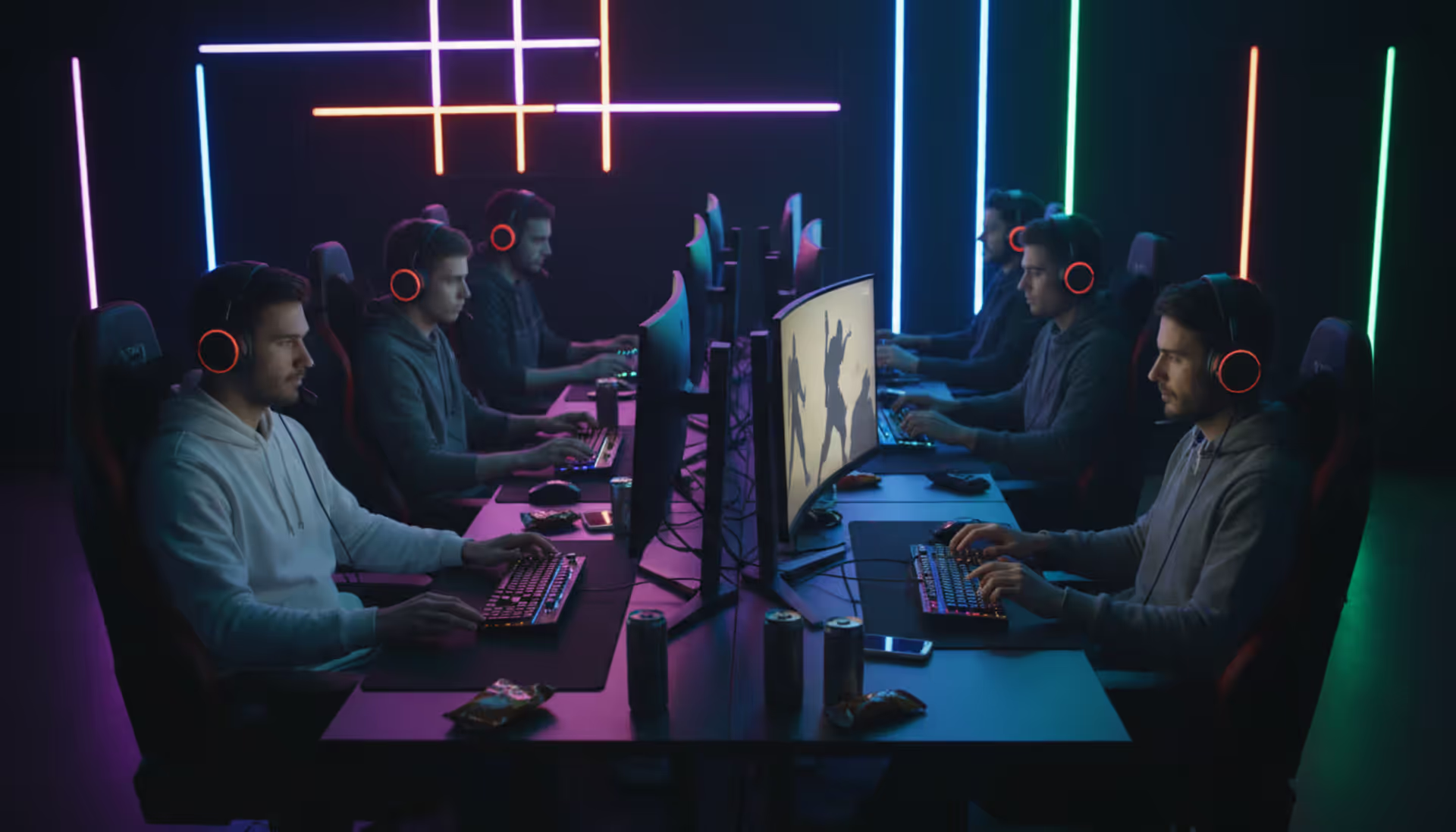
Studios everywhere are cooking up multiplayer experiences right now. Some will flop hard. Others? They'll steal thousands of hours from your life before you realize what happened.
Cross-platform features that actually work, servers that don't crash when streamers play, progression systems that respect your time—these aren't luxuries anymore. They're baseline requirements. The difference between games that stick around and those abandoned within months often comes down to execution on these fundamentals.
Looking for your next obsession in tactical shooters? Curious which battle royales might dethrone the current kings? Want co-op games that won't bore your friends after three sessions? This breakdown covers the releases actually worth monitoring, the red flags suggesting you should wait for reviews, and how to separate legitimate hype from marketing noise.
What Makes a Multiplayer Game Worth Anticipating
Here's the thing about game announcements—90% of them lie. Not intentionally maybe, but the gap between reveal trailers and launch reality kills more hype than anything else.
Track records tell you everything. Did the studio ship their last game in a playable state? Do they patch regularly or abandon projects when player counts dip? Respawn Entertainment launching a new shooter carries different weight than a brand-new studio with gorgeous concept art and zero shipped titles. One's earned your attention through Apex Legends maintenance and Titanfall innovation. The other's promising the moon with nothing backing it up.
Fresh mechanics matter way more than visual polish. Another military shooter with slightly better graphics won't pull players from established games with years of maps, modes, and community investment. But introduce wall-running that fundamentally changes encounter design? Add destructible environments that create new tactics mid-match? Now you've got something competitors can't easily copy. Players will tolerate rough edges if core gameplay offers experiences they can't get elsewhere.
Beta tests reveal a studio's true priorities. Extensive testing periods where developers actually respond to feedback? Good sign. Token betas two weeks before launch that clearly can't accommodate major changes? Marketing exercise. Check Reddit and Discord during test phases—if players report the same bugs across multiple weekends with no acknowledgment from devs, launch day will be a disaster.
Cross-platform play isn't a feature anymore—it's the default expectation. Your friends game on different hardware. Period. Titles launching without cross-play in 2025 need extraordinary reasons to justify splitting player bases. Even Sony's dropped most resistance to cross-platform functionality after seeing competitors capture their audience.
Built-in social features separate games you play for a month from games you play for years. Clans, content sharing, tournament brackets, coaching systems—when developers build community tools directly into their game instead of relying on Discord to do the heavy lifting, player retention shoots up. Bungie learned this with Destiny 2's clan improvements. Riot builds entire ecosystems around watching and learning from better players in Valorant.
New FPS and Shooter Games Releasing Soon
Shooter fans have options. Too many options, honestly. Here's what stands out from the pack competing for your time against Warzone, Apex, and Valorant.
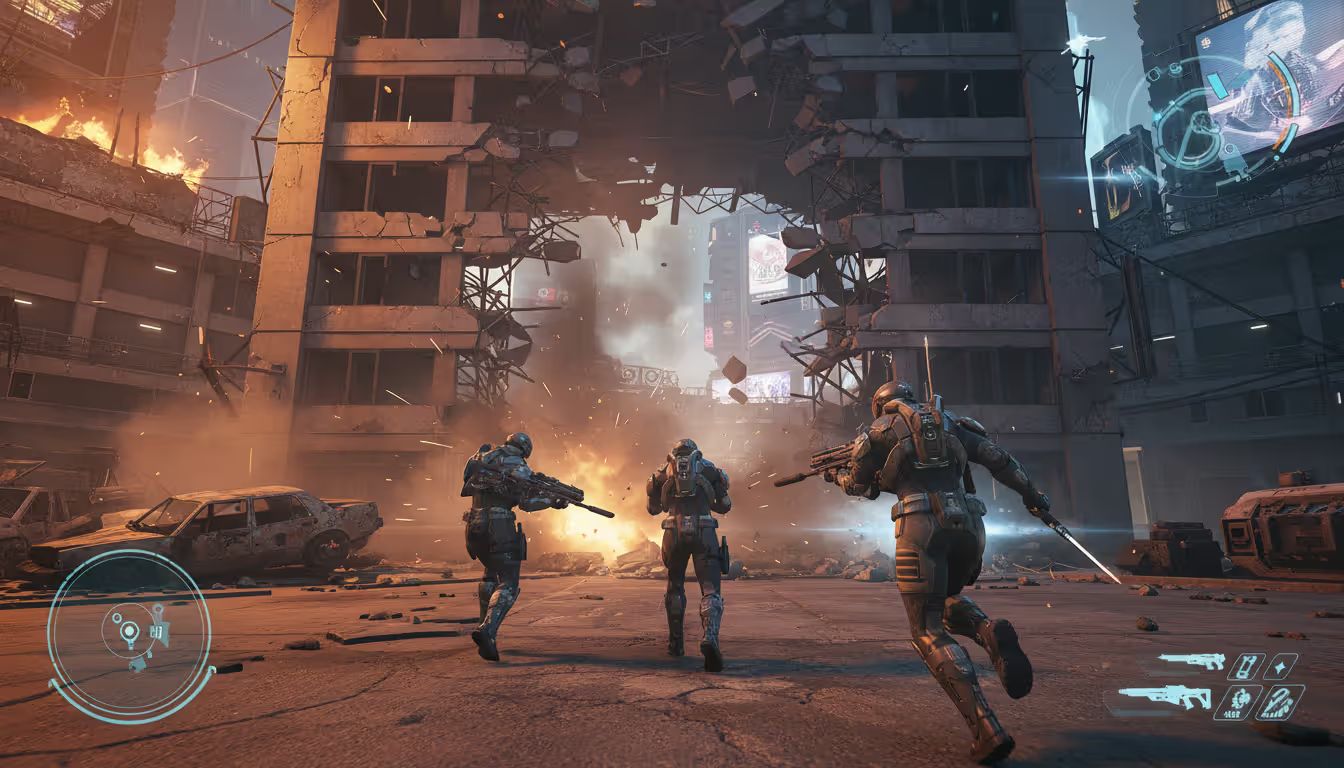
Fragmented Warfare drops Q2 2025 on PC, PlayStation 5, and Xbox Series X|S with a wild promise: total destructibility in competitive matches. Kinetic Studios lets you blast holes through literally any surface. That camping sniper? Demolish the floor beneath them. Enemy fortified in a building? Collapse the entire structure. Alpha footage shows players creating completely new pathways three minutes into matches, turning familiar maps into unrecognizable rubble by round five. The 6v6 format keeps things manageable while environmental chaos unfolds.
Author: Jordan Kessler;
Source: canelomobile.com
Will it work? Performance demands seem brutal. Calculating real-time physics for that level of destruction while maintaining 120fps on console hardware—that's a technical nightmare. Battlefield's tried building destruction for years with mixed results. Kinetic's a smaller studio attempting something EA struggles with. Skepticism's warranted until we see extended gameplay from non-developer sources.
Neon Rift targets arena shooter purists when it launches Q3 2025 for PC and PS5. Velocity Games built this for the movement junkies who never stopped playing Quake and still complain about modern shooters feeling too slow. Wall-running flows into double-jumps into air-dashes. One-shot-kill weapons reward precision. Matches cap at five minutes in tight arenas where momentum matters more than loadouts.
This won't compete with Call of Duty numbers. Can't—the skill floor's too high. But dedicated arena communities support games for decades when mechanics click. Tribes still has active players. Quake Champions maintains a small but passionate base. Neon Rift might carve out a similar niche if it nails the movement physics. No cross-play hurts though, especially splitting an already small potential audience.
Exo Marines launches Q4 2025 for PC and Xbox Series X|S, bringing back genuine class restrictions. Heavy, Scout, Medic, Engineer—four roles with completely different movement capabilities and weapon access. You can't lone-wolf this one. Heavies move slow but break through choke points. Scouts flank but die instantly under focused fire. Medics keep teams alive. Engineers control map flow with deployables.
PlayStation's absence raises questions. Partial cross-play between PC and Xbox happens at launch, but leaving out Sony's install base fragments the community before it starts. Developer interviews mention "platform negotiations" which usually means money arguments, not technical limitations. Still, asymmetric objective modes requiring real coordination could fill the gap Rainbow Six Siege's competitive scene left when it shifted focus.
Operation: Coldfront arrives Q1 2026 exclusively for PC, and it's not for casual audiences. Former military consultants building hardcore milsim gameplay—one-life modes, realistic ballistics, communication requirements that make SOCOM look forgiving. Minimal UI. No respawns in primary modes. Mistakes kill you and cost your team rounds.
This targets the Escape from Tarkov and Squad demographics willing to crawl for three minutes to reach a sight line. Expect a smaller but incredibly dedicated player base. The question's whether enough of that audience exists outside existing milsims to sustain another entry. Ground Branch, Zero Hour, Ready or Not—several games already compete for these players.
Battle Royale and Large-Scale Combat Games on the Horizon
Battle royales peaked in 2019, right? Wrong. The format keeps evolving, and several upcoming titles experiment with what "last player standing" actually means.
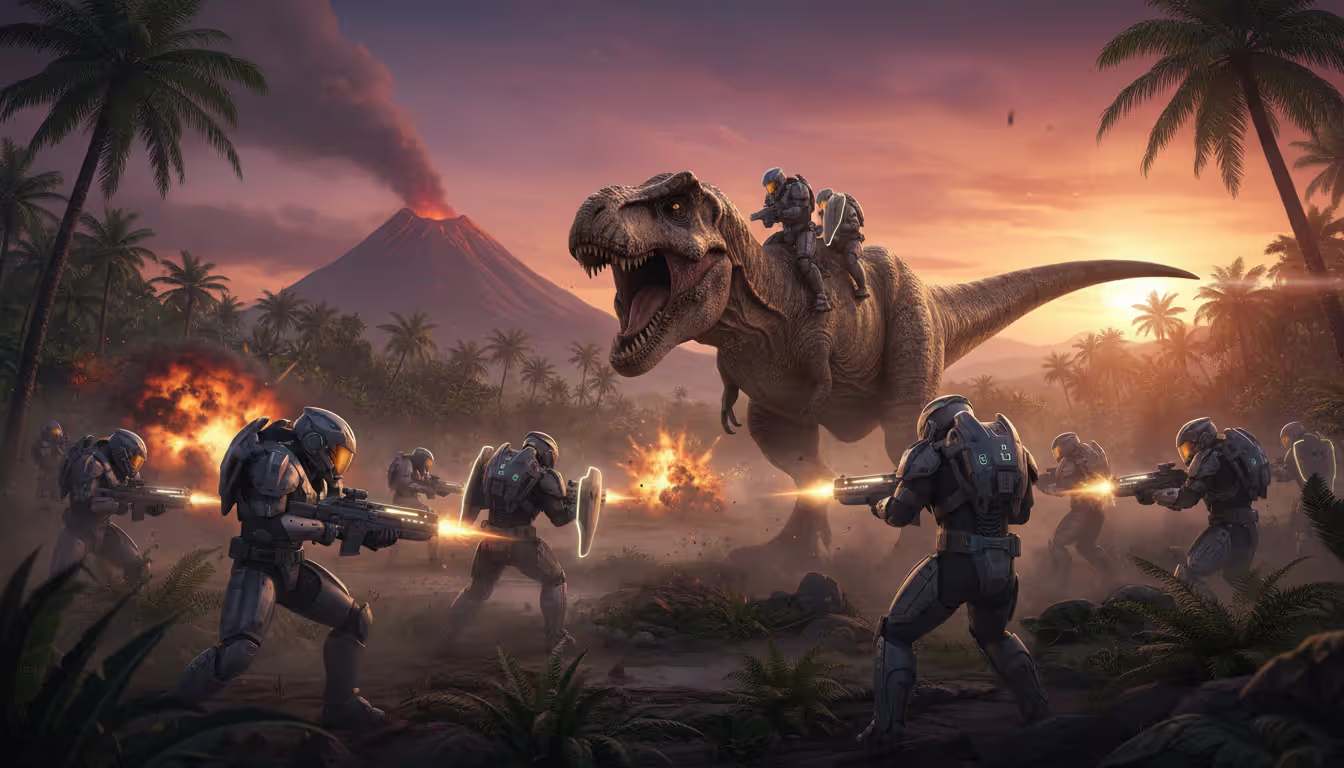
Apex Predator (Q2 2025, all platforms) stuffs 200 players into prehistoric environments where you're hunting dinosaurs while other players hunt you. Primal Interactive's twist—killing creatures grants temporary evolution abilities. Enhanced hearing lets you track nearby players. Speed bursts escape bad situations. Armored skin tanks damage. The abilities expire, forcing constant PvE engagement to maintain advantages.
200 players though? Server stability's already questionable in 100-player matches. Add AI dinosaurs with complex pathfinding and attack patterns? Launch week will probably be rough. Cross-platform play at launch is ambitious considering the technical demands. Still, the concept's fresh enough to attract players bored with traditional BR survival.
Author: Jordan Kessler;
Source: canelomobile.com
Warzone Eternal (Q3 2025, PC/consoles) represents Activision's next evolution beyond traditional Call of Duty battle royale. The core innovation: persistent map changes based on community actions. Buildings destroyed across thousands of matches stay destroyed. Factions capture and hold zones. Resources get scarce when players over-extract from regions.
Sounds incredible on paper. Reality check—new players entering three months post-launch face established meta-strategies and altered geography with zero context. Imagine dropping into a BR where half the buildings from tutorial videos no longer exist and everyone else knows exactly which faction controls which zones. The new-player experience could be brutal unless Activision implements catch-up mechanics, which defeats the persistence concept.
Mech Assault Royale (Q4 2025, PC/PS5/Xbox Series X|S) scales down to 60 players but gives everyone customizable mechs. Titan Games emphasizes tactical positioning over twitch reflexes. Weapon loadouts, mobility systems, defensive capabilities—all customizable, all creating rock-paper-scissors matchups.
The respawn mechanic's clever: eliminated players return as infantry with anti-mech weapons. Instead of spectating, you're hunting the mechs that killed you. It creates dynamic role reversals where dominant players suddenly become hunted. Balancing's the concern. Mech games historically struggle when optimized builds stomp casual configurations. If meta loadouts become mandatory for competitiveness, the build variety promise evaporates.
Frontline Chaos launches Q1 2026 for PC with 128v128 battles in persistent conflicts lasting hours. Think PlanetSide 2 modernized—territorial control matters, matches extend across gaming sessions, roles span infantry to vehicle operators to support positions.
Can 256 concurrent players work in 2026 without complete chaos? PlanetSide 2 manages it but often feels like random explosions from unknowable sources. Battlefield scaled back from 128 to 64 players in 2042 after community feedback. Size alone doesn't create compelling experiences if individual player agency gets lost in the noise. Frontline Chaos needs exceptional UI and matchmaking to make participation feel meaningful at that scale.
Co-Op Games Coming Soon for You and Your Friends
Cooperative experiences range from punishing survival challenges to relaxed adventures perfect for mismatched skill groups. Here's what's coming.
The Forgotten Deep (Q2 2025, PC/consoles) drops four-player teams into procedurally generated cave systems where everything wants you dead. Oxygen depletes. Ammunition runs out. Light sources flicker and die. Abyssal Studios designed this for hardcore co-op groups who've exhausted Deep Rock Galactic's content.
The tension mechanic's brutal: separated players experience audio hallucinations and visual distortions. Stay close or lose your mind—literally. It mechanically punishes team splits, which creates interesting dynamics but might frustrate casual groups who want freedom to explore. Preparation matters more than reaction time. Rushing ahead kills everyone. Careful resource management and communication determine success.
Expect limited mainstream appeal. This targets the same audience that loved GTFO's difficulty and teamwork requirements, not groups wanting chill gaming sessions.
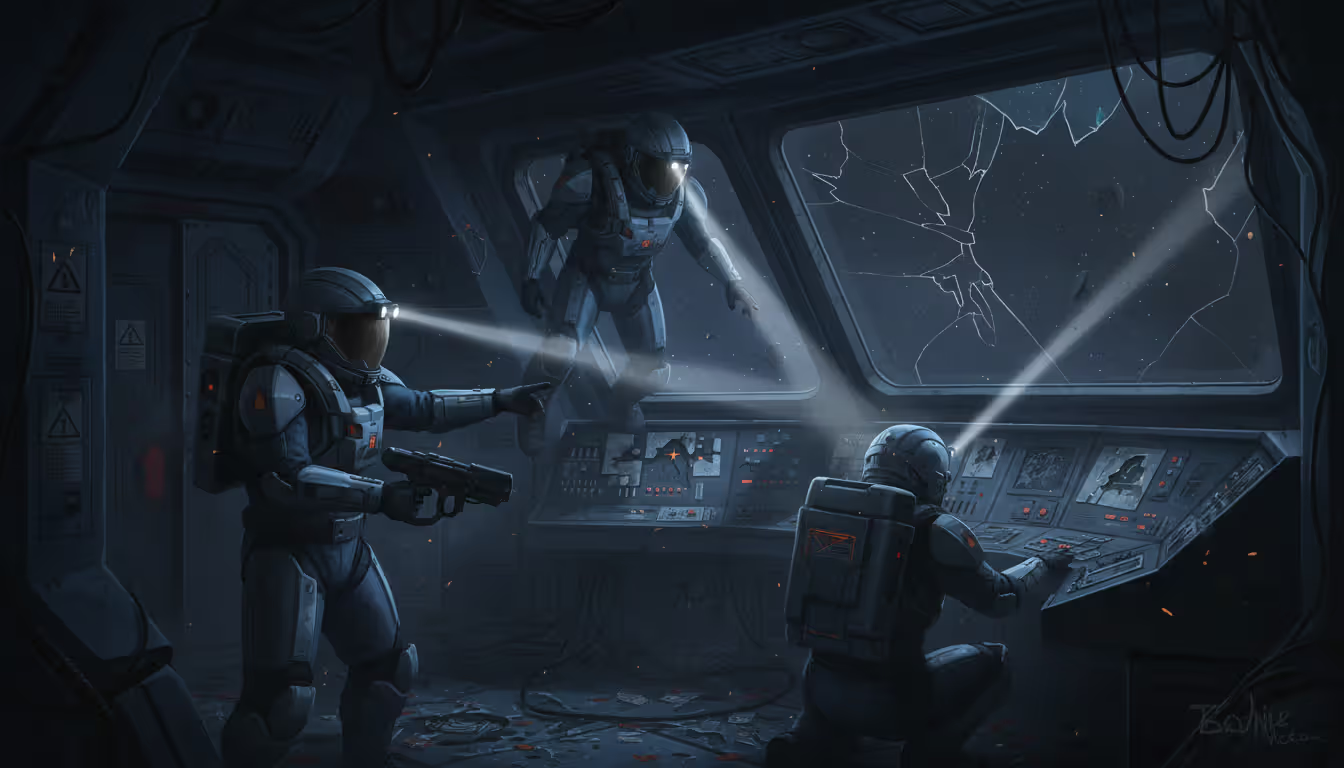
Starbound Salvagers (Q3 2025, PC/PS5/Xbox Series X|S) delivers accessible three-player co-op exploring derelict spaceships. Environmental puzzles and automated security systems provide resistance without demanding twitch skills. Persistent ship upgrades carry between missions, creating satisfying long-term progression.
Cross-platform support and drop-in/drop-out functionality make this friendly for irregular gaming schedules. Your friend needs to leave early? They disconnect, AI takes over, no session lost. The trade-off: previews suggest repetition. Mission structures appear formulaic after 15-20 hours. Fine for casual weekly sessions with friends. Questionable value for daily players seeking depth.
Author: Jordan Kessler;
Source: canelomobile.com
Ember Knights (Q4 2025, all platforms) mixes roguelike runs with four-player dungeon crawling. Permadeath applies to individual runs, but meta-progression unlocks abilities and equipment for future attempts. Tiny Titan Studios promises balanced scaling for solo and full squads—a persistent problem where co-op games often feel tuned for specific party sizes.
Full cross-play at launch removes platform barriers. The roguelike structure accommodates irregular friend schedules since each run's self-contained. No campaign checkpoints to remember. No story beats to catch up on. Drop in, fight through randomized dungeons, unlock permanent upgrades, repeat.
Echoes of Tomorrow (Q1 2026, PC/consoles) requires exactly two players for its narrative-focused adventure. Asymmetric design gives each player different perspectives—one sees the present, one sees the past. Puzzles demand constant communication about divergent timelines. What you observe in your timeline provides clues for your partner's challenges and vice versa.
Voice chat becomes mandatory. This won't work through matchmaking with strangers. You need a consistent partner willing to commit to the 10-12 hour campaign. It follows the It Takes Two design philosophy—experiences crafted for specific player counts with friends, not scalable content for random group sizes. Either that appeals to you or it doesn't. There's no middle ground.
Major Multiplayer Game Announcements from Recent Events
Major showcases dropped several announcements that set community expectations moving forward. Some deserve excitement. Others warrant caution.
The Game Awards 2025 revealed Project Nexus, Riot Games experimenting with MOBA-extraction shooter hybrids. Five-player teams secure objectives and extract with rewards. Dying means dropping loot for enemies. The announcement trailer generated massive response based purely on Riot's reputation from League of Legends and Valorant.
Details remain scarce though. Genre mashups risk alienating both source audiences. MOBA players want strategic depth and character mastery. Extraction shooter fans prioritize tension and loot progression. Combining them requires exceptional execution to avoid satisfying neither group. Riot's track record suggests they'll nail it, but genre experimentation carries inherent risk.
Summer Game Fest 2025 finally showcased Factions, the missing Last of Us multiplayer component. Naughty Dog committed to Q4 2025 after years of silence and development restarts. Gameplay emphasized tense, methodical combat in small-team modes. Stealth and resource scarcity create high-stakes encounters where every bullet matters.
Community reception split hard. Excitement for Naughty Dog's storytelling expertise applied to multiplayer versus concern about their zero live-service experience. Single-player narrative design doesn't automatically translate to retention-focused multiplayer design. The studio's never maintained a game long-term. Will they patch regularly? Balance weapons consistently? Handle seasonal content? Unknown factors that matter more than launch quality for multiplayer longevity.
Gamescom 2025 brought BattleCore, NetEase targeting Smash Bros audiences with competitive platform fighting. Free-to-play model, rollback netcode (essential for fighting games, still not standard), new characters every six weeks post-launch.
NetEase's mobile game reputation precedes them. Monetization concerns dominate discussion—will character unlocks be pay-to-win? Can you reasonably earn new fighters through gameplay or does it require unreasonable time investment? Free-to-play fighting games historically struggle balancing revenue needs against competitive integrity. Fantasy Strike went free-to-play and maintained fairness but couldn't sustain development. MultiVersus launched free with generous unlocks but WB's still figuring out monetization. BattleCore faces the same challenge.
Nintendo Direct late 2025 confirmed Splatoon 4 for 2026. Details stayed minimal—Nintendo fashion—but improved competitive features and better voice chat got specific mention. Both address longtime series pain points. Splatoon 3 maintained momentum despite communication limitations. Actual voice chat infrastructure could push the competitive scene significantly.
Players in 2026 expect multiplayer games to respect their time and social connections. The days of forcing 40-hour grinds or platform-exclusive friend lists are over. Studios that understand multiplayer gaming is fundamentally about people, not just mechanics, will dominate the next generation
— Marcus Chen
How to Stay Updated on Multiplayer Game Releases
Tracking releases requires active effort beyond scrolling Twitter and hoping algorithms surface relevant news. Here's what actually works.
Direct follows beat algorithms every time. Identify studios making games you care about. Follow their official Twitter/X, YouTube, Discord channels directly. Create dedicated lists or folders separating game announcements from general content. Algorithms hide things constantly. Direct follows guarantee you see announcements when they happen, not three days later when discussion's moved on.
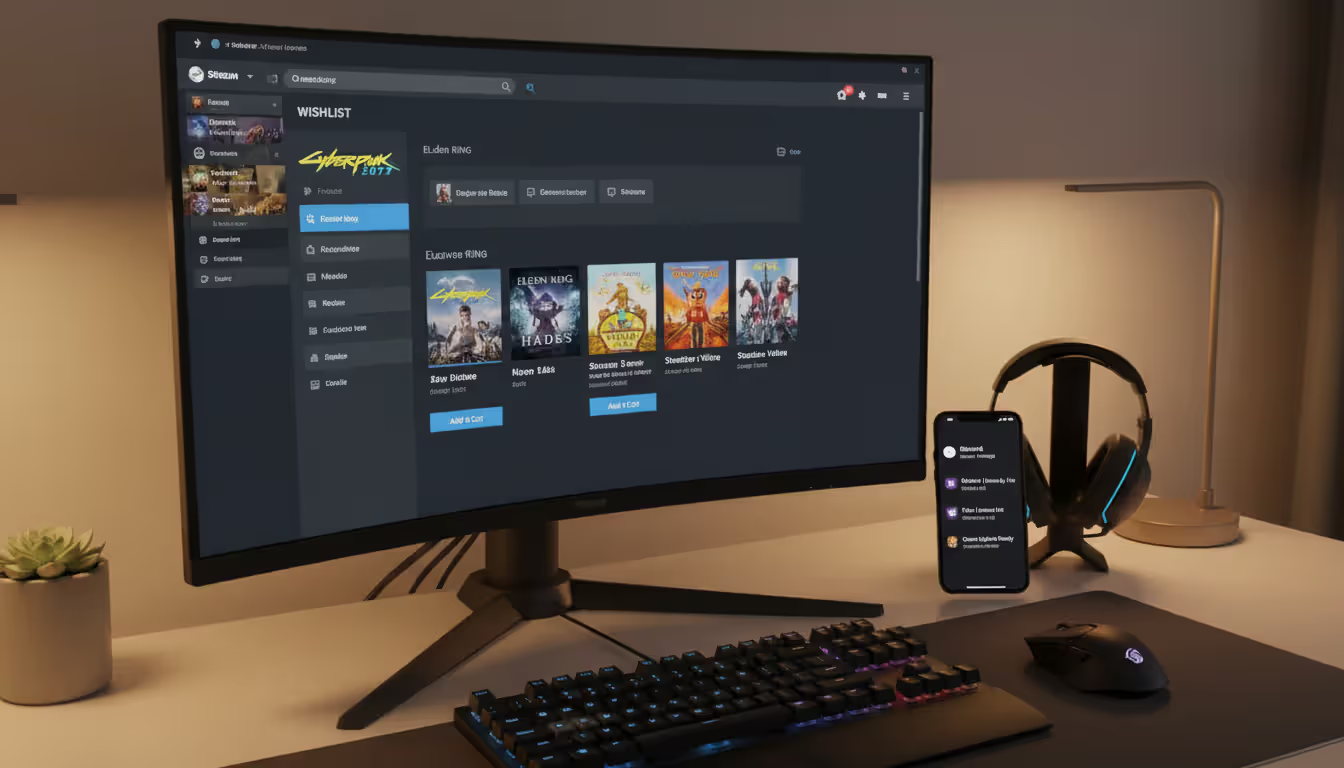
Steam wishlists function as personal calendars. Add upcoming titles regardless of purchase platform. Email notifications trigger for release dates, beta opportunities, major updates. The wishlist interface sorts games by release window automatically. Even PlayStation exclusives—wishlist them on Steam for tracking, buy them wherever makes sense. Steam's notification system works better than most dedicated calendar apps for game releases.
News aggregators drown you in content without filters. PC Gamer, IGN, Polygon cover everything, which creates noise. Use RSS readers filtering for multiplayer-specific tags. Set up Google Alerts for exact game titles you're monitoring. Be ready to wade through irrelevant results—automated alerts lack context—but you'll catch announcements from smaller outlets mainstream sites miss.
Author: Jordan Kessler;
Source: canelomobile.com
Beta sign-ups fill fast. Sites like BetaBound and r/PlaytestGaming aggregate testing opportunities across publishers. Developers run technical tests months before launch now. Early hands-on experience reveals whether marketing promises match reality. Sign up immediately when announced—popular tests fill in hours or select participants randomly from early registrations.
Official Discord servers announce first. Playtests, patch notes, developer Q&As happen in game-specific Discord communities before information spreads elsewhere. Larger gaming communities like PC Gaming Discord maintain upcoming-release channels with active discussions. Turn on notifications for announcement channels. You'll catch news hours before it reaches YouTube or Reddit.
YouTube preview specialists attend closed events. Jackfrags, LevelCapGaming, SkillUp get early access to gameplay demos at conventions. Their impressions go beyond marketing talking points. Subscribe to channels covering your preferred genres. Enable notifications specifically for preview content—you want announcements, not every video they upload.
Mark convention schedules now. Summer Game Fest, The Game Awards, Gamescom, PAX events, Nintendo Direct, PlayStation State of Play—these concentrated announcement windows deliver months of news in hours. Follow event organizers on social media for schedule announcements and last-minute additions. Block time on your calendar for live streams or plan to watch VODs same-day before spoilers spread.
Smaller studios can't afford massive marketing campaigns. Grassroots community excitement becomes their primary promotion vector. Engaging with gaming communities—actually participating in discussions, not just lurking—surfaces hidden gems before mainstream coverage catches on. Some of the best multiplayer experiences launch with minimal fanfare and grow through word-of-mouth.
Quick Reference: Multiplayer Game Release Calendar
Title
Category
Launch Window
Available On
Cross-Platform
Fragmented Warfare
Tactical FPS
Q2 2025
PC, PS5, Xbox Series X|S
Full support
Neon Rift
Arena Shooter
Q3 2025
PC, PS5
Platform locked
Exo Marines
Class-Based Shooter
Q4 2025
PC, Xbox Series X|S
PC/Xbox only
Operation: Coldfront
Hardcore Milsim
Q1 2026
PC exclusive
Single platform
Apex Predator
200-Player BR
Q2 2025
All platforms
Full support
Warzone Eternal
Persistent BR
Q3 2025
PC, PS5, Xbox Series X|S
Full support
Mech Assault Royale
Mech-Based BR
Q4 2025
PC, PS5, Xbox Series X|S
Full support
Frontline Chaos
256-Player Combat
Q1 2026
PC exclusive
Single platform
The Forgotten Deep
Hardcore Co-op
Q2 2025
PC, PS5, Xbox Series X|S
Full support
Starbound Salvagers
Casual Co-op
Q3 2025
PC, PS5, Xbox Series X|S
Full support
Ember Knights
Roguelike Co-op
Q4 2025
All platforms
Full support
Echoes of Tomorrow
2-Player Narrative
Q1 2026
PC, PS5, Xbox Series X|S
Full support
Frequently Asked Questions About Upcoming Multiplayer Games
What are the most anticipated multiplayer games of 2024?
2024's already passed, but Helldivers 2 and Palworld dominated player counts despite modest pre-launch marketing. For 2025-2026 anticipation, community discussion volume and pre-registration numbers point to Fragmented Warfare, Warzone Eternal, and Riot's Project Nexus generating the most excitement. Social media engagement metrics show these three consistently trend higher than competitors when new information drops.
Which upcoming multiplayer games support cross-platform play?
Most major releases include cross-play now. Fragmented Warfare, Apex Predator, Warzone Eternal, Mech Assault Royale, The Forgotten Deep, Starbound Salvagers, Ember Knights, and Echoes of Tomorrow all confirmed full cross-platform functionality at launch. Exo Marines offers limited cross-play connecting PC and Xbox while excluding PlayStation—likely business negotiations rather than technical limitations. Neon Rift and Operation: Coldfront remain platform-exclusive by design.
Are there any new free-to-play multiplayer games coming out?
Warzone Eternal continues Call of Duty's free-to-play battle royale approach, monetizing through cosmetics and battle passes. BattleCore launches free-to-play with character unlocks available through gameplay or direct purchase. Project Nexus will probably adopt Riot's free-to-play structure based on League of Legends and Valorant precedent, though official confirmation hasn't arrived. Most other announced titles use traditional $40-$70 pricing models.
What co-op games are releasing in the next six months?
From current date perspective in Q1 2026, The Forgotten Deep (Q2 2025), Starbound Salvagers (Q3 2025), and Ember Knights (Q4 2025) have already launched. Echoes of Tomorrow arrives Q1 2026 as the next major cooperative release. Several unannounced indie co-op titles typically surface 2-3 months before release windows, so monitor Steam's upcoming co-op category and wishlist-focused subreddits for late calendar additions.
How can I get early access to upcoming multiplayer games?
Most developers run closed beta tests requiring registration through official websites or Steam store pages. Follow game social media accounts for beta announcements—they typically drop 2-4 months before launch. Some studios grant early access to content creators and their communities, so engaging with YouTubers and streamers covering specific titles occasionally yields beta keys through community giveaways. Pre-ordering sometimes includes guaranteed beta access, though this practice has declined as developers prefer broader testing pools over rewarding early purchases.
Which battle royale games are launching soon?
Apex Predator (Q2 2025) introduces prehistoric survival with 200-player matches and evolution abilities from killing dinosaurs. Warzone Eternal (Q3 2025) evolves Call of Duty's formula through persistent map changes based on community actions. Mech Assault Royale (Q4 2025) adds mech customization and infantry respawn mechanics. Beyond confirmed titles, unverified rumors suggest CD Projekt Red's developing a fantasy-themed battle royale for late 2026, but nothing official exists beyond speculation on gaming forums.
The 2025-2026 multiplayer calendar offers genuine variety across shooter subgenres, battle royale experiments, and cooperative experiences. From hardcore milsim demanding military precision to accessible adventures perfect for mixed-skill friend groups, release schedules accommodate different play preferences.
Smart anticipation means looking past cinematic reveals to examine developer histories, beta reception, and community infrastructure. Cross-platform support shifted from bonus feature to baseline requirement—games launching without it face immediate competitive disadvantages against titles letting friends play together regardless of hardware.
Staying informed requires curated information sources, active community participation, and early beta registrations. The most rewarding multiplayer experiences often build organic excitement through gameplay quality rather than massive marketing budgets.
Whether tactical depth in Operation: Coldfront appeals to you, chaotic scale in Frontline Chaos attracts your attention, or cooperative storytelling in Echoes of Tomorrow matches your preferences, the next 12-18 months deliver compelling reasons to gather friends for new virtual worlds. Match game design philosophies with your actual play patterns rather than chasing whatever generates the most social media buzz. That's how you find multiplayer games worth your limited gaming time.
Total Battle combines city-building, real-time combat, and alliance warfare across multiple historical eras. This complete guide explains core systems, troop counters, resource management, hero progression, and proven strategies to help new players build competitive castles and thrive in alliance warfare
Strat roulette injects chaos into competitive gaming by forcing players to follow randomly generated strategies. Born from Counter-Strike, this concept has evolved into a global phenomenon with dedicated platforms, streaming categories, and legitimate training applications across multiple game genres
Shooter games span diverse subgenres from tactical simulations to fast-paced battle royales. This guide explains first-person vs third-person shooters, major game types, core mechanics, and how to choose games matching your skill level and preferences
Gaming from your living room has evolved into a vibrant social experience connecting millions worldwide. Whether coordinating raids with teammates across continents or enjoying puzzle games during lunch breaks, optimizing your home setup and choosing the right games makes all the difference
The content on this website is provided for general informational and educational purposes only. It is intended to explain concepts related to video games, gaming guides, builds, mobile gaming, multiplayer strategies, and gaming history.
All information on this website, including articles, guides, and examples, is presented for general educational and entertainment purposes. Gameplay outcomes, strategies, and performance may vary depending on player skill, game updates, and platform.
This website does not provide professional advice or guarantee game outcomes, and the information presented should not be used as a substitute for official game documentation or developer guidance.
The website and its authors are not responsible for any errors or omissions, or for any outcomes resulting from decisions made based on the information provided on this website.